

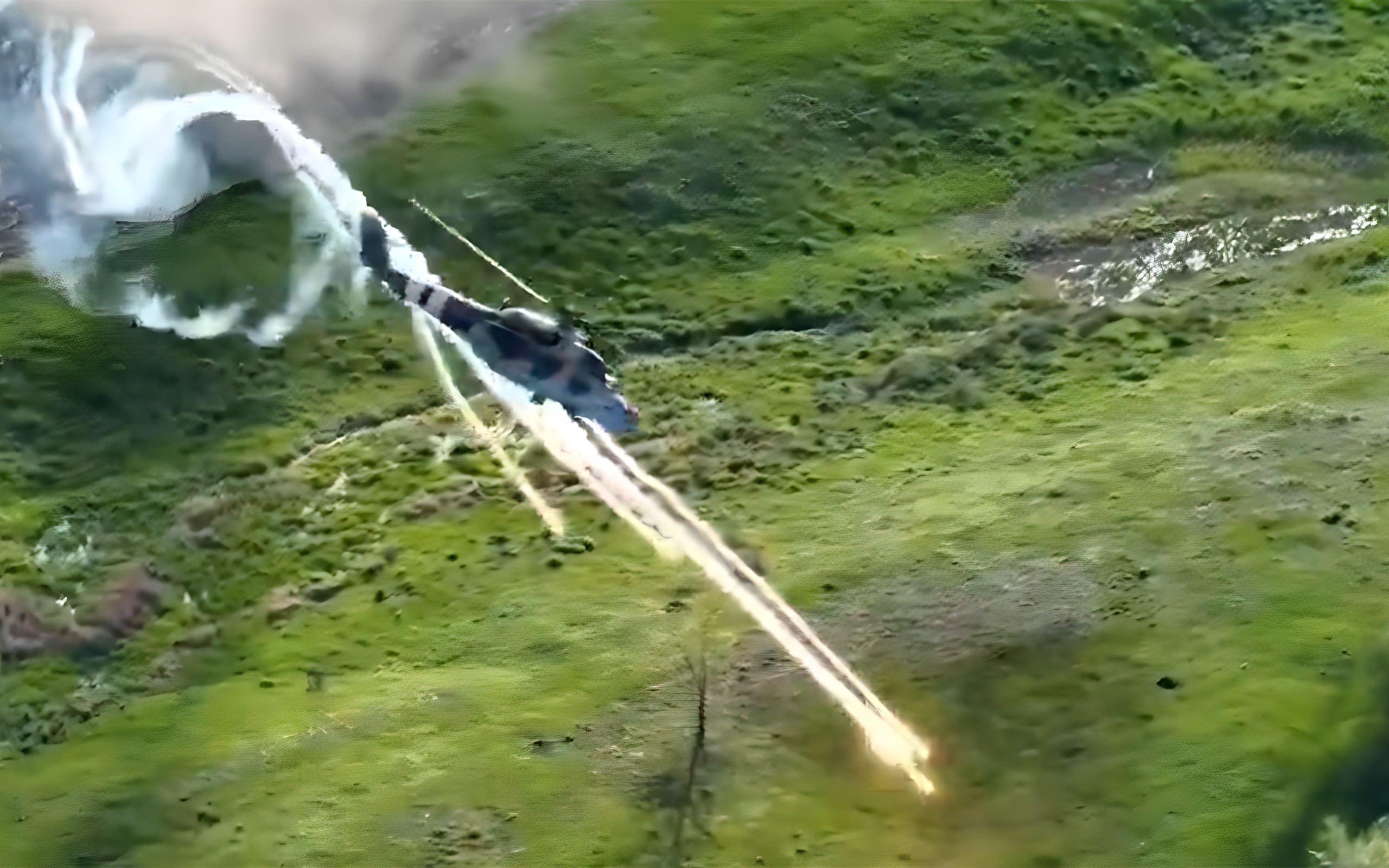
China is providing decisive economic and technological backing to the Russian war effort in Ukraine, effectively sustaining the Russian ability to continue the conflict while avoiding overt military involvement, defence experts told MPs this week.
Giving evidence to the Defence Committee during a one-off session on the future of warfare, witnesses described a relationship in which Russia is becoming increasingly dependent on China for finance, supply chains and technology, even as Beijing avoids being seen as a direct participant in the war.
Air Marshal (Retd) Edward Stringer, Senior Fellow at Policy Exchange, told MPs that open-source intelligence points to a level of Chinese support that goes far beyond diplomatic alignment. “Open source suggests around 60% of the Russian war effort is being covertly bankrolled by China,” he said. “Russia can only maintain this war because China is essentially bankrolling it.”
Stringer said the support was largely indirect, with China avoiding the export of weapons that could be clearly identified as Chinese military equipment. “It’s not weaponry with a Chinese flag on it,” he said. “But there is a huge amount of support to Russia, and it’s in China’s interests to keep the West, and America in particular, distracted.”
He also highlighted a shift in the technological balance between the two states, noting that Russia is no longer the senior partner in military innovation. “The previous generation of Chinese aircraft and ships were copies of Russian designs. That is not the case now,” Stringer told the committee. “The latest generation of Chinese warships and aircraft are Chinese manufacture. The boot is now on the other foot.”
Dr Keith Dear, CEO and founder of Cassi, said Russia’s growing dependence on China was the result of long-term structural weakness that had been accelerated by the war in Ukraine. “Russia is weak and weakening in technology,” he said. “Its technical talent is leaving, and its education system is deteriorating. That means an ever-growing dependency on China.”
Dear argued that the war has placed Moscow in a subordinate position that benefits Beijing strategically. “It is useful for China to keep Russia occupied in Ukraine,” he said. “It increases Russia’s economic and technological dependency and reduces the threat China faces from the north.”
Asked by Labour MP Fred Thomas whether the conflict was beginning to resemble a proxy war between the United States and a China-backed Russia, witnesses urged caution over the label, while acknowledging the underlying dynamic.
Sir Hew Strachan, Wardlaw Professor of International Relations at the University of St Andrews, warned against oversimplification. “I don’t think ‘proxy war’ is a helpful term because it loses the nuance,” he said. “China did not instigate Russia’s invasion of Ukraine, but it has enabled its continuation.”
Strachan said Beijing’s primary interest lay in preventing escalation rather than ending the conflict. “What I don’t see is any desire on China’s part for this war to escalate,” he told MPs. “It suits China to have this war ongoing and Russian dependency growing.”
He also pointed to the emergence of a geographically contiguous bloc involving Russia, China and Iran, with significant strategic leverage across Eurasia. “You now have a block with extraordinary leverage from its geographic position,” Strachan said. “The question is not how we encourage these states to work together, but how we prevent further consolidation.”
On whether China might encourage future Russian aggression elsewhere after a ceasefire in Ukraine, Strachan said Beijing was more likely to act opportunistically than directive. “China is more candid than that,” he said. “Ukraine was an opportunity. China did not create it, but it has taken advantage of it.”



“Big circles”
The West has been making China rich for decades.
Everyone loves a cheap bargain !
Rather, western capitalists love to screw domestic staff, shift manufacturing overseas to the cheapest, least responsible workforce so they can get richer quicker. Traitors the lot of them plus all the politicians who allowed this. The public were never asked. So we end up funding the knives that will cut the throats of our civilisation.
Biggest threat to the west is CCP, yet leaders still seek to submit us to Chinese domination & defund defence.
Yet it’s the public that buy Chinese cars.. every MG purchased is supporting the biggest maritime power on the planet..
BYD, there’s an Invasion happening and they have their own massive Ships, you can track their journeys.
Changsha is off Southampton now ! It’s big and Red so It’ll please some on here !
I do love the western versions of a good Chinese though!
You talking Pork Balls Daniele ?
It’s not exactly a secret is it.
Of course but we dont have the will to get away from it. The West is just waking up to the risk and unfortunately it has largely been about Biden and Trump’s reactions.
We have known it is a proxy war from the start. And yet look at UK politicians involved. Johnson scuppered any early peace talks. Starmer is giving up Chagos, allowing a Chicom super embassy. Then there is the collapse of a certain spying trial….
Of course most ignore the reality, thats the comfort zone for a majority of sheep.
For the sake of clarity? I do no trust any politician of any shade. I like the term used by one respected contributor on this site.
Scum.
No big surprise there….
China built and created the Russian semi conductor industry from the ground up.. it proved the skills, the machinery and the materials for every semi conductor Russia puts in a missile or drone…
Essentially China pretty much owns Russia and no amount of appeasement from the US will change that…
What makes me hold my head in my hands is the time when China simply decides it’s going to build Russia a navy.. because China can pretty much launch the equivalent of the RN over 2 years… so when it’s finally decided it’s got the numbers to bury the USN it’s undoubtedly going to build up it’s allies…
Ahhh, that’ll explain Starmer’s trip then.
“we’ll be your friends If you build us some Ships” !!!!
Quite frankly the why geopolitics is up in the air I would never say never..
Picture in 10 years a dystopia of geopolitics:
The US keeps going full MAGA completely separates from all European Nations and is infact a geopolitical competitor pushing in the high north and our friend and ally Canada.. while it’s also taken control of its entire hemisphere.
Europe entrenches into the EU.. “EU first and only” the EU becoming more and more militarised as if faces off Russia.. it finally warps into that thing Britain always feared the most.. a continental superpower , but not created by one nutters ambition and therefore inefficient and under occupation… but the whole continent fanatical defenders of Europe. Pushing against the US in the high north
A China that dominates the western pacific and India ocean… Taiwan has gone sacrificed by the US for trade and peace.. Japan and tiawan with nowhere to go but to become clients, the Australian economy totally dependent on selling ore to China and the US is a passive neutral hiding in that vastness of the South Pacific. Russ becames chinas Client in the north being the launch pad for Chinese exploration in the high north..
And sitting alone is the UK.. Russia ever present hates us with a passion.. Europe mistrusts us as an independent nation that is a dagger to its back.. with constant calls to cauterise the risk by any means ( as we did to Ireland).. the US calling for the annexation of the Falklands islands…
What does the UK do ? Join the US ( an authoritarian dictatorship) become an ally of China ( a communist dictatorship) or become a member of a European superstate.. or stay independent and hope it does not get invaded by one of the 3 superpower groups.. playing each off against the other
That’s a nastier future, but it’s by no means the nastiest possible worst case we could see…
Starmer’s trip is a necessary part of UK geopolitics.
The USA is potentially on the way to being a rogue state, and we need to find more resilience in case the USA cannot be saved.