

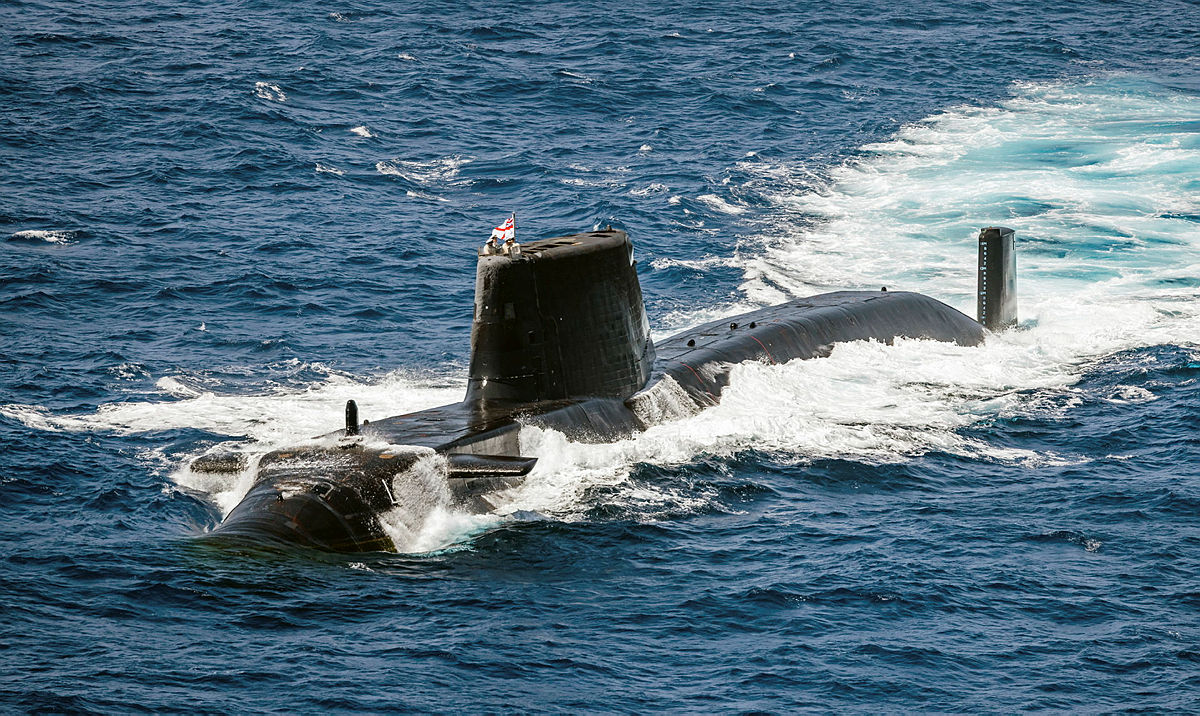
Evidence of low availability among destroyers, frigates and attack submarines raises serious questions about whether Britain can meet its High North commitments before new capabilities enter service, according to a report by the Defence Committee.
The committee, chaired by Tan Dhesi, the Labour member for Slough, records reporting that all five of the Astute class nuclear attack submarines then in service had recently been tied up in dockyards at the same time, with none deployed.
Dhesi said: “The UK needs to be willing to address a hard truth: it does not currently have all the capabilities to operate successfully in the High North. Russian submarine and sabotage forces in the High North pose direct risks to the North Atlantic and the UK, including the nuclear deterrent. Despite this, the Ministry of Defence has accepted a serious anti-submarine warfare gap. Publicly available evidence of low availability among destroyers, frigates and attack submarines calls into question whether the UK can meet its commitments in the High North.”
Professor David Blagden of the University of Exeter told the committee: “[i]t was reported in the media quite recently that a French SSN [attack submarine] had been seen in Faslane around the time that one of [our] SSBNs sailed on its patrol… [i]s this the French now doing ‘delousing’ for a UK nuclear deterrent submarine going on patrol? Is that great alliance solidarity or is it, ‘Oh my god, we can’t get one of our own SSNs to sea to do one of the highest missions?'”
Delousing is the activity in which an attack submarine sanitises the waters around a ballistic missile submarine to ensure it is not being tracked or tailed by an adversary as it leaves on or returns from a deterrent patrol.
The Rt Hon the Lord Case, chair of Team Barrow, told the committee in November 2025 that the government is saying to the defence industry “[p]lease, how quickly can you build our nuclear submarines for us? We are having to make up for decades of neglect.”
Retired Rear Admiral Philip Mathias, a former Director of Nuclear Policy at the Ministry of Defence, said in December 2025 that one consequence of a lack of investment in the submarine fleet was that the duration of patrols for Vanguard class crews, which were seventy days during the Cold War, were now more than two hundred days, and that there was a shockingly low availability of submarines to counter the Russian threat in the High North.
The committee’s conclusion states: “The Royal Marines’ Arctic expertise is a significant national strength, but it cannot compensate for shortfalls in the naval platforms needed to deploy, protect and sustain operations in the region. The UK’s ability to deter and respond to threats in the High North depends not only on future programmes, but also on the readiness of the Royal Navy’s existing ships, submarines and specialist forces. Russian submarine and seabed warfare capabilities based in the High North pose direct risks to the North Atlantic, UK waters and the nuclear deterrent. Evidence of low availability among destroyers, frigates and attack submarines therefore raises serious questions about whether the UK can meet its High North commitments before new capabilities enter service.”
The committee asks the government to provide a plan setting out how the department will improve the availability of the Royal Navy’s frigates, destroyers and attack submarines before 2030, noting that the update might be presented at a classified level but that it expects a version to be made publicly available.
Ministers have consistently declined to disclose submarine availability, and Luke Pollard MP told Parliament this week that it is British policy not to disclose the operational availability or deployment details of submarines, as doing so would be likely to prejudice the capability, effectiveness or security of the armed forces.





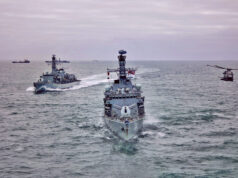


‘The committee asks the government to provide a plan setting out how the department will improve the availability of the Royal Navy’s frigates, destroyers and attack submarines before 2030, …’
We cannot. There, saved the Committee’s time and a shed load of money.
The problem is, as good as Tan Dhesi is, the Committee has no power and no authority.
Parliamentary cross party authority is needed to make defence laws, agree a minimum force level and agree an equipment plan with secured, ring fenced funding.
As it is, these Committee meetings can be farcial, with Civil Servants and Officers gagged by the MoD and avoiding tough questions the likes of which many on this forum would supply answers to quite suitably.
MoD and HMG just sidestep ignore, lie, deflect, or blame the opposition.
A farce, actually.
Quite so, and endlessly tedious / frustrating. Trouble is all this does in the long run is encourage people to look to ‘straight talking’ politicians as an alternative and we can see how well that’s turned out recently.
Hello mate,
While I agree with your post I would suggest that funding is possibly no longer the limiting factor. A lack of suitably skilled and experienced people is probably now the biggest issue. Even if there was by some miracle unlimited funds available fixing the problems would still take years because there are just not the people to do the work.
CR
Got to look on the bright side though 2030 is going to be mega for defence (not)😂
The basic point is.that Parliiament has a need to, and a duty to, scrutise the actions and expenditure of all government departments on behalf of the electorate. This is essential, as we are otherwise condemned to accept the spin and half-truths pedalled by the executive (the government ministers and payroll) and the departments’ high heid yins.
The MOD has in the past been spectacularly uncooperative, defensive and evasive. Time for the Sellect Committee to roundly box the MOD”s ears on this strategically essential issue of naval preparedness in the North Atlantic. It is absolutely essential that Parliament is aware of the true position, even if the MOD”s answers have to be restricted to the committee members under official secrets terms. The MOD is not unaccountable and a law unto itself, it serves at the pleasure of Parliament.
If the MOD again stalls and declines to give full and frank answers, the Committee chair would be at liberty to go before the House and announce that the department was being uncooperative and withholding information and that the Select Committee could not fo its job on behalf of Parliament. Which would lead to a large vote of concern and the almost certain replacement of the civil servant who heads up the MOD.
I don’t think a Select Committee has gone so far in the past, but there is no reason not to. The MOD cannot be a law unto itself and think itself above scrutiny.
Different day the same old news…
The state of the Royal Navy is the result of stupid short term decisions taken over the last 40 or more years and it is possible that it will get worse before it gets better with many observers suggesting that two more T23 might leave service before the first of the Royal Navy’s new T26 ASW frigates arrives. Goodness knows when the T31’s will arrive.
As for the SSN’s we have six world class boats in service. One is on trials, four are queuing for refit / maintenance is Faslane / Devonport and one has been used as a source of spare parts! To strip a multi-billion pound asset for spares is a disgrace and indicative of foolish short term thinking. Austerity as a lot of answer for, but the problems go back decades. As a result we have NO attack submarines on patrol..!
Sadly, much of the issues is now down to a lack of long term investment in infrastructure and skilled and experienced people. Fixing these deep and embedded problems will take a long years to fix. In the meantime, we are left horribly vulnerable.
The once mighty Royal Navy has been humbled not by the actions of an enemy but by the foolishness of our own Parliament and Governments.
Defence spending is rising, but it is too slow and tentative and is not being backed up with strong leadership and any real serious explanation of the nations’ predicament. In short, we are horribly exposed and lacking real leadership.
All of our armed services have been rundown to a dangerous levels. We have great people and some good kit, but there are too many gaps and not enough people, kit or munitions.
Things need to change and much faster than is currently the case.
CR
It’s a tough one to be fair. How far would people like committee’s such as this, to outline exactly how good, bad, bleak or indifferent things actually are, when it comes to the ability to send assets to sea?
To be candid and open, simply tells everyone and their dog what we have, where, how long etc. To say little attracts calls for more clarity and ‘openness’. To say nothing prompts shouts of condemnation.
Sometimes less is more.