

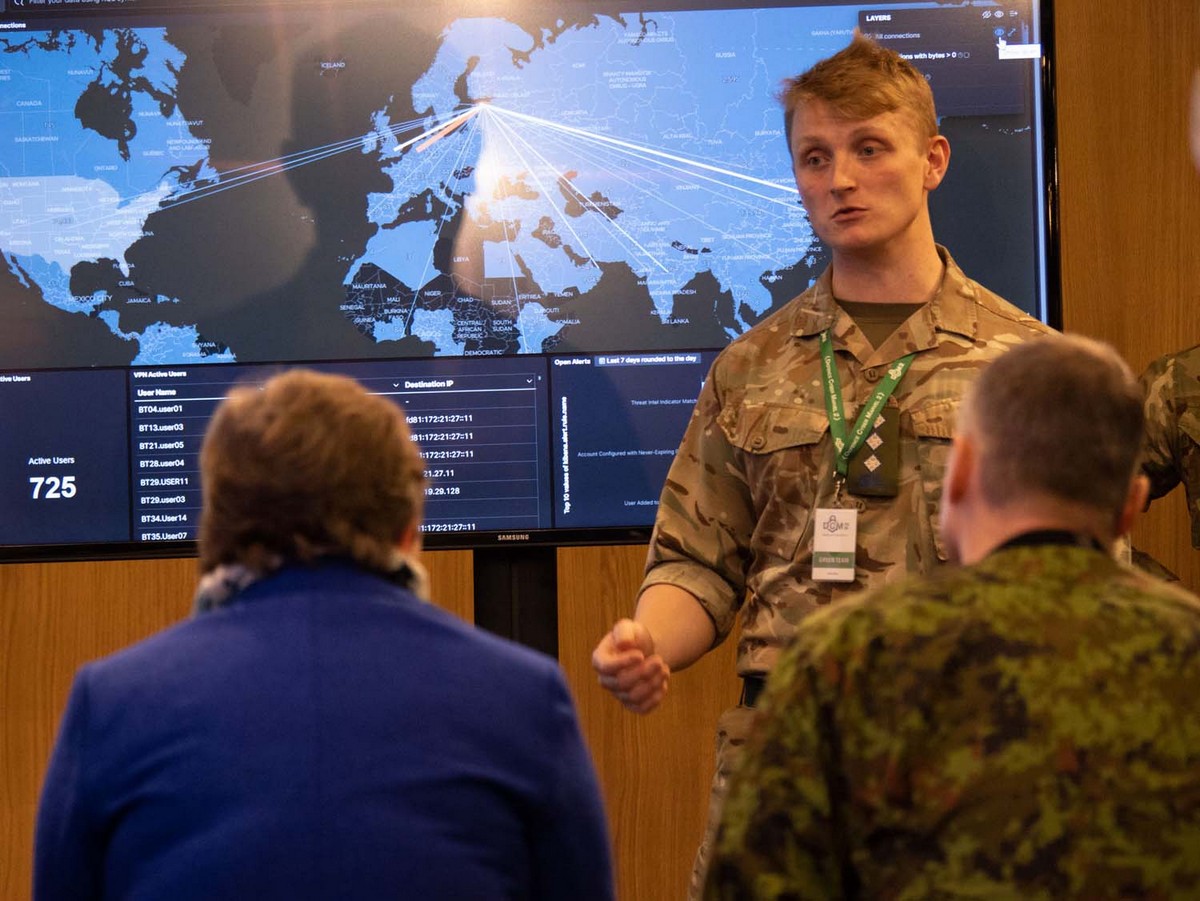
Britain’s national resilience is being tested in ways that would have been unthinkable a generation ago.
The threats we face no longer come solely from hostile militaries with their bombs and artillery, but from cyber operations that target our essential services, our economy, and the systems that underpin daily life.
This article is the opinion of the author and not necessarily that of the UK Defence Journal. If you would like to submit your own article on this topic or any other, please see our submission guidelines.
In the 12 months to September 2025, GCHQ’s National Cyber Security Centre handled a record 204 “nationally significant” cyber attacks, up from 89 in the previous 12 months. That works out as four attacks a week, aimed squarely at our national security, economy and critical infrastructure.
It comes as no surprise that a substantial proportion were linked to Advanced Persistent Threat actors – nation-states or highly capable criminal organisations.
When people think of cyber attacks, they might picture the recent Jaguar Land Rover incident, which is estimated to have cost the economy nearly £2 billion. Or attacks on the NHS, disrupting services and compromising patient privacy as systems are locked down and data stolen.
But cyber operations also accompany conventional warfare.
A newer and often overlooked element is the impact it could have on our space capabilities. Our satellites, vital for communications, navigation, intelligence and military operations, are now targets for cyber interference. And because satellites rely on software and ground-based digital infrastructure, a single vulnerability can compromise an entire system.
Recent incidents, including the 2022 attack on commercial satellite networks in Ukraine, have shown how cyber operations against space assets can disrupt civilian services and defence capabilities alike. As the UK’s reliance on space grows, so too does our exposure.
In short: the cyber battlefield is here, and it is intensifying.
But the role of cyber in modern conflict isn’t limited to attempts to steal data or bring down infrastructure. The boundaries between war, espionage, criminality and influence are blurring, with disinformation and social division often playing as much a role as bombs and sabotage.
Just as a successful attack could disable hospitals, paralyse transport networks, shut down energy grids or freeze supply chains, malicious actors can use social media to spread misinformation, sow distrust and polarise communities, eroding social cohesion and undermining democratic institutions.
The battlefield may not be physical, but the harm can be just as real, widespread and long-lasting.
As a country, we can no longer treat cyber defence as a niche concern or simply a matter for IT departments. Cybersecurity is now at the heart of national resilience, economic security, and public safety.
GCHQ and the NCSC do exceptional work, often without public recognition, but they cannot secure the nation alone. Cybersecurity requires political leadership, sustained investment and a workforce strategy that matches the scale of the threat.
The Government says that it recognises the importance of Cyber which is welcome. The decision earlier this year to open up the Cyber Direct Entry route into the armed forces is the right one, waiving some of the traditional medical and fitness requirements so that we do not miss out on the skills that we need.
But this does not go far enough. In particular, more needs to be done to build on previous efforts to attract people with the right skills into the Reserves. Why not, for example, offer more secondments between the public and private sector? This would enable private-sector cyber experts to support the military or the MoD, and allow government specialists to spend time in industry. This kind of mutually beneficial skill transfer, used effectively in the United States, would rapidly strengthen capability at relatively low cost.
And the seeming loss in prioritisation of space capabilities also means more risk in this area.
We also cannot ignore the gap between the Defence Secretary’s rhetoric and action. There is still no commitment to spending 3% of GDP on defence by 2030, and no real new defence money until 2027. Within these constraints, cyber must not be an afterthought but a clear priority.
Cyber is now a strategic risk, as fundamental as energy security or military readiness, and it must be treated with the seriousness that entails. While the battlefield might feel far away, the truth is that cyber has changed where the frontline is – and the UK is being attacked every week. At a time when some NATO allies in western Europe have yet to recognise the threat for what it is, we need the UK to be showing leadership on the global stage.
The nature of threat and warfare has changed. Our adversaries know it. Our defences must reflect it. If we want to protect our citizens, economy and way of life, cyber security cannot be an afterthought. It must be front and centre of Britain’s national security strategy.








Complete failure to mention any offensive capability. We cannot just be a victim.