

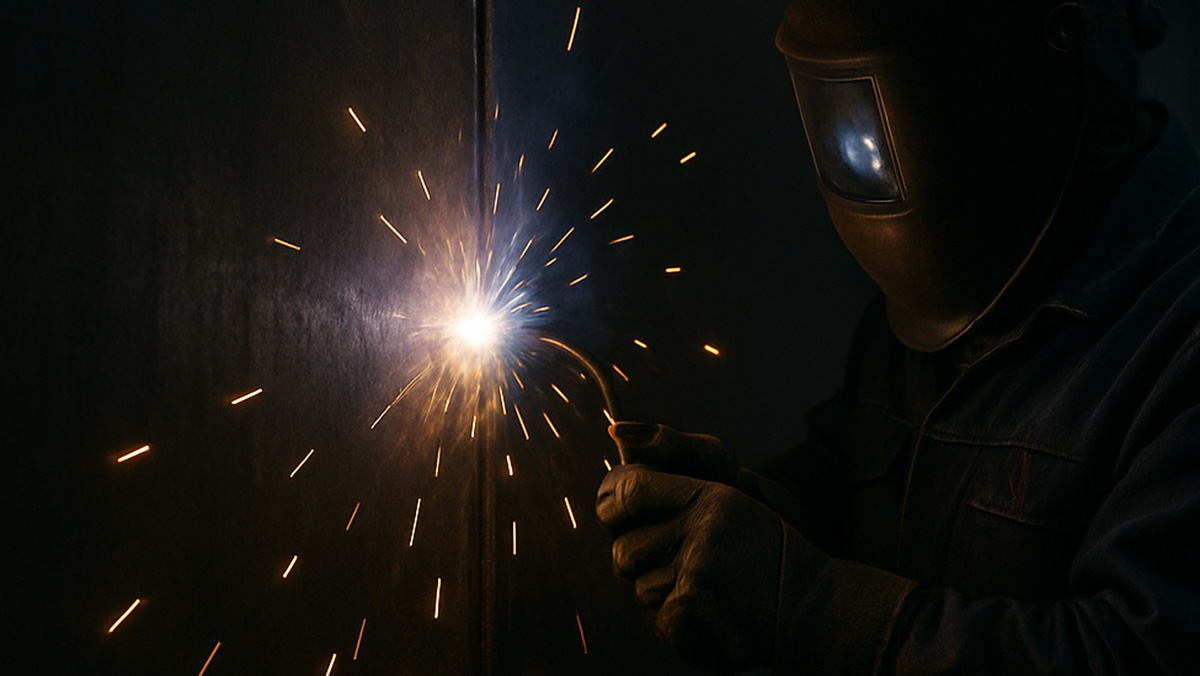
Scotland’s defence industry has received negligible public-sector support in Scotland despite delivering billions in economic value and tens of thousands of skilled jobs, MPs were told during a Scottish Affairs Committee evidence session on defence skills and employment.
Giving evidence to the committee, Warrick Malcolm, Director of ADS Scotland, said that while the sector was experiencing its most buoyant period in decades, public-sector backing in Scotland had lagged well behind that seen elsewhere in the UK.
He told MPs that across aerospace, defence, security and space, the sector contributes £3.7 billion in value added to the Scottish economy, with turnover reaching £9 billion and employment standing at nearly 57,000 people. Direct employment has grown by 20 percent over the past five years, with productivity across the sector now 49 percent higher than the UK average.
Despite that performance, Malcolm said public-sector engagement had been minimal.
“In those 20 years, we’ll have seen 10 Farnborough International Air Shows, 10 Paris Air Shows, 10 DSEI exhibitions, multiple trade missions specifically for the defence sector. I think it’s not unfair to say that Scottish public-sector support for those events has been negligible.”
Malcolm said Scotland had missed repeated opportunities to capitalise on defence-led growth, particularly at a time when rising defence spending could deliver significant employment benefits. ADS modelling suggests that a move to 3.5 percent of GDP on defence could create up to 85,000 new defence jobs across the UK, with around 13,000 of those potentially in Scotland.
Andrew Kinniburgh, Director-General of Make UK Defence, reinforced the sector’s importance to Scotland’s skills base, particularly in engineering and manufacturing. He told MPs that defence companies generate the majority of engineering apprenticeships in Scotland and that salaries in the sector are around 40 percent above the UK median.
“These are long-term programmes,” he said, referring to major defence contracts. “You genuinely have a career for a very long time in these businesses.”
Both witnesses highlighted the role of defence SMEs in supporting rural and regional economies, with companies spread from Aberdeen to the Western Isles. Kinniburgh cited QinetiQ as a major employer in the Hebrides and said SMEs in Scotland routinely supply programmes across the UK. However, Malcolm warned that policy uncertainty at devolved level was creating friction just as other parts of the UK focused on maximising what he described as the “defence dividend”. He said Scotland had faced repeated challenges around ammunition policy and that new guidance introduced in September had taken months to clarify.
“We are hearing positive noises from the Scottish Government,” Malcolm said, “but it is for others to determine whether the positive phrases about the defence industry are supported by the actions.”
Pressed by MPs on whether Scotland was receiving its fair share of Ministry of Defence spending, Malcolm acknowledged that direct MOD expenditure in Scotland remained lower than the national average but said this masked the scale of supply-chain activity, particularly among SMEs. Kinniburgh added that uncertainty around Scottish Government policies risked deterring inward investment, citing concerns that companies could be discouraged by perceptions of political hostility towards defence-related activity.
Both witnesses stressed that defence remained a reserved matter but argued that skills, economic development and inward investment policies were crucial areas where devolved government action could make a material difference. Malcolm concluded that Scotland had a strong industrial base and workforce but warned that without consistent public-sector support, the country risked falling further behind as defence investment accelerates elsewhere in the UK.








“Direct MoD spending (in Scotland) remains below the national average”
That statement there sums is all up.
I’m really not sure why anyone expects the Scottish government and the SNP to have anything to do with defence. It’s a reserved matter and for good reason and devolved administrations should have nothing to do with the ammunition plan.
Is anyone asking the Mayor of London what their input in to defence is as they have a similar level of devolution to Scotland.
It depends whether they wish to grow the Scottish economy and wealth.
However the article makes it clear growth and jobs are the SNPs responsibility and they have failed. As an Englishman I have no objections to the SNP funded trade fairs in the Uk and abroad selling the Scottish defence industry. But instead they waste money on countless independence documents, Angus, and fake embassies. Political goals ahead of the Scottish workers and job creation.
The SNP has its part to play in skills, investment in facilities to win work etc.
EV Fergusons would be in a prime position to win subcontracted work for BAE and Babcock but the Nats won’t provide the promised investment.
True, they’re caught in a ‘catch-22’ vortex.
SNP MPs are arguing that Scotland isn’t getting its fair slice of the pie. However, the reality is shaped by three centuries of industrial history that isn’t easily decoupled.
Looking at the numbers for the two regions (they have a similar population), the newest 2026 data shows a massive gap. If you live in Scotland, the MOD spends about £390 on industry for every person in the country. In the South West of England, that figure is £1,120 per person. Why the difference? It basically comes down to where things are built and maintained.
The South West is home to the UK’s only dockyard for nuclear submarines, Devonport, and a massive cluster of aerospace giants.
Scotland, meanwhile, has a thriving shipbuilding scene on the Clyde and high-tech radar hubs in Edinburgh, but it hasn’t hit a “critical mass” as seen in South West England.
The SNP and other critics point to a £3 billion “spending gap”. Their logic is simple, Scotland pays in about £5.1 billion; its population share of the UK defence budget but only gets £2.1 billion back in direct industrial contracts.
Opponents argue this is a “cherry-picked” figure. They point out that the £2.1 billion doesn’t include paycheques, such as the salaries of 13,500 soldiers, sailors, and airforce personnel living and spending in Scotland. It also excludes the massive operations at Faslane, the UK’s biggest employment site in Scotland and RAF Lossiemouth, or that Scotland is the heart of the UK’s frigate and destroyer-building programmes. They argue this scale of production would not happen without the UK’s massive national budget.
Did the Gov. plan for the South-West to triumph over Scotland? No! I think of it like Silicon Valley, once a few big tech firms set up in California, the talent and startups followed and the ecosystem evolved. The South-West did the same with planes and ships and for decades, the MOD simply “underpinned” what was already established and working.
The South-West evolution began over 300 years ago, driven first by the Royal Navy’s need for western-facing ports and later by the 20th-century aviation boom. Below are some of the business that evolved in the South-West.
Maritime & Naval Support.
This foundation goes back over three centuries –
1691 HMNB Devonport in Plymouth was established to support the Royal Navy’s shift from Dutch to French and Spanish threats.
1840s -1860s. During the steam revolution, the yard expanded north to Keyham to build and maintain the new steam-powered fleet.
1970s. During the transition to nuclear power, Devonport became the UK’s primary refitting base for nuclear submarines.
2007 – Present. After centuries of state management, Babcock International took over operations. In 2026, Remains the sole site in the UK for nuclear submarine refitting.
Aerospace & Engine Manufacturing: The Bristol Cluster
1910. The Bristol Aeroplane Company was founded; it produced the Boxkite and later the Bristol Fighter, becoming a global supplier.
1918 -1945. The firm developed world-leading Hercules and Centaurus radial engines, powering much of the RAF fleet in WWII.
1958 -1966. The engine division merged with Armstrong Siddeley before being purchased by Rolls-Royce in 1966.
1977 -1999. The airframe division merged into the British Aircraft Corporation (1960), was nationalised to become British Aerospace, and was finally privatised as BAE Systems in 1999.
At Present: Rolls-Royce focuses on military engines at its Bristol site, such as the EJ200 for the Eurofighter.
Helicopter Specialisation – The Yeovil Cluster.
1915. Westland Aircraft Works was established in Yeovil to build seaplanes for the Admiralty during WWI.
1946. Westland abandons fixed-wing aircraft to focus entirely on helicopters under licence from Sikorsky.
1959 -1961. The UK Gov. forces the rationalisation and merger of all British helicopter divisions including Bristol’s and Fairey’s into Westland Helicopters.
2000 – Present. Westland merged with Italy’s Agusta to form Agusta Westland, which is fully absorbed into Leonardo in 2016.
Yeovil remains the “Home of British Helicopters” in 2026.
Advanced Systems & Components.
1897 – Present. GEC-Marconi evolved into BAE. Originally founded by Guglielmo Marconi, the wireless technology evolved through GEC into Marconi Electronic Systems, which merged with British Aerospace to form BAE Systems in 1999.
1902 – Present. GKN Aerospace, once an iron and steel giant, became a major defence player. It owned Westland for a period (1994–2004) before focusing on advanced aerospace components. It now operates its largest advanced aerostructures plant in Filton, Bristol, specialising in sub-assemblies for the F-35 Lightning II, the Eurofighter Typhoon, and the Saab Gripen.
Others include –
Rolls-Royce, Patchway (Military aero-engines and propulsion)
Leonardo, Yeovil (Avionics, radar, and electronic warfare)
Ultra Electronics, Wimborne (Sensors and communication systems)
Gooch & Housego, Ilminster (Photonics and precision optics)
TT Electronics, Barnstaple (Advanced power and sensor components)
National Composites Centre (NCC), Bristol (Advanced materials research)
Permali Gloucester, Gloucester (Ballistic and mine protection materials)
MSubs Limited, Plymouth (Unmanned and manned submarines)
BMT Defence Services, Bath (Naval engineering and design)
CodaOctopus Martech, Portland (Sonar and maritime technology)
Horstman Defence Systems, Bath (Armoured vehicle suspension and mobility)
Moog, Tewkesbury (Flight control and actuation systems)
Parker Hannifin, Barnstaple (Hydraulic and motion control systems)
MBDA, Bristol/Filton (Missile and weapon systems integration)
Thales, Templecombe (Sonar and maritime electronic warfare)
Safran, Gloucester (Landing gear and aerospace systems)
L3Harris, Tewkesbury (Communications and integrated mission systems)
GKN Aerospace, Filton (Advanced aerostructures and wing systems)
Rolls-Royce, Patchway (Military aero-engines and propulsion)
That’s a lot of heavy duty defence business in the South-West.
Major contractors placed their headquarters in the South West to be near the companies they deal with, which makes perfect business sense. Similarly, the Gov. often places major assets like the Defence Equipment and Support (DE&S) headquarters in Bristol, to be near the industry partners they manage. All this further cements the region’s status as a defence hub.
This isn’t a plot to ignore or disenfranchise Scotland; it’s various Gov’s. following the path of least resistance to get things done. However, it has led to “regional atrophy” regarding defence spending in other parts of the UK.
The “lock-in” is starting to crack. In 2026, the Gov. acknowledge that concentrating spending in one corner of England isn’t ideal for the rest of the UK. Consequently, they launched “Defence Growth Deals” specifically to pump more money into Scottish SMEs and high-tech firms.
Is Scotland being purposely disenfranchised as SNP’s would have you believe? No. Is it receiving less “Direct Expenditure” cash than its southern neighbours? Yes absolutely. While the “spending gap” makes for great political headlines and helps SNP MPs appeal to voters, the reality is a mix of historical chance and natural business growth in the South-West.
Scotland remains a massive player in UK defence, but as long as the nuclear submarines, the largest aerospace and tech hubs stay in the South-West, the per-capita numbers will likely remain tilted.
Do we want to keep the Kingdom United? Yes.
Let’s continue to invest in Scotland and break the SNP.
– Not going to delve into The Barnett Formula or the Union Dividend Calculation.
—
As an aside and on a personal note, I started down the Sir Hiram Stevens Maxim / Vickers / Mark I .303-inch machine gun / GKN (mistake) rabbit hole while supposedly researching the SNP shenanigans, as tangents go, quite interesting.
I learnt (relearnt) that GKN did not acquire Vickers back in 90’s as I thought they had and that in fact RR did in 99’; primarily for its marine engineering business.
So, the timeline; Vickers purchased the Maxim company in 1896, they simplified the action, reduced its weight by using high-strength alloys, and inverted the toggle-lock mechanism.
In 98’ GKN sold its armoured vehicle business to Alvis plc. and In 02’ Rolls-Royce sold its armoured vehicle division to Alvis plc. These acquisitions by Alvis brought the two formerly rival land-defence units together under a single company called Alvis Vickers Limited.
Then In 04’ BAE Systems acquired Alvis Vickers, effectively merging the heritage of both GKN and Vickers land-defence units into its own portfolio. (I seem to have forgotten all this earlier to-ing and fro-ing from the late 90’s as I did follow it at the time)
Eventually, in 2019 BAE Systems merged its UK combat vehicles business with Rheinmetall to create ‘Rheinmetall BAE Systems Land’ (RBSL) with ownership split – Rheinmetall owns the majority 55% stake, and BAE Systems retain the remaining 45%.
BAE Systems maintained its own munitions and weapons systems business, which was not included in the RBSL deal.It includes a massive expansion of artillery ammunition production in South Wales and BAE Systems operates other parts of its “Land” business independently.
Enjoy your weekend.
I don’t see It as a big issue and Scotland is easily one of the best performing regions outside of the South East. Edinburgh even outperforms London in GDP per capita now.
My comments are based on the never ending myth percolated on here that Scotland gets more than its fair share of MoD spending.
Clearly from the expert testimony provided to parliament that’s not the case. It’s below average.
No doubt other parts of the UK need investment more but in terms of warship building, central Scotland is where the mass is at. It’s the only place in Britain building large surface ships of any kind. It’s the only major industrial centre with access to east and West Coast.
Just like we are not moving aerospace out of the north and south west because that’s where it gets done, it’s not possible to move ship building out of central Scotland.
Better together 😀
Don’y worry, be happy, once Emperor Trump gets Greenland I predict he will offer Scotchland independence, if they sell it to him.
Unfortunately this seems to be the British way. If you’ve got something homegrown, employing locals, that’s productive and generating revenue, and of critical importance… ransack it and throw as many vague and confusing rules at it as possible.