

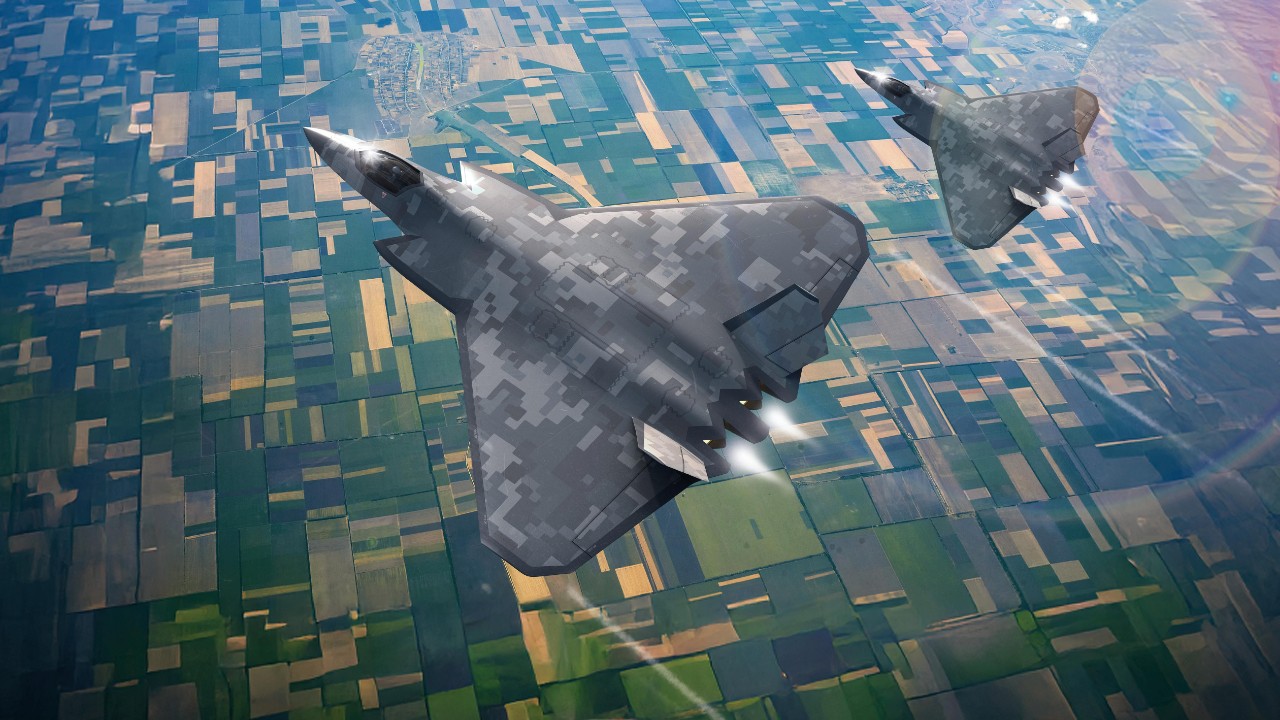
The joint venture designing the next generation fighter for Britain, Italy and Japan has opened an engineering site in Turin, the first of three planned facilities, with British and Japanese sites due to follow in the coming months, according to Edgewing.
Turin is the first additional Edgewing site to open for engineering work since the joint GCAP Agency and Edgewing headquarters was established in Reading last year. All three global sites will play the same role as engineering hubs contributing to delivery of the programme.
The company says the site will sustain thousands of highly skilled engineering jobs in the region through its workforce and supply chain. Engineers from all three nations will work there, with the initial cohort made up of secondees from Edgewing’s three partner companies, some of whom have moved their lives and families as far as ten thousand kilometres from Japan to Italy.
Edgewing set out what the aircraft they are working on is meant to do. The fighter will feature sensing and communications equipment, artificial intelligence support for pilots and the latest stealth technology, flying surveillance and strike missions at long range in heavily contested airspace. It will also contribute to the strategic operating picture and direct drones and other assets in the battle as a flying team captain.
Marco Zoff, the chief executive of Edgewing, said: “Our new site in Italy is the latest step in Edgewing’s rapid growth as an organisation, as we scale up the company across our three nations. Ready to disrupt the defence industry by delivering dramatically quicker than previous generation programmes, the innovation and energy we can access here in Turin will underpin our acceleration.”
Giuseppe Lupoli, general manager of Edgewing in Italy, said: “GCAP represents the next generation of technology, and this new site represents an opportunity for many to join Edgewing and work on some of the world’s most advanced digitally-driven engineering. I look forward to welcoming colleagues from across our three partner nations to Turin as we embark on this journey together.”
Lorenzo Mariani, chief executive and general manager of Leonardo, said: “GCAP will ensure technological sovereignty for generations to come and I am proud that hundreds of engineers here in Turin, and thousands more around the country, will contribute to its success. Leonardo is proud to support Edgewing as the programme continues to drive technological development and long-term economic growth.”
Edgewing launched in 2025 as the industrial lead and design authority for the GCAP aircraft, and signed international contracts worth more than six billion euros with the three-nation GCAP Agency this year. The company is delivering the programme’s advanced concept and assessment phase while scaling to bring work together from the three national programmes, with the design and development phase to follow.
Ownership is split equally between BAE Systems in the United Kingdom, Leonardo in Italy and Japan Aircraft Industrial Enhancement Co in Japan, and the company will remain the design authority for the aircraft throughout its service life.
In Italy the new site has been placed alongside Leonardo, which has a long history of combat air technology research and development in Turin that Edgewing says it will draw on.
The United Kingdom site is one of the two still to open, and will sit alongside the Reading headquarters instead of replacing it. BAE Systems does the bulk of its combat air work at Warton and Samlesbury in Lancashire, where the Tempest demonstrator has been under construction. The programme replaces Typhoon in Royal Air Force service and F-2 in Japanese service, with an in-service date of 2035, and the three governments established the GCAP Agency in 2024 to act as the single customer.





Andy Burnhams ability to offer German a seat at the table shows just how important it is for the UK to continue to spend money on r&d to keep ourselves at the forefront of combat aircraft design and manufacturing.
The soft power of such projects is often over looked in a pure financial or military capability assessment.
Burham did that to try to get closer to the eu and because he doesnt want to spend the cash himself. Gcap is one of the most important manufacturing projects the uk has ever undertaken and him willy nilly offering german a seat at the table was nieve at best, it would lose us workshare, exports and likely delay its development.
But yes it shows how key it is to keep hard power and our industry at the forefront of innovation but that has to be backed by uk military orders not by pursuing exports first
Hopefully behind the scenes things are moving smoothly and quickly. With the European programme in a mess we have a real opportunity to make this aircraft an export success.
This will be an heavy missile truck with a size near a F111. Not a F16 export success heir.