

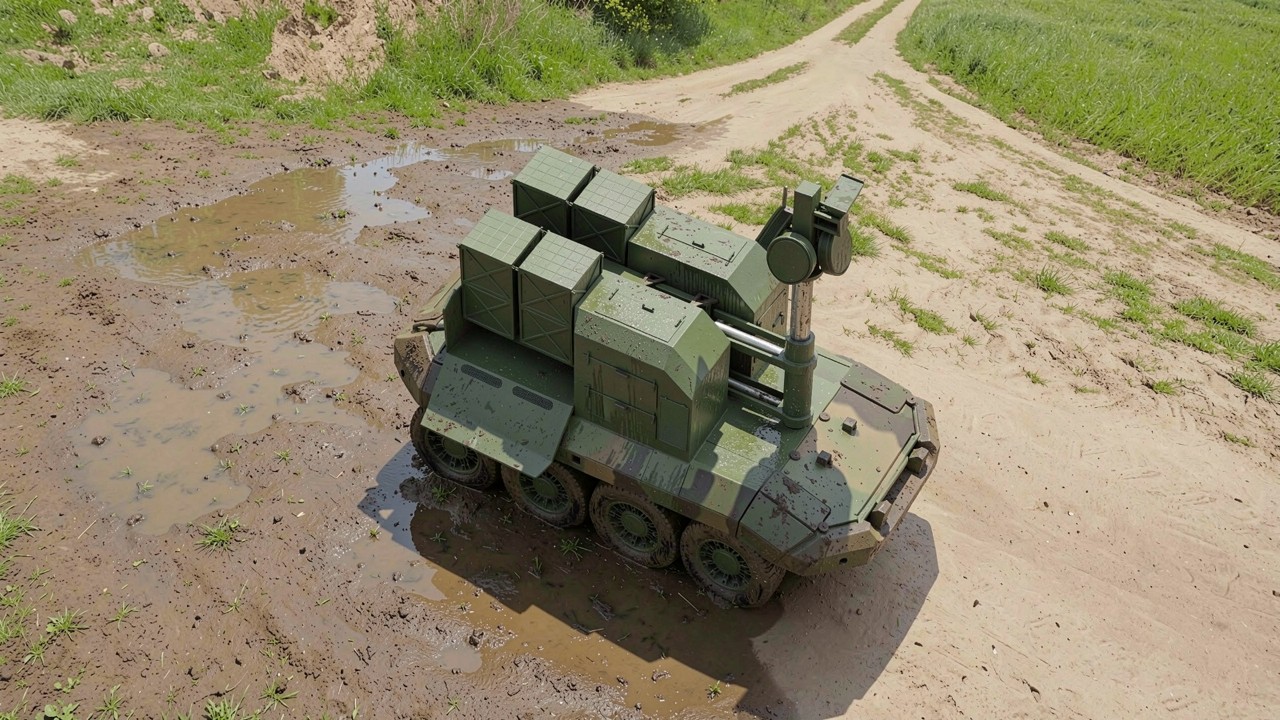
A defence technology company founded in Washington and Israel has unveiled what it describes as the world’s first native counter swarm defence system, designed from the outset to engage large numbers of drones at once instead of picking off one target at a time, according to the company.
Skapion said the system has been designed by its founding architect, General (retired) Pini Yungman, who was the architect of Iron Dome and formerly general manager of Rafael’s air and missile defence division. It is built around what the company calls a native many-to-many architecture, allowing multiple interceptors to engage multiple targets at the same time.
The company said the mobile, fully kinetic system is designed to engage more than one hundred targets simultaneously with an interception rate above 97 per cent, at a significantly lower cost per interception than conventional air defence. A vertical launch arrangement gives 360 degree coverage, and the company said it is designed for deployment from ground, airborne and maritime platforms.
Ido Bar-On, co-founder and chief executive, said: “The next generation of threats cannot be defeated by simply stacking yesterday’s air-defense solutions. A swarm is not just a larger number of discrete drones. It changes the dynamics of the engagement, the number of simultaneous decisions, the speed at which they must be made and the economies of every interception. Native Counter-Swarm means designing the entire system from day one for simultaneous mass engagement.”
Most air defence systems were developed to engage single targets or small numbers of them, which creates capacity and cost constraints against simultaneous mass attack. Skapion cited the wars in Ukraine and Iran, where it said legacy air defence is being saturated by swarms built to exhaust the defender’s magazines and budgets.
A Shahed type one-way attack drone costs tens of thousands of dollars. The interceptors fired at it can cost hundreds of thousands or more, and the magazine on any launcher is finite, so an attacker who can generate enough cheap airframes wins on arithmetic even when every shot is defeated. Bringing the cost per interception down, and the number of simultaneous engagements up, is what several companies on both sides of the Atlantic are now chasing.
At the centre of the Skapion system is an AI command and control architecture that fuses data from the company’s own sensors or from third party systems, evaluates and prioritises threats, allocates interceptors and manages engagements in real time. The company said it can run with full end-to-end autonomy or with a single human operator in the loop, depending on customer policy, and that the open, sensor-agnostic design allows integration with existing command and control and other counter-drone systems.






Excellent. The principles seem correct finally . What remains is: does it work?
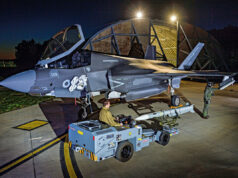
What is really interesting is There are two box’s that look like a new vertical launched C-UAS system spotted on Dauntless this week…
At what point will counter UAS drones move from self destructive attacks (making them single use) to firing something at the target drone (making them recoverable and reusable)? For instance, get close enough and fire a shotgun cartridge at it or equivalent. As soon as that happens, the cost picture changes completely. Plus, there will then be ‘Ace’ drones.