


Air Chief Marshal Sir Richard Knighton used his first major speech as Chief of the Defence Staff at DSEI 2025 to deliver a stark message about the pace of change required in defence.
“It is a great pleasure to be here today and to have the opportunity to give my first major speech as the Chief of Defence Staff here at DSEI 2025,” he said. “I am hugely honoured to take on this role at such an important time for our security.”
Knighton paid tribute to his predecessor, Admiral Sir Tony Radakin, and noted that the “themes” of a speech he had given at DSEI in 2019 still applied: “increasing global uncertainty, the imperative of modernising our armed forces to meet new threats, and how private sector innovation must be fired up to catalyse that renewal.”
But he stressed the world had changed profoundly. “Those themes seem just as relevant in 2025 as they were six years ago… but what’s remarkable looking back to 2019 is just how fast things have changed. We had no idea that Ukraine would teach us such clear lessons on the importance of adapting our Armed Forces quickly, the need for speed.”
He argued that the security environment today is “far more uncertain, risky and dangerous,” shaped by “a resurgent, aggressive Russia probing our defences” and by the “character of conflict changed irrevocably… increasingly embracing new digital technologies, robotics and artificial intelligence.”
As CDS, he said his focus would be on “our readiness, our people and our modernisation. That way we will be ready to deter, fight and win today and tomorrow.”
The lessons of Ukraine loomed large in the speech. “I’ve been to Ukraine twice in the past two weeks, and I’ve witnessed the remarkable ingenuity, spirit and bravery of its people,” Knighton said. “There is much we can learn from Ukraine… when we think in the UK about how we want to fight, we ideally want to deter that fight by being able to win quickly and decisively with the forces we have. But history tells us that if we don’t win quickly, we must also be ready to sustain that fight and adapt faster than our adversary to win over the long term.”
He pushed for a new relationship with industry. “The problem is we have spent the last 25 years driving through efficiency, making our systems leaner… that approach will not deliver the rate of change and adaptation we need. It’s a system optimised for the past, not the needs of the future. So achieving the required speed demands that we change our relationship with industry to innovate at a wartime pace and make defence the engine for growth.”
That means, he argued, “opening up our systems and architectures to allow the best in the market to play,” ensuring companies “can make money in this new model,” and simplifying approvals so that “we value time much more.”
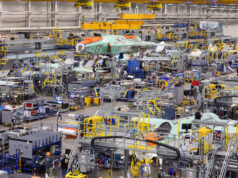
He challenged industry directly: “Three and a half years on from Russia’s full scale invasion of Ukraine and with massive, massive planned increases in defence spending right across Europe, I’m surprised that I don’t see shareholders investing to grow capacity and develop new products right across the enterprise. We need to see industry partners step up, just as we are asking the taxpayer to step up.”
Knighton concluded by urging urgency: “The Strategic Defence Review charts the course for defence reform, the Defence Industrial Strategy tells us how to progress, and the rising budget gives us the means. So our task is clear. We have to get on with it so that we are ready to deter, fight and win today, tomorrow and together.”









“Im surprised that I don’t see shareholders investing to grow capacity and develop new products right across the enterprise. We need to see industry partners step up, just as we are asking the taxpayer to step up.”
In the UK at least, I expect industry will invest to significantly increase capacity when you actually do spend more and not just talk about spending more.