

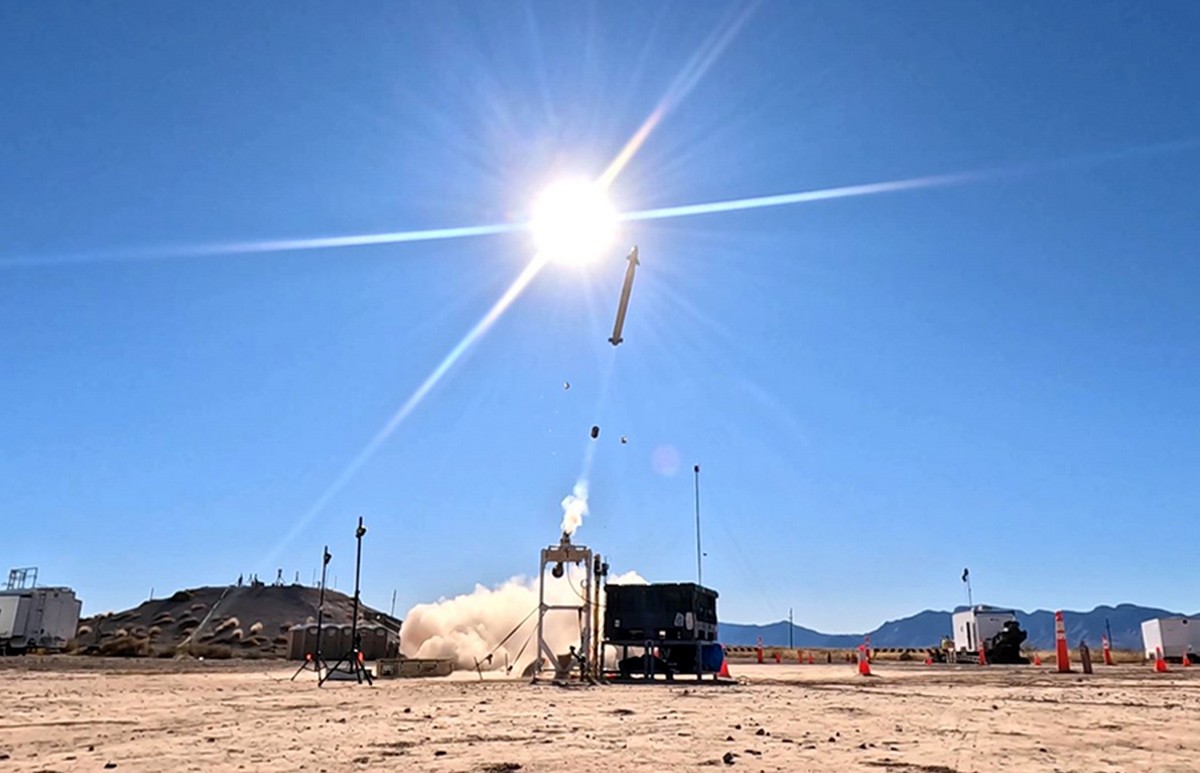
Lockheed Martin has completed the first flight test of its Next-Generation Short-Range Interceptor, a system being developed as a potential successor to the Stinger missile, according to the company.
The test took place on 13 January at the U.S. Army’s White Sands Missile Range in New Mexico and forms part of a planned series intended to demonstrate the interceptor’s performance and maturity. Lockheed Martin said the event marked progress in validating key subsystems within the missile design. The company stated that the flight test represents an early milestone in the development of the interceptor, which is being offered to the U.S. Army as part of its future short-range air defence requirements.
According to Lockheed Martin, the NGSRI is being designed using an open systems architecture and a modular approach intended to support future upgrades. The company said the system is intended to counter a range of aerial threats, including unmanned aerial systems as well as rotary- and fixed-wing aircraft, with performance improvements compared with legacy short-range air defence missiles. Lockheed Martin said development of the interceptor has progressed rapidly since contract award in 2023, with the missile moving from concept to initial flight testing within 26 months.
Randy Crites, vice president of Lockheed Martin Advanced Programs, said: “Our team’s shared mission, innovative approach and agility were essential to achieving this milestone. Lockheed Martin is driving the future of integrated air and missile defense, advancing technologies that safeguard our warfighters and allies from evolving threats.”
Chris Murphy, business development lead at Lockheed Martin Advanced Programs, said: “The successful completion of this first flight test is a testament to our team’s agility and drive to deliver critical capabilities on an accelerated timeline.” He added: “We completed our controlled flight test series in less than six months, demonstrating the speed and agility the Lockheed Martin team brings to this exciting competition.”
Lockheed Martin said the interceptor incorporates a range of advanced technologies as part of its design and that further testing is planned as development continues.










Will it work in the snow 🇺🇸😂
😁