

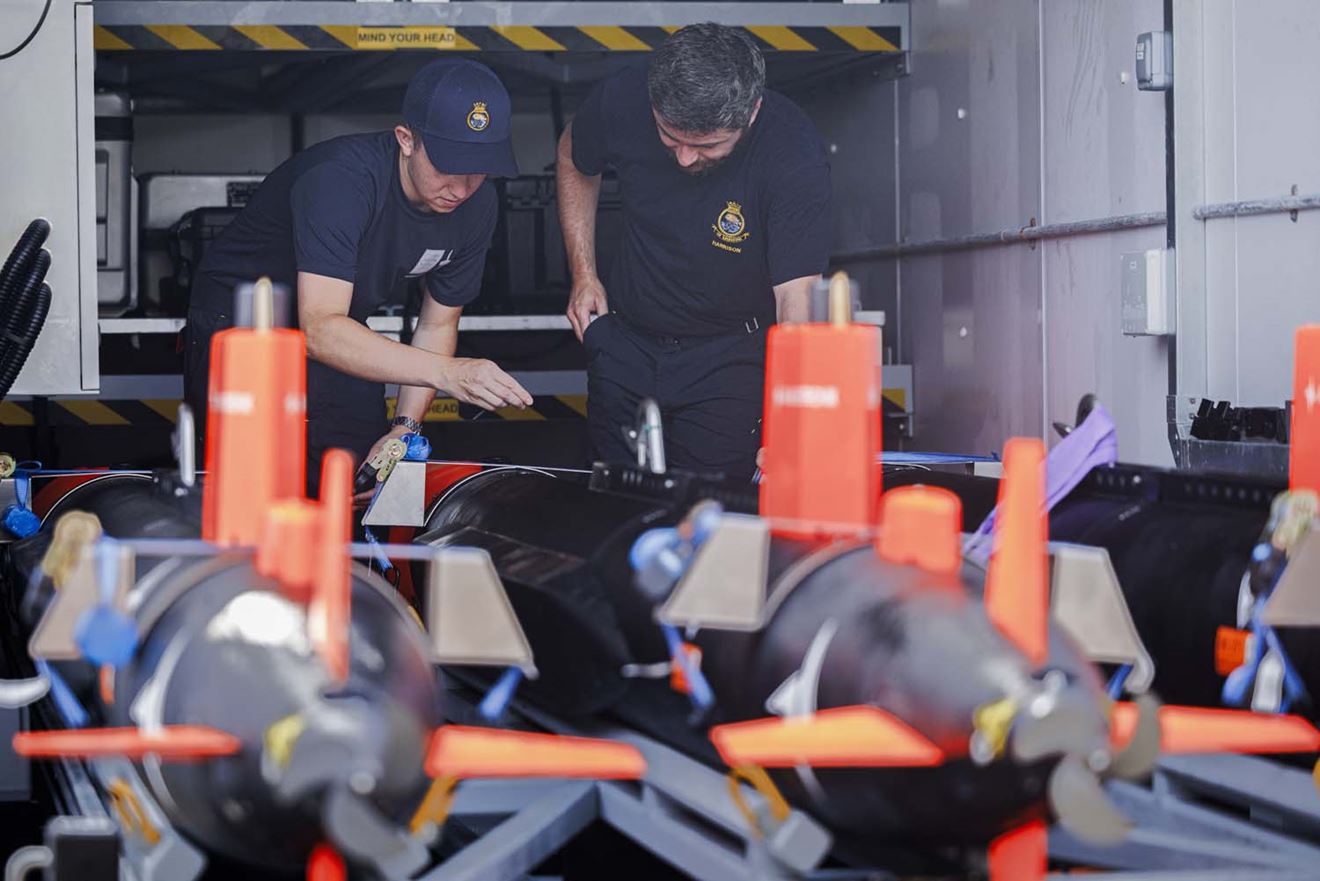
Royal Navy minehunting specialists have been taking their equipment to sea aboard a range of ships as they prepare for deployments overseas, the Royal Navy stated.
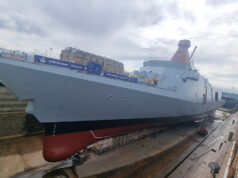
X-Ray Squadron from the Mine and Threat Exploitation Group embarked HMS Stirling Castle to train with the crew, deploying its Remus 300 uncrewed underwater vehicle to scan the seabed and identify possible threats in a training scenario. The squadron also conducted drills to confirm it could operate from the ship over a sustained period and respond to emergencies, work that formed part of pre-deployment training ahead of operations in the Middle East. Stirling Castle was recently commissioned into the Royal Navy from the Royal Fleet Auxiliary.
According to the Royal Navy, accuracy assessments have been completed for the uncrewed vehicles to confirm they can detect objects and potential mines, with boat coxswain training running alongside to ensure operators are competent in boat handling.
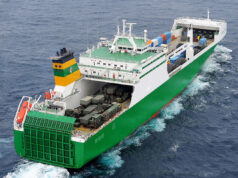
Elements of X-Ray Squadron joined personnel from Yankee Squadron aboard RFA Lyme Bay as the ship took on the role of minehunting mothership, with a small group deployed to Gibraltar to help load equipment for a joint operation involving RFA personnel, the French Marine Nationale, Mine Warfare Battle Staff, the Diving and Threat Exploitation Group and MTXG. The Royal Navy describes the combined task group as testing the limits of modern minehunting capability should it be called on to clear one of the world’s busiest shipping lanes.
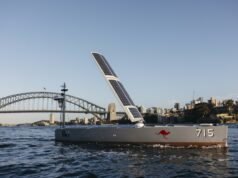
The equipment embarked includes two classes of autonomous boats capable of launching towed sensors or remotely operated submersibles, autonomous 2D and 3D sonar systems, and VideoRay Defender-Viper portable mine disposal submersibles able to locate, identify and destroy mines. The Royal Navy states that the kit aboard Lyme Bay has been tested in UK waters across a range of operational environments, with Zulu Squadron continuing to put further technology through its paces.
Personnel have also been working with industry partner Thales on the Maritime Mine Countermeasures system, which is intended to replace crewed vessels with uncrewed systems operated remotely from a hub ashore. Using sub-surface autonomous vehicles, operators can detect, classify and identify contacts while remaining outside the threat area. Recent training has focused on the Portable Operations Centre containers that serve as the deployable command element of the system, with personnel learning to convert them into a functioning centre capable of planning, controlling and executing mine countermeasures missions ashore or embarked.
Operators from Zulu Unit 2 have received training on the Seacat uncrewed underwater vehicle through the group’s Operational Conversion Unit at Faslane. That squadron directly supports the Royal Navy’s continuous at-sea deterrent activity by detecting and identifying seabed objects in the Clyde areas. The Operational Conversion Unit has also been delivering new and revised courses covering the SeeByte integrated training tool, VideoRay Defender and the Seacat medium uncrewed underwater vehicle, adding the Maritime Reserves to those it trains.
The group has additionally been working with the Hydrographic Exploitation Group to align efforts around autonomous technology, including joint use of the Gavia autonomous underwater vehicle for seabed mapping and object investigation. The activity comes as the Royal Navy shifts its mine countermeasures capability away from crewed minehunters, with the Ministry of Defence having confirmed this week that the last Hunt-class vessel is due to leave service in 2031.




Interestingly France had now pulled CDG back to France and Germany has pulled back its minesweeper from the gulf of Oman.
Just us their now.
Can’t keep carriers permanently on station, and to be honest the mine clearing operation was dependent on hostilities ending. There’s no sigh of that happening this year, despite Trump’s memorandum of surrender.
Iran is reporting a ‘tanker has exploded after hitting a mine’ today. If so, it’s the first definitive proof the original deep water channel has been mined.
Getting even more involved in trumps genocidal war of choice, a piss poor decision in our part not to stick up for the UN against the USA and Israels wars
The GdeG CSG has been continuously deployed and hard worked since January – the crew, ship and air group are just worn out and need a few months to recover operational effectiveness. The Italian Cavour CSG is lined up as a potential replacement if necessary. The two German ships, Fulda and Mosel, just aren’t designed and equipped to operate in the extreme temperatures of the Arabian Sea in summer and have suffered from many problems and equipment failures. Although whether the Eastern Med is much better at the moment may be a moot point!
In my mind’s eye, I have this image of HMS Dragon wondering round, alone and lost on the high seas, billy no friends, without orders.
Meanwhile, Burnham is stuck on a broken down train somewhere between Manchester and London, and Streeting is in the middle of a temper tantrum and threatening to resign if he doesn’t get his daily sweeties (and his other daily sweeties).