

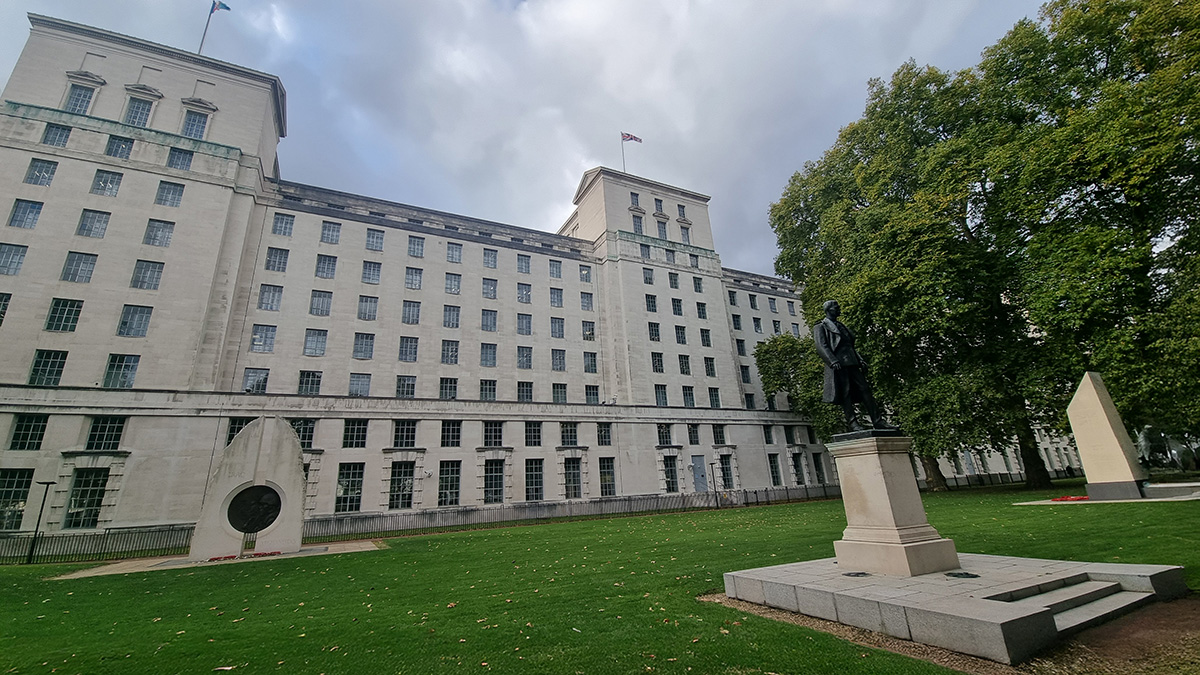
Ministers say they have held more than 70 engagements with veterans since July 2024 while discussing legislation relating to the Northern Ireland Troubles.
The figure was disclosed by Veterans Minister Al Carns in response to a series of written parliamentary questions from Conservative MP James Cartlidge concerning consultation with veterans over the Northern Ireland Troubles Bill.
Cartlidge had asked the Ministry of Defence to provide details of the veterans’ groups, military cohorts and associations ministers had met since 5 July 2024 to discuss the legislation.
In his response, Carns said the government had engaged with a wide range of military stakeholders, including veterans who served during Operation Banner, the British Army’s long-running deployment in Northern Ireland from 1969 to 2007. “The Government has engaged closely with a wide range of military stakeholders in relation to the Troubles Bill to ensure that the Northern Ireland Troubles Bill effectively supports veterans,” Carns said.
He added that discussions had involved both veterans and serving members of the Armed Forces from different regiments and time periods. “This has involved meeting with veterans and current serving members of the Armed Forces whose service took place across different time periods, including during Op BANNER, and across a wide range of regiments,” he said.
However, the minister did not provide a list of specific organisations or associations when answering the questions. Instead, Carns said the scale of engagement should be understood in terms of the number of meetings held with veterans across the armed forces community.
“Since 5 July 2024, in my previous, and current Ministerial role, I have conducted over 70 veterans’ engagements, where I spoke with hundreds of veterans, from all Services and cohorts, from a wide range of different associations, about a number of matters,” he said.


See The Circumlocution Office (Little Dorritt by Charles Dickens) for details.
They can point to all the meetings and consultations that they like.
Isn’t it the point that this leaves armed forces personnel open to prosecution while terrorists walk away free?
Like those responsible for killing the two Corporals Wood and Howes in 88, which I remember watching as a teen, who were subsequently released.
Forces personnel including Det and 22 soldiers who did a quite fabulous job monitoring and then ambushing terrorists while in the act, at which they were often shot dead.
You live by the sword and die by the sword? Or does that only work one way and not for those who shot off duty RUC and UDR personnel in bed, infont of families, on their doorstep, or bombed their cars?
Why should the army have to answer for shooting to kill when terrorists did it as standard?
Balancing that, some of the actions by the FRU, on Bloody Sunday, and at the Ballymurphy massacres are questionable, and some actions by the MRF outrageous.
But these are isolated examples, and again if these actions apply to one side only and not both, no wonder people are angry.