

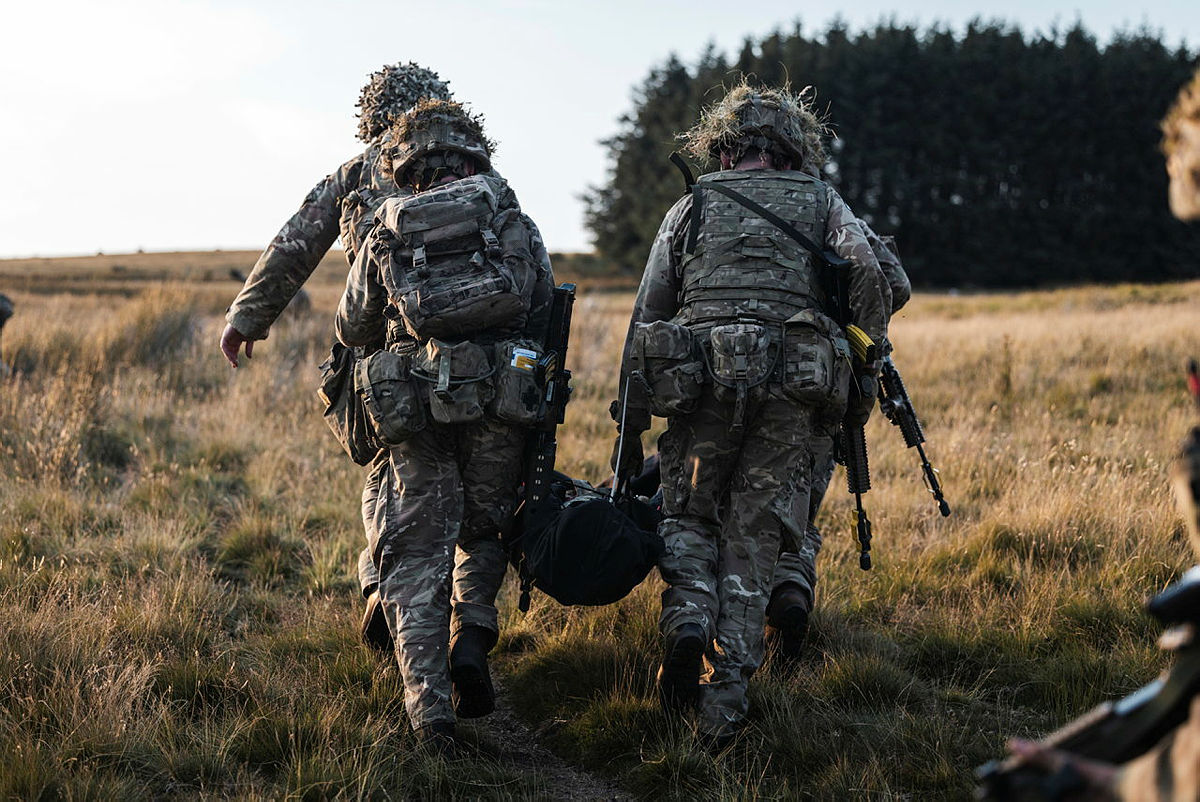
The Ministry of Defence has allocated up to £50 million over four years for battlefield medical equipment, blood products, treatments for severe bleeding and field hospital equipment as it seeks to rebuild Defence Medical Services capacity for larger-scale operations, the department has said.
The funding was set out in a written parliamentary answer to Conservative MP Stuart Anderson, who asked the Defence Secretary what capabilities were planned for the Defence Medical Services in terms of capacity and specialised medical care. Veterans and People Minister Calvin Bailey said the DMS supports Defence outputs across the Royal Navy, Army, Royal Air Force and Cyber and Specialist Operations Command, including NATO commitments, crisis response, strategic resilience and global competition.
Bailey said: “The Strategic Defence Review recognised the need to rebuild both medical capacity and capability within Defence to ensure our Armed Forces remain fighting fit in peacetime and are prepared to meet operational demands when at war.” He said the immediate priority was to make the best use of existing capability so that the Defence Medical Services could reliably provide the support required by the Armed Forces today.
The second priority is the modernisation of operational medical capability and the healthcare support needed to generate forces for deployment. Bailey said: “The second priority is to modernise operational medical capability and the healthcare support to force generation to meet the demands of contemporary warfare and evolving clinical practice. To accelerate modernisation, Defence has allocated up to £50 million through the Defence Investment Plan over four years, focused on delivering priority capability enhancements.”
Of that funding, £20 million has been allocated to Tactical Combat Casualty Care, providing kits for combat personnel based on the latest research into equipment intended to save lives on the battlefield. A further £10 million will be used to develop or procure dried blood products for use forward, while £10 million has been allocated to Tranexamic Acid, or TXA, to improve the treatment of severe blood loss. The remaining £10 million will go towards field hospital equipment intended to support combat operations at scale.
The MOD is also preparing for a longer-term expansion of military medical capacity. Bailey said: “The third priority is to prepare to expand medical capacity to deliver the Strategic Defence Review’s vision of enhanced warfighting readiness.”
According to the minister, rebuilding Defence medical capability will concentrate on four functions: “Medically preparing the Integrated Force; maximising deployable medical capability and capacity within available resources; managing scalable and adaptable Operational Patient Care Pathways from point of injury or illness to definitive care and rehabilitation in collaboration with allies and UK healthcare systems; [and] building on our world class military medical research to adapt medical advances to gain operational advantage.”











Cutting through the waffle, the RAMS remains stretched.
We are at least 2 Medical Regiments short, 4 Bde for example lacking any allocated, nor any of the DRSBs.
12,20,7,16 Bdes and the UKSF Group all have Medical support allocated, UKCF has elements as well, though not Regiment sized.
The 3 Regular Field Hospitals were cut to 2 some years ago, and renamed to MMR ( Multirole Medical Regiments ), is there sufficient MMR support for the newly expanded and prioritised 1 UK Division? Elements of one MMR are always allocated as Vanguard on HR/VHRA for out of area deployments. So if the other is allocated to 3 Division, what of the LSOF and the other deployable areas of the Army?
Further, and this has been noted by J many times, the many MMR founded by the Army Reserve, which in mobilisation form the bulk of 2 Medical Group, are stuffed with NHS staff, all of which will be required in UK hospitals if it kicked off in a big way with mass casualty attacks. So not deploying anywhere in reality in support of the ARRC.
On the plus side, the training centre at Strensall I read has been reprieved, and Whittington Barracks Lichfield invested in as the main centre of Medical Command and DMS.
We are absolutely and utterly down to the bone and bone marrow in all areas of defence! Governments of all shades hang your fucking heads in Shame! Shit may be going kinetic in the next 24 months and we are scrambling around trying to put a few sticking plasters on what is a neglected military, absolutely unable to defend this country at any level! While the people we have are the best, that are absolute cannon fodder on the alter of neglect, dis-interest and vote buying! If we could fight wars by getting the benefits recipients of every county to fight each other we would be fucking unbeatable!
Never again will I fight for this county overseas, while we have traitors and overtly UK hating scum in power. I would however fight any internal action, along with many many of my ex colleagues if needed, in defence of UK citizens, democracy and freedom. Make of that what you will!
Bravo.
And for that, you’re a racist and part of the “far right.”
No, just sick to the back teeth like so many millions of others and preparing for the unthinkable as HMG of all shades still sing from the Globalist hym sheet.
👊
Yeah, if after seeing some of the vile crap that is posted here by Mosley’s followers and you think that the reason people on the right are branded racists is because of their stance on the armed forces I don’t think there is much helping you.