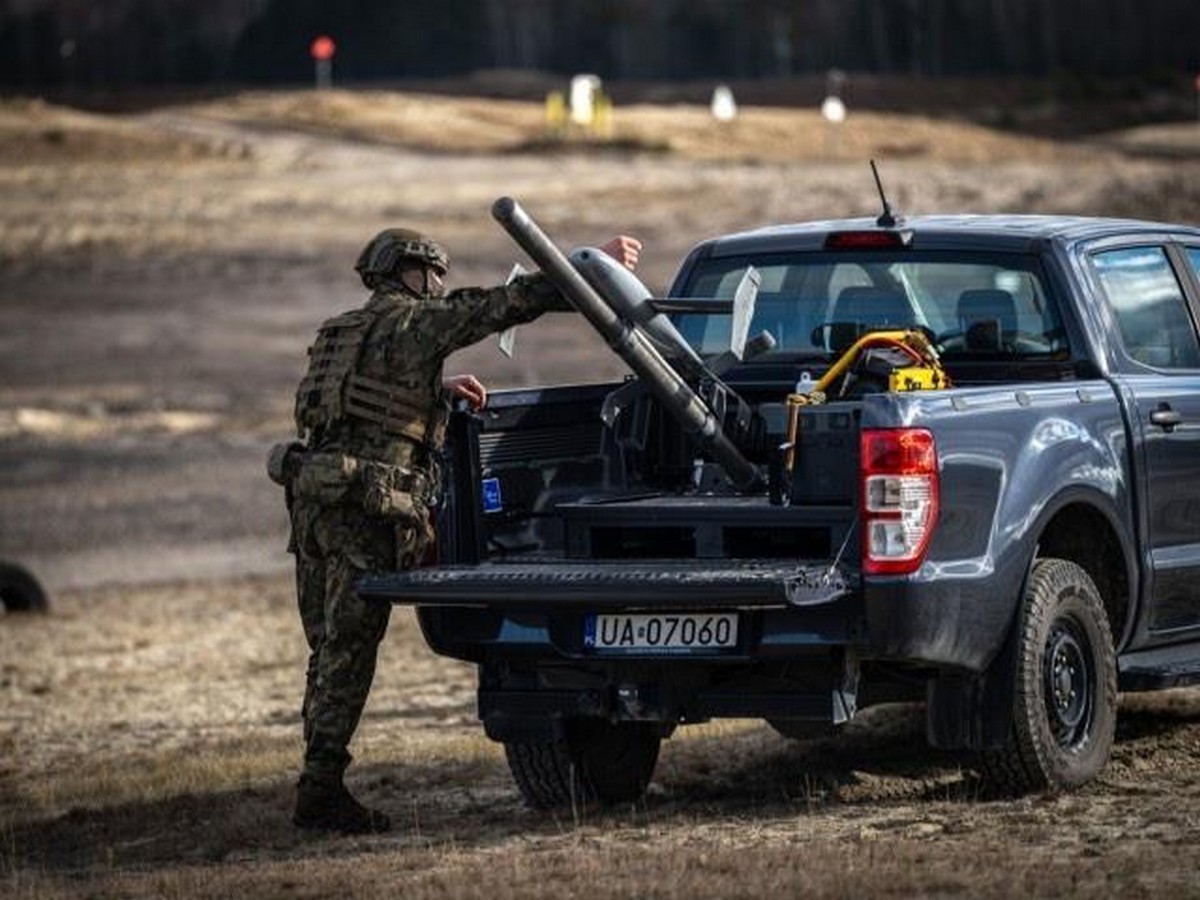
US, Polish and Romanian soldiers demonstrated a mobile counter-unmanned aircraft system in Nowa Dęba, Poland, on 18 November, highlighting allied efforts to respond to rising drone activity along NATO’s eastern flank, the alliance stated.
The live fire marked the end of a two week course that brought together air defence personnel from the three nations. According to the release, trainees worked with a system that combines radar, electro optical sensors and a small interceptor drone to detect, track and defeat hostile unmanned aircraft.
All major components can be mounted on a light tactical vehicle or pickup, allowing a four person crew to deploy or reload the system quickly.
During the demonstration, crews launched interceptors from a truck mounted system to engage surrogate drones and recovered them by parachute for reuse. Brigadier General Curtis King, who leads the 10th Army Air and Missile Defense Command, said the system is “very lethal, very effective, but the key piece here is that it’s cost effective.” He noted that the same interceptor type has been used in Ukraine and described it as “highly effective and lethal against one way attack drones.”
NATO presents the capability as a way to counter inexpensive unmanned aircraft without using long range interceptors required for higher tier threats. The release says combat employment in Ukraine has given allies practical performance data before fielding similar systems within NATO territory. Polish and Romanian officers cited recent airspace incursions and drone incidents as reasons for accelerating counter UAS efforts.
The course followed a train the trainer model. US soldiers from 1st Battalion, 57th Air Defense Artillery Regiment worked with Polish and Romanian participants through classroom sessions, simulator training and live launches. Graduates will form the basis of national training teams.
The event supports Operation Eastern Sentry and NATO’s Eastern Flank Deterrence Line, which seeks to connect ground based air defence, aviation, sensors and fires into a layered architecture. The alliance said short range counter UAS systems provide an initial defensive layer and help conserve more advanced interceptors for complex threats. Through shared training and planning, the participating forces aim to increase readiness and strengthen deterrence against the growing drone threat on the eastern flank.