

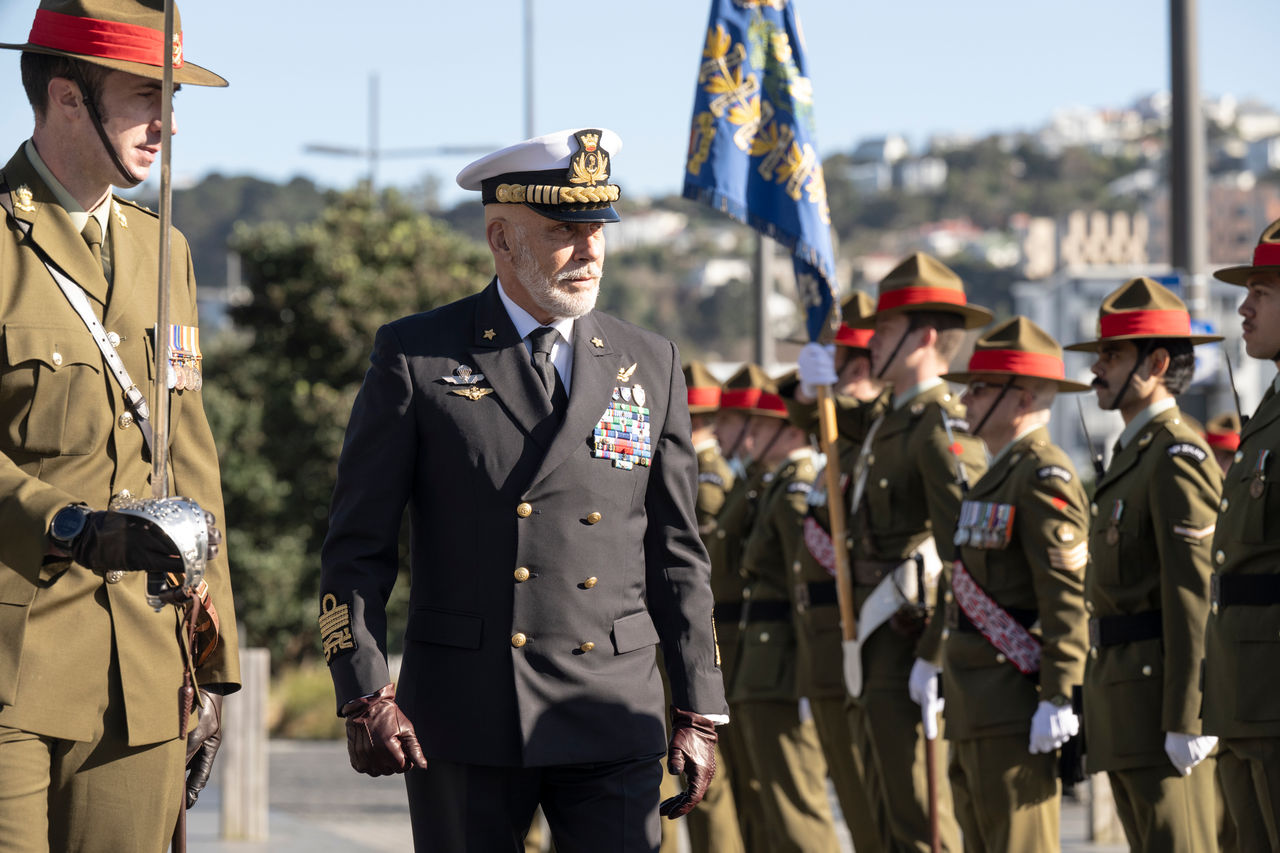
NATO’s senior military representative has visited New Zealand for talks on maritime security, cyber threats and interoperability as the alliance strengthens links between Euro-Atlantic and Indo-Pacific partners.
NATO and New Zealand are seeking closer military cooperation on maritime security, interoperability and emerging technologies following talks between the alliance’s senior military representative and political and defence leaders in Wellington, the UK Defence Journal understands.
Admiral Giuseppe Cavo Dragone, Chair of the NATO Military Committee, visited New Zealand between 23 and 25 August, meeting Prime Minister Christopher Luxon, Defence Minister Paul Goldsmith, Chief of Defence Force Air Marshal Tony Davies and other senior officials. According to a NATO news update, discussions covered freedom of navigation, secure sea lines of communication, cyber incursions and the military implications of emerging and disruptive technologies.
Maritime security featured prominently in the visit. During talks with Luxon and Taha Macpherson, Deputy Chief Executive for Policy at New Zealand’s Ministry of Foreign Affairs and Trade, Cavo Dragone discussed maintaining open and resilient maritime routes. NATO said the conversations reflected the importance of sea lines of communication to both European and Indo-Pacific security, particularly as military, commercial and strategic activity increasingly links the two regions.
The discussions place New Zealand within NATO’s wider network of Indo-Pacific partners rather than suggesting any change to the geographic scope of the North Atlantic alliance. Wellington is not a NATO member, but it has an established partnership with the organisation and has contributed to NATO-led missions and operations. NATO also cited New Zealand’s continuing support for Ukraine as an element of the relationship.
Cavo Dragone met Air Marshal Davies and New Zealand Secretary of Defence Dr Brook Barrington to discuss the military side of that partnership. NATO said improving interoperability and developing capabilities remain central to cooperation, with the objective of making it easier for New Zealand forces and those of NATO members to operate together when required.
Interoperability can encompass common procedures, communications, training and the ability of forces using different equipment to work within the same command structure. NATO has increasingly emphasised those areas in relationships with partners outside the alliance as it examines how security developments in Europe and the Indo-Pacific can affect one another.
The meeting with Goldsmith focused in part on common technological and security challenges. NATO said the alliance and New Zealand face overlapping concerns ranging from cyber activity to emerging and disruptive technologies, fields which are becoming increasingly important to military planning as armed forces expand their reliance on networked systems, artificial intelligence and other digital capabilities.
Cavo Dragone set out the broader strategic argument during a lecture at the Centre for Strategic Studies at Victoria University of Wellington. He said, as quoted in the NATO news update: “Euro-Atlantic and Indo-Pacific security are one conversation held in two time zones.”
The formulation reflects NATO’s growing emphasis on the connections between security developments in Europe and the Indo-Pacific without extending the alliance’s collective defence commitments to New Zealand. The organisation has developed closer political and practical relationships with several regional partners in recent years, with interoperability, resilience and technology cooperation among the areas receiving increased attention.
For New Zealand, maritime security is particularly relevant given the country’s dependence on long-distance trade and its position in the Pacific. The discussions on freedom of navigation and resilient sea routes therefore connect NATO’s concerns about maintaining transatlantic reinforcement and commercial routes with New Zealand’s own interest in secure maritime communications and access across the Indo-Pacific.
The NATO Military Committee Chair also took part in a wreath-laying ceremony at the Hall of Memories in Pukeahu National War Memorial Park during the visit. NATO said the wider programme was intended to reinforce a partnership based on shared security interests and continued practical military cooperation.
The visit concluded with both sides maintaining their focus on closer interoperability, capability development and coordination on security challenges affecting the Euro-Atlantic and Indo-Pacific regions, while New Zealand continues its role as a NATO partner rather than an alliance member.


lol here ne pal
some graphic images be aswell getting over there and cleaning that up more ways 1
Small nation sitting miles from nowhere,probably getting a bit lonely aren’t they.
Was wondering what NZ brings to the table that could be of interest to NATO! There’s no doubting the quality of the soldier they produce, but when it comes to capabilities I think they are marginally better than Ireland. Actually, thinking about it, NZ is probably one of the rare countries that makes the Irish Military look good. They have no Air Force or Navy to speak of and the Army consists of 2 Regular Infantry Battalions and 24 L119’s. Base wise, I don’t see much they can offer that Australia already hasn’t.