

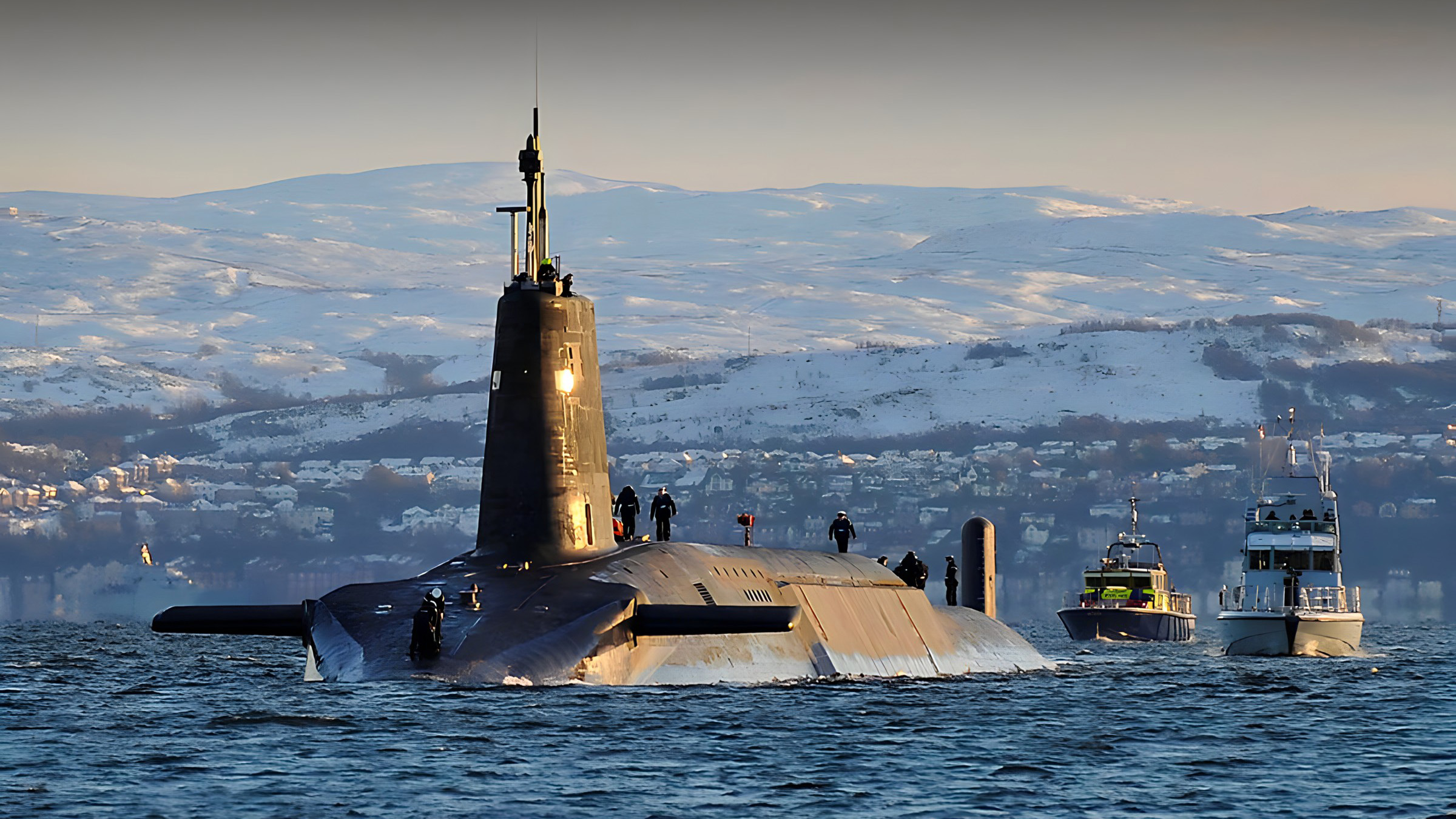
The government has no plans to publish whole-life nuclear weapons cost forecasts, citing national security, while the Defence Investment Plan provides £63.6 billion for the Defence Nuclear Enterprise between 2026-27 and 2029-30, according to Lord Coaker.
Baroness Blower, a Labour peer, asked whether whole-life forecasts of nuclear weapons costs and the proportion of the defence budget spent on nuclear weapons would appear in future annual updates.
Lord Coaker, Minister of State at the Ministry of Defence, replied: “The Defence Investment Plan provides for £63.6 billion of investment in the Defence Nuclear Enterprise between 2026-27 and 2029-30. The Government does not publish detailed spending figures or forecasts relating to nuclear weapons or wider defence nuclear capabilities for national security reasons. Accordingly, there are no plans to include such information in future DNE Annual Updates or other public reporting. High-level financial information will continue to be published through departmental financial reporting.”
Baroness Blower also asked what assessment had been made of public understanding of the deterrent and what funding had gone to public engagement on nuclear policy in each of the last three years. Lord Coaker replied: “The Ministry of Defence assesses public understanding of the UK’s nuclear deterrent through polling and evaluation of its communications activity. While public support for the nuclear deterrent remains high, polling indicates there is scope to increase public awareness of the nuclear deterrent, including the programme to build new submarines and replace the UK’s warheads. The Ministry of Defence engages the public through the National Endeavour communications campaign, which aims to improve understanding of the Defence Nuclear Enterprise and its contribution to national security and economic growth. As a Government Communication Service low/no-cost campaign, no specific funding has been allocated to it for public engagement on nuclear policy.”
Jeremy Pocklington, the department’s Permanent Secretary, told the Public Accounts Committee in March that the Defence Nuclear Enterprise is on course to take “between about 20% and 25%” of the overall budget, the UK Defence Journal reported, after about £10.9 billion, or 18 per cent, in 2024-25.
A new Commons-only committee appointed by the Prime Minister will scrutinise spending and programmes across the enterprise, according to the annual update on Strategic Defence Review recommendations published in September. The update said the aim is to give the public “the confidence that taxpayer money is being spent wisely on this critical area.”








Of course not, as it is eating Defence alive and HMT won’t want it sent back from MoD core budget.
One day the Defence Budget will be wholly consumed by the CASD/DNE, what happens after that?
You’re not wrong, my friend. Roughly £16 billion a year for the next four years which is about the same as the total spend on the three services combined.
£63.6Bn over three years is a huge % of the defence budget.
The truth is that it would not go up a lot if we ran 2x the number of SSN (OK crew costs do).
The cost of running the minimum is not the minimum per unit but the maximal cost per unit!
Problem is that while parsimony and grandiosity rule KO then…..the lack of depth in our forces due to perfectionism is unbelievable. Conversely I don’t think that the issue is purely about UK designed and made….France is very nationalistic in its purchasing and it achieves far more bang per Euro.
In the end France jacks it military nuclear establishment of the back of its civilian nuclear, it’s made it a hell of a lot cheaper.. we could not because.
1) thatcher and then major fucked the county over by pausing any new nuclear power plants in 1989 and then in 1995 saying the government would never again provide support for a nuclear power plant leaving it to the markets to build them if they wanted.. no market is ever going to build a nuclear power plant.. so the fucking idiots essentially sent the UK down the gas dependency route.
2) the navy had a snot on about using LEU and insisted on using HEU.. probably because the Americans use it..
Together these two facts make the UK military nuclear establishment hugely expensive for the mass of assets we actually build and operate.
Personally I think we would have been better going down the LEU or MEU route.. just like everyone apart from the US…as it’s cheaper and easier to manage.
I hate to contradict you but…..Thatcher commissioned a fleet of nuclear stations…..which Major, under pressure from environmentalists, cancelled.
Blur liked nuclear; Brown didn’t; PLP didn’t.
Hi supportive, sorry mate, but thatcher essentially changed her mind due to costs and in 1989 put a 5 year moratorium on all new nuclear power stations, she then commission a five year study on the future of nuclear that was to publish in 1994/5.
This was because of the electricity act of 1989, the statutory tool for the privatisation of electricity in the Uk. Essentially as part of this work they found that nuclear generation was massively more expensive than new coal or gas and essentially it could not fit in the privatisation model.. so they put in the moratorium to allow the privatisation as nobody was going to buy into the requirement to build new nuclear as a private enterprise.
The follow on studies essentially firmed this up and the only way to get new nuclear builds was to essentially give massive government subsidies.. the major government decided this was against the neoliberal ideology that privatised power generation and our generating model should be governed by market forces.. essentially fucking the UK big time.
I did a lovely essay on the fall of UK nuclear power generation and its future dependence on hydrocarbons, when I did my first degree in environmental science way back in 1992.. I thought it was a stupid move when I did the research for the essay and was sadly proven right.
The origional papers are now in TNA – well worth a look.
The reason for the study was the explosion of cost of unit #1 – sound familiar?
One of the issue was the way DNE was part funded from electric bills in MAGNOX times.
I will have a good look, as not done any reading on it for a very long time. Nuclear power was my favourite thing when I was young and studying environmental science ( I had a bit of a plan to do environmental impact assessments for the nuclear industry )…
It’s almost as if they don’t want the costs of anything coming out isn’t it?
Because the British public would loss their utter shite if the full life to disposal ( a 100,000 year process) of an SSN or SSBN was ever published.
After all we have not even built our Deep Geological Disposal Facility yet and that’s a 50 billion pound check we owe but have still not payed.
There are some things it is fine to share. This is not one of them. Silly question.
Why not?
Because the British public would utterly and completely loss its mind when it finds out the whole life to final disposal cost of an SSN or SSBN
… after all most of the public are unaware we have not yet even built the Deep Geological Disposal Facility we need to bury the reactor vessels in.. and that’s a 50 billion pound check that some government over the next decade or so is going to have to right.
Nonsense. Lot of guess work there Jonathon probably well wide of the mark.
That’s the estimate for the DGDF, 50 billion is a middle road estimate, Nista’s Infrastructure Pipeline lists the GDF’s capital expenditure range for new infrastructure in 2024/2025 prices as being from £26.2bn to £68.7bn.
Governments decide how much information it wishes to share depending on the security considerations. Don’t think you are going to find any sensible person with any serious knowledge from any western Government even thinking about sharing anything other than top line figures.
Imprecise questions from the Baroness. Instead of asking for the ‘whole-lfe cost’ of nuclear ‘weapons’ and what proportion of the defence budget they represent, she could have usefully asked what the future budget is for the DNE programme and what proportion of the defence procurement budget it represents.
‘Nuclear weapons’ are just one element of the DNE programme. As well as the new warheads, the DNE includes the cost of building 5 submarines, ( 1Astute, 4 Dreadnoughts), plus some part of the development costs of SSN-A, the floating dry docks at Faslane, some or all of the F-35A procurement costs, the decommissioning of nuclear subs at Rosyth and Devonport, the cost of refurbishment and re-equipping at Aldemaston and so on.
HMG and MOD regularly trot out that Defence Nuclear will rise to 20-25% of the defence budget. This is a Yes Minister kind of answer. The key question is how much of the defence procurement budget is ot gobbling up? I had thought 40% but have revised that to think closer to 50%. Nicholas Drummond showed in a pie chart on X last week that it was 50%, though that wasn’t broken down by detail.
It means for every £2 on the table,
– £1 goes on aircraft, RN ships, Army vehicles and artillery, joint RAF/Army helicopters, weapons, munitions and now a whole bag of unmanned UAVs and naval platforms.
– The other £1 goes on the independent nuclear deterrent and 7 SSNs.
No wonder we cannot afford half the replacement kit we need, the money is all being siphoned off to provide the ultimate, if probably unusable, last-gasp deterrent! And, in the view of many in the Whitehall corridors of power, to buy our way into our permanent seat on the UN Security Council, so we get to punch (far) above our weight! I suspect that the select committee being set up to examine the DNE will have something to say on the matter of affordability and value.
I don’t know why the defence spokesmen go round in circles about the long-tetm cost of Defence Nuclear. It is published that the DNE budget for 2026/27 to 2034/6 will be £124 Bn, so £8bn this year and £16 bn every year thereafter.
Just imagine what each service could do with an extra £5bn every year for its equipment budget, we’d be on a war footing pretty quickly!
We need to share out these colossal nuclear costs among our ENATO allies, who our independent deterrent is pledged to defend.
Good post, fully agree.
But if allies chip in, then it’s not really independent anymore, and they will want their say on the matter, and possibly its use.
Mr Micron set the bar on that argument…..when he said, with typical Gallic modesty, that it would always be for the President to decide on the usage of the Force de Frappe….but others are welcome to pay for it and some aircraft carriers….provided they are French toys.
Sounds about right. Although very expensive. I’d rather keep the deterrent well and truly in our hands.
There is that, certainly Robert.
There are however sensible ways to find a middle path through. One off-the-wall idea might be:
– We and France embed our deterrents in a combined ENATO force
– We look to grow the force from 8 to 10 SSBNs, by encouraging the two largest non-concontributors, Germany and Italy, to acquire and man one SSBN each. We and France can build these.
– Decisions on their use would be by one vote per boat in the controlling committee, so UK gets 4 votes, France 4, Germany 1, Italy 1, with a 2/3rds majority required to order a nuclear strike. (It will be clear that only the UK and France together could achieve that 2/3rds majority)
– Each country would retain the right to launch its own missiles, from its own boat(s), at their own risk.
(Hence no collective launch or threat to
launch could take place without UK consent).
– A 1% levy on all other EU members’ defence budgets, in recognition of the benefit they gain from the joint ENATO nuclear umbrella, would be more than fair.
Some arrangement like that which reduces the costly nuclear millstone and gives us a controlling position regarding use, which would be quite good enough for me.
I would be less bothered about ‘independent’, if the UK ever fired our Tridents in anger, the homeland would likely be obliterated minutes later.
That is one idea, if you don’t like it, well I have others….!
Seriously though, we need the rest of Europe to make some useful contribution to the nuclear costs borne by the UK and France, which would enable us to switch a chunk of the massive DNE budget back to the main task of upping our spend on conventional weapons and equipment.
Agree on one point, not on another.
Totally agree that the costs of nuclear weapons and associated infrastructure should be taken out of the MoD budget. It’s killing it. The Navy may well be responsible for operating the subs which carry it, but nuclear weapons are a profoundly political beast. Once a conventional war starts, then subject to rules of engagement and stated aims, the military are basically allowed to let off their firecrackers largely as and when they need/want/choose to. By contrast, barring a “letters of last resort” scenario, fire authority for nuclear weapons always rests with the civilian political leaders, not the military leaders.
Nuclear weapons should have their own line in the public spending accounts in the way the NHS for example does. They should not be allocated to / come out of, the defence budget. If the government don’t like that, or don’t want to recognise the political nature of nuclear weapons, they can give them up. Obviously lots of other issues would flow from such a decision!
Where I don’t agree is the comment about sharing the nuclear costs among our ENATO allies. The minute you do that, you open the door to the very valid argument that those paying directly for the UK’s nuclear weapons costs should have a say in their use (or non-use!) and everything do to with them. That could be overt – for example Spain, Italy or Germany agitating to be in the firing loop if they’re paying for these weapons (they might already be, obviously, via the whole NATO C&C structure, but this would be a potential separate issue), or it might be more subtle – Germany saying for example, “We’ll happily pay towards the costs of updating and maintaining your docks, berths etc for your nuclear subs, but the work will be done exclusively by German companies, using German workers”, A bit like the old “tied aid” wheeze with the third world. That creates a security and vetting nightmare, and leads to tax revenue flowing out of the country. Long term, it also means the atrophying and eventual disappearance of your ability to do this kind of stuff yourself.
It also opens up a complete can of worms in the other direction if you establish this principle. Germany and Poland might say, for example, “Well, it’s our boys and girls and armoured vehicles which will bear the initial brunt of any Russian armoured assault from the east, so you UK, need to contribute towards the costs of training and equipping our armies”.
You might say “OK, well, we’ll just do in reverse to the Germans and Poles that the Germans did to us with the deterrent – we’ll make them buy UK manufactured kit (Ed: no sniggering at the back there!) and armoured vehicles”.
Unfortunately, I don’t trust UK governments of either the red or the blue persuasion to look after UK economic interests like that – you just need to look at how they all negotiated over Brexit and the proposal now to rejoin, where HMG’s approach seems to be “We’ll be jolly sporting and give them everything they ask for first, and trust that they reciprocate instead of acting like a bunch of cads and bounders”.
The current setup works – our weapons are pledged to NATO already, but we bear the cost alone. The upside of that is that we retain operational control and, in extremis, the ability to use them independently in the case of “supreme national interest”.
I don’t think we want to do anything that would start to chip away at that, or invite an argument about chipping away…
A very good, well argued post. Thought provoking…I hope.
In 1946, Ernie Bevan, the Labour foreign secretary, insisted Britain had to have its own nuclear deterrent and all major parties have retained that commitment. But since the Nassau agreement, we have been locked into the most expensive element of the nuclear triad- submarine launched ICBMs and we are entirely dependent on the USA to supply and maintain the missiles themselves. Once committed to SSBNs, it is logical that we decided on an all nuclear attack submarine fleet.
But the costs of this approach have risen far faster than wider inflation of military equipment costs. Arguing about whether these costs should be separate from the general defence budget is irrelevant: it all has to be paid for.
So the better question is whether our commitment to SSBN is the best or only way to achieve its one simple objective- to be so damaging in retaliation that a nuclear attack on Britain is unthinkable.
The most powerful argument for SSBN is their immunity to a pre-emptive attack. Any other system would need to operate in a fire on warning mode. But how important is a second strike capability if the country has already been destroyed? If used, it has already failed. Is it not time to rethink how we could have an effective deterrent at lower cost? Long range stealthy cruise missiles will penetrate most defence systems and could be launched from a variety of platforms.
Bevin.