Swedish Air Force fighter jets were scrambled on 22 January after Russian long-range aircraft approached NATO airspace during a patrol over the Baltic Sea.
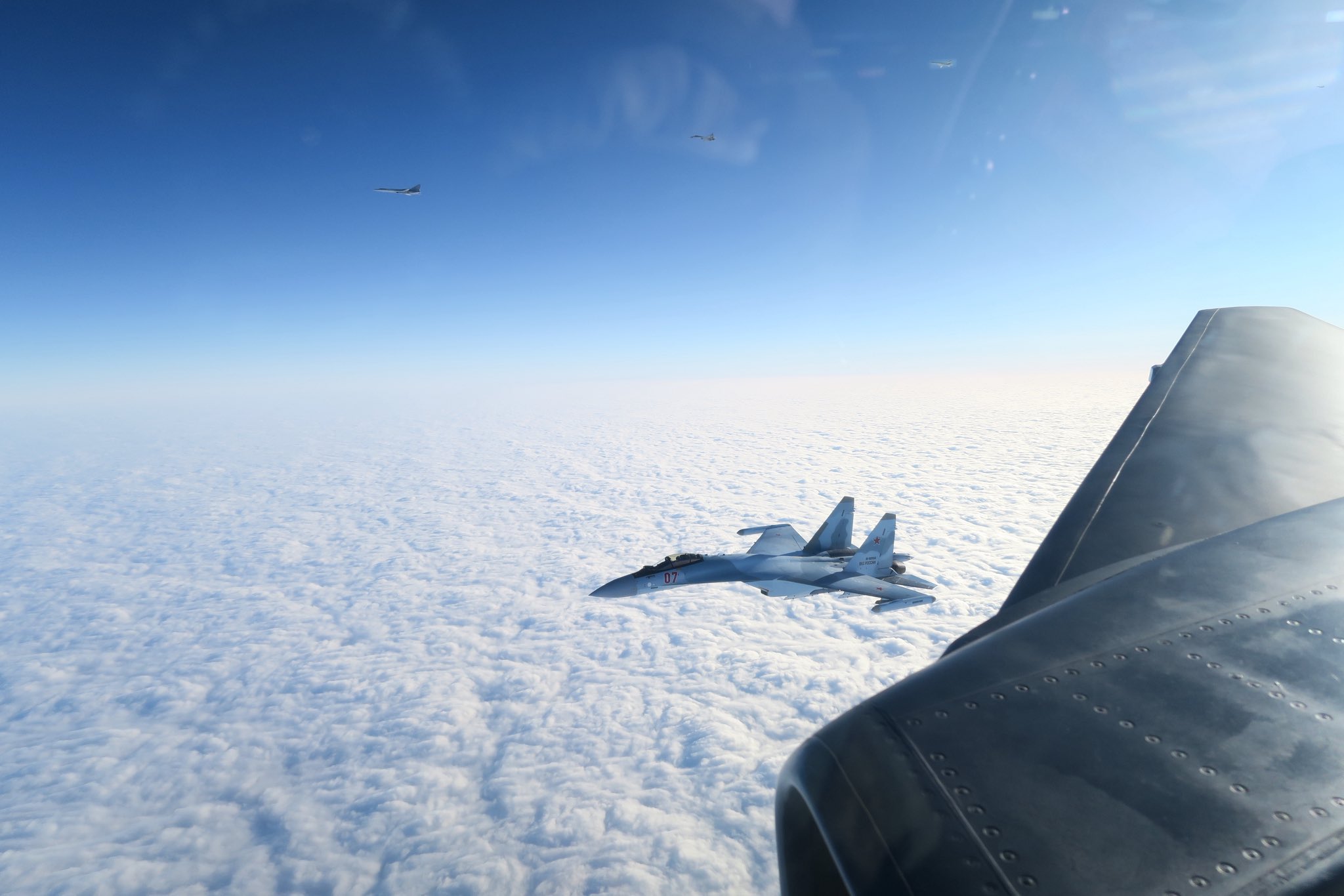
According to Sweden’s Armed Forces, Quick Reaction Alert Gripen fighters were launched to identify and shadow a Russian formation consisting of a Tu-22M3 bomber escorted by Su-35S fighters. The aircraft were operating in international airspace but close to NATO member states bordering the Baltic. Images released by Försvarsmakten showed the Swedish aircraft flying alongside the Russian formation as part of standard air policing procedures. Officials said the intercept formed part of routine readiness activity as Russian long-range aviation missions continue to increase in frequency.
Russian defence officials later confirmed that two Tu-22M3 bombers had departed Olenya Air Base on the Kola Peninsula earlier that morning, flying south along Russia’s border with Finland before entering international airspace over the Baltic Sea. Moscow described the sortie as a scheduled flight conducted over neutral waters. During part of the mission, the bombers were accompanied by Su-35S and Su-30SM fighter aircraft, according to Russia’s Ministry of Defence.
The flight marked the second known Tu-22M3 bomber mission over the Baltic in less than two months, as Russia continues to demonstrate long-range strike capability in regions bordering NATO territory. The aircraft flew in proximity to the airspace of Finland, Sweden, Estonia, Latvia, Lithuania and Poland.
Video footage released by Russian authorities showed at least one bomber carrying a cruise missile under its wing at take-off, indicating the aircraft was not flying in a clean configuration. The Tu-22M3 is capable of carrying Kh-22 and Kh-32 supersonic air-launched cruise missiles with ranges of up to 1,000 kilometres, weapons that have been used extensively during strikes against Ukrainian infrastructure.
The Tu-22M, known by NATO as the Backfire, is a supersonic long-range bomber originally developed for maritime strike and strategic attack missions.