

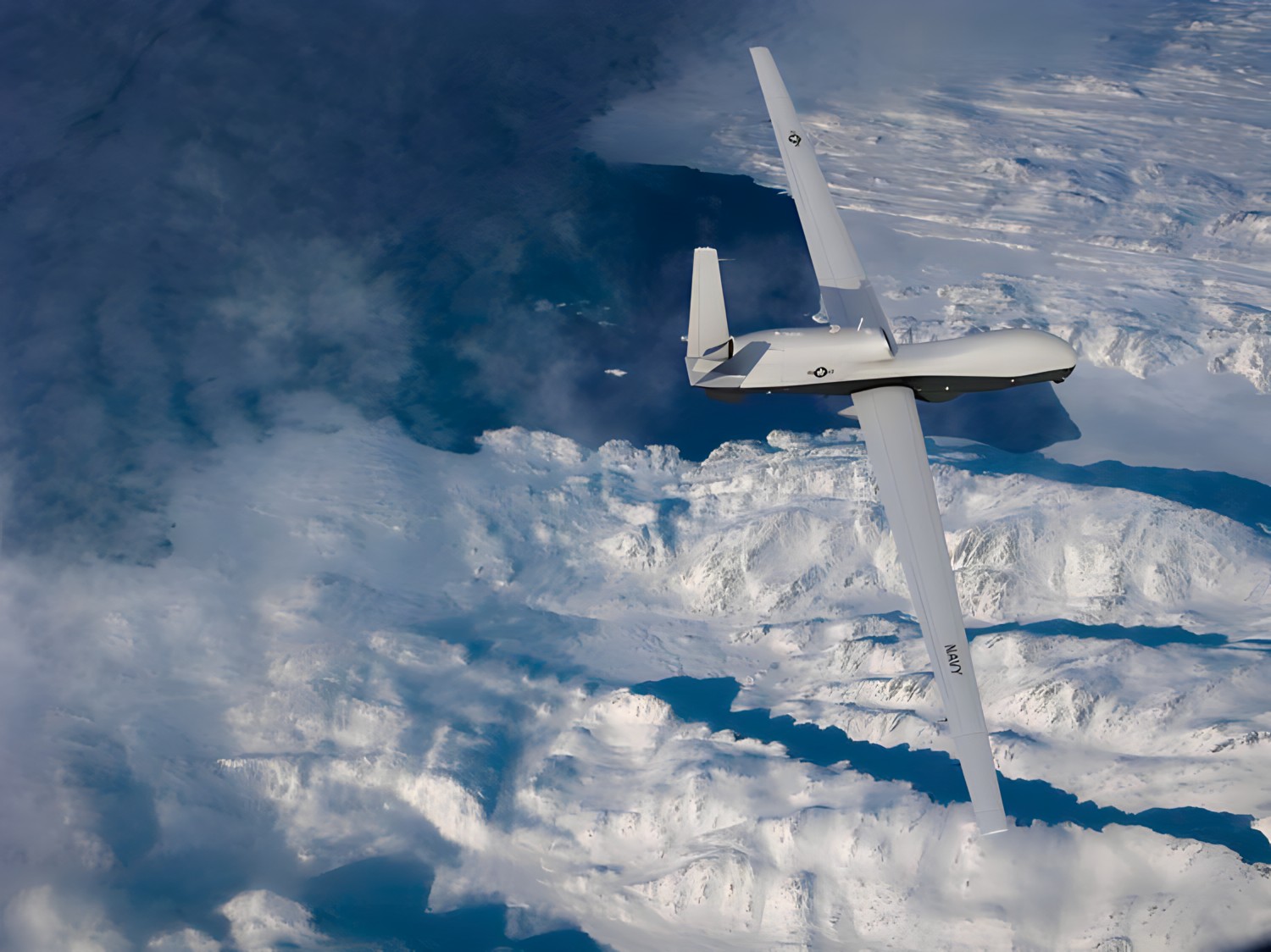
NATO has launched a new enhanced vigilance activity in the Arctic and High North, warning the region is increasingly becoming a front line of strategic competition as climate change opens new routes and drives greater military interest from Russia and China.
The initiative, named Arctic Sentry, was announced by Allied officials ahead of this week’s NATO Defence Ministers meeting in Brussels and is designed to bring together and better coordinate NATO and national activity across the northern theatre under a single framework.
A senior NATO military official told myself and other journalists that the Arctic was “no longer a distant frontier” and argued that shifting environmental and geopolitical conditions meant the Alliance had to increase its focus on the region. “The Arctic and High North are no longer distant frontiers. They comprise a region of growing strategic importance,” the official said, warning that melting ice is creating both opportunities and risks. The official said the Arctic is warming almost four times faster than the global average, opening new shipping lanes and shortening trade routes between Asia, Europe and North America.
However, the official said this had also increased the strategic value of the region and was accompanied by a rise in Russian military activity and China’s growing interest. “With this opportunity comes risk,” the official said, pointing to “increased military activity from Russia” and describing Beijing’s presence in the region as expanding, including through investment in polar infrastructure after declaring itself a “near-Arctic state”.
The official said Arctic Sentry would not represent an offensive posture, but would instead provide a defensive and transparent structure intended to increase NATO’s awareness and coherence across the vast operating area. “Arctic Sentry is not an offensive posture. It is a defensive, transparent and cooperative framework,” the official said, adding that it would allow NATO to be “more connected, more aligned and more agile to Arctic security threats.”
The official said the activity was intended to improve NATO’s understanding of the operating environment and bring existing national efforts under a broader NATO umbrella, with some national activity expected to transition into NATO-led activity over the coming months. Asked whether Arctic Sentry was focused specifically on Greenland, the official rejected the suggestion, saying it was intended to cover the wider Arctic and High North rather than a single territory. “This is not simply about Greenland,” the official said.
When pressed on what tangible incident had triggered the initiative, the official said it was not prompted by a specific event such as undersea cable sabotage, but instead reflected longer-term strategic shifts. “There was no cable cutting to prompt this,” the official said, adding that NATO’s Supreme Allied Commander Europe has authority to initiate enhanced vigilance activities without a single triggering incident.
The NATO Secretary General later echoed the messaging during a press conference, stating that Russia’s increased military activity and China’s growing interest in the High North meant the Alliance needed to do more. He said Arctic Sentry would bring together exercises such as Denmark’s Arctic Endurance and Norway’s Cold Response, involving tens of thousands of personnel, under a single operational umbrella.
Responding to a question on whether the move was simply a rebranding of existing efforts, the Secretary General said the key change was that NATO would now coordinate Arctic activities “under one command”, enabling a clearer understanding of capability gaps and allowing them to be addressed more quickly. “For the first time now, we will bring everything we do in the Arctic together under one command,” he said.





Oh, Ho ho ho I get It lol.
Bit late for Santa.