

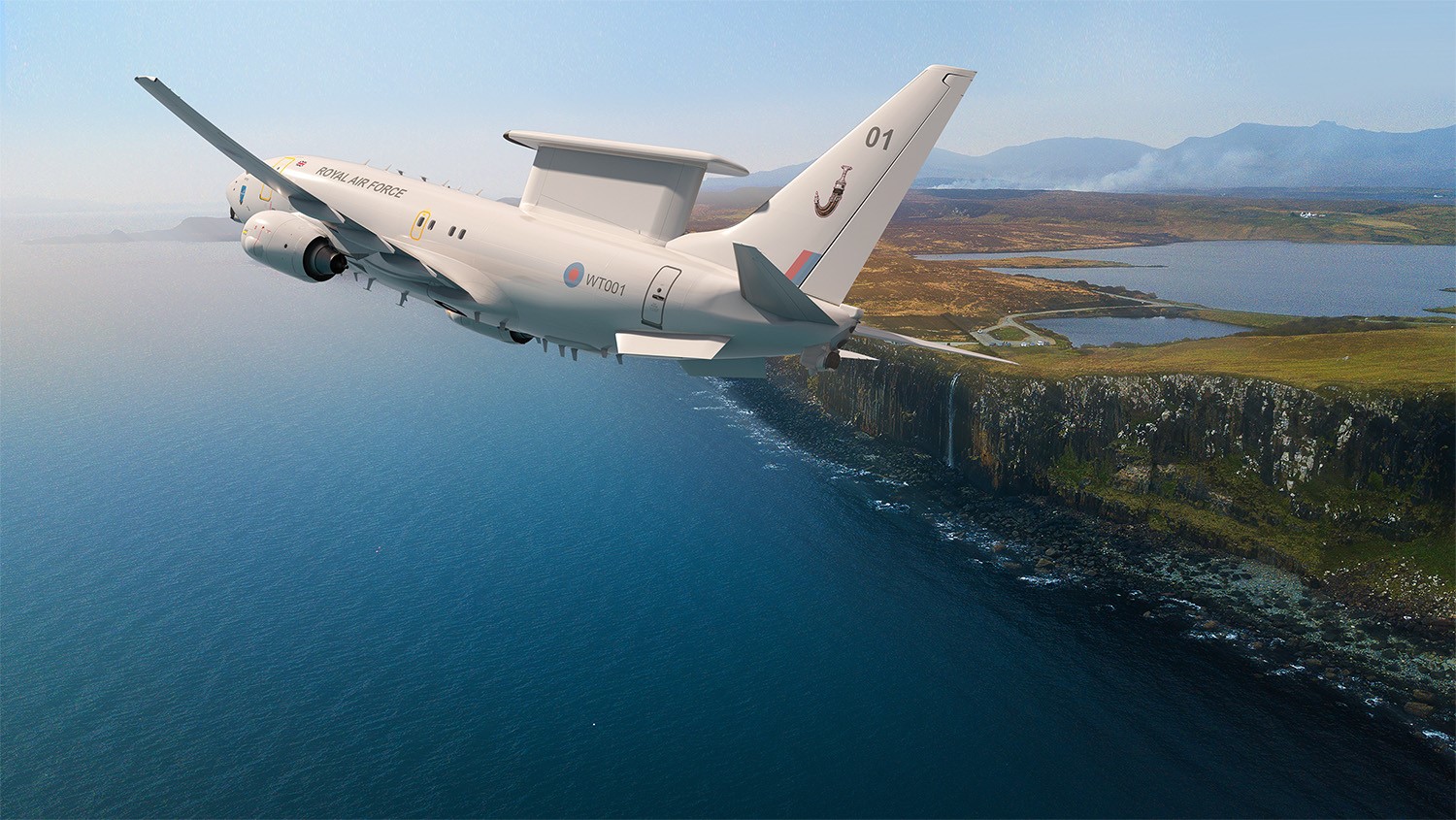
Defence Equipment and Support has signed a £269,557.69 contract with Jeppesen UK for navigation and flight planning services to support the Royal Air Force’s E-7 Wedgetail airborne early warning aircraft, according to a contract details notice published on Wednesday.
The notice describes the requirement as “the procurement of Jeppesen and ForeFlight Services to support the E-7 Wedgetail AEW Mk 1”. The contract was signed on 14 September and runs until 14 September 2027, and was placed below the relevant threshold without competition under the defence and security regime.
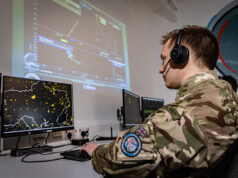
Jeppesen provides the aeronautical charts, navigation databases and terminal procedures that aircraft flight management systems and crews depend on, updated on a regular cycle as airspace and airfield information changes. ForeFlight is flight planning and electronic flight bag software, used by aircrew to plan routes, carry charts and brief sorties on a tablet rather than on paper.
The work is classified in the notice under the common procurement vocabulary code for air traffic control software packages, and the supplier is recorded as Jeppesen UK Limited, based in Crawley in West Sussex, with the contract managed by the E-7 team within the Air ISTAR area of Defence Equipment and Support at Abbey Wood.
The Wedgetail AEW Mk 1 replaces the E-3D Sentry, which the Royal Air Force retired in 2021, and gives the service back an airborne early warning and control capability built around a Boeing 737 airframe carrying the Northrop Grumman Multi-role Electronically Scanned Array radar. The radar sits in a fixed dorsal fin rather than a rotating dome, and can concentrate its search on particular sectors as well as providing all-round coverage.
Britain originally ordered five aircraft in 2019, a figure reduced to three in the 2021 Integrated Review. The fleet is based at RAF Lossiemouth in Moray and operated by 8 Squadron, with the conversion of the airframes carried out in Birmingham.
The aircraft featured in Parliament this month in a separate context, when Ben Obese-Jecty, the Conservative MP for Huntingdon, named the E-7 as one of four types in British service that can only be refuelled in the air by a boom, alongside the P-8A Poseidon, the RC-135W Rivet Joint and the future F-35A, and asked what assessment had been made of the demand for that capability.
Luke Pollard, Minister of State for Defence Readiness and Industry, replied that the Royal Air Force currently operates a probe and drogue system and will complement it with the development of a boom system, which he said will ensure a sovereign air-to-air refuelling capability for the future fleet and enhance interoperability with NATO allies.






So a whiteboard in the WinCo’s office isn’t enough for the little darlings these days?
It is the over management fallacy that pervades British thinking.
If we do things in a highly complex manner it must be better?
OK part of the problem is that we have a culture that abhors failure of any kind and like to hang anyone out to dry who fails. So the mission planning with be a massive piece of ass covering.
What happened to chalk?
Conversely, Saab’s GlobalEye radar is limited to 300 degree coverage (150 degrees on either side), leaving 30 degree gaps in front and and behind the aircraft.
3 aircraft aren’t enough
It the two (#4&5/5) spare radars are still sitting around somewhere then just two extra planes needed.
I would guess these two radars were part of the deal for STS Aviation to build two E-7s for the US… not that they would ever tell us.
“The UK remains open to exploring all opportunities for future E-7 Wedgetail procurement, subject to the availability of funding.”
Pollard in parliament Sept 8th. 🤞for the budget then?
3 is not enough. But on the bright side WT001 was flying from Lossie this week and WT002 in uniform and at Boscombe Down and hopefully will soon be heading north, Anyone know about WT003?
I spotted WT002 on the airfield at Boscombe Down on the way past on Saturday. Barely visible among all of the C17s and A400s moved down from Brize.
Which bit does the 69 pence buy?