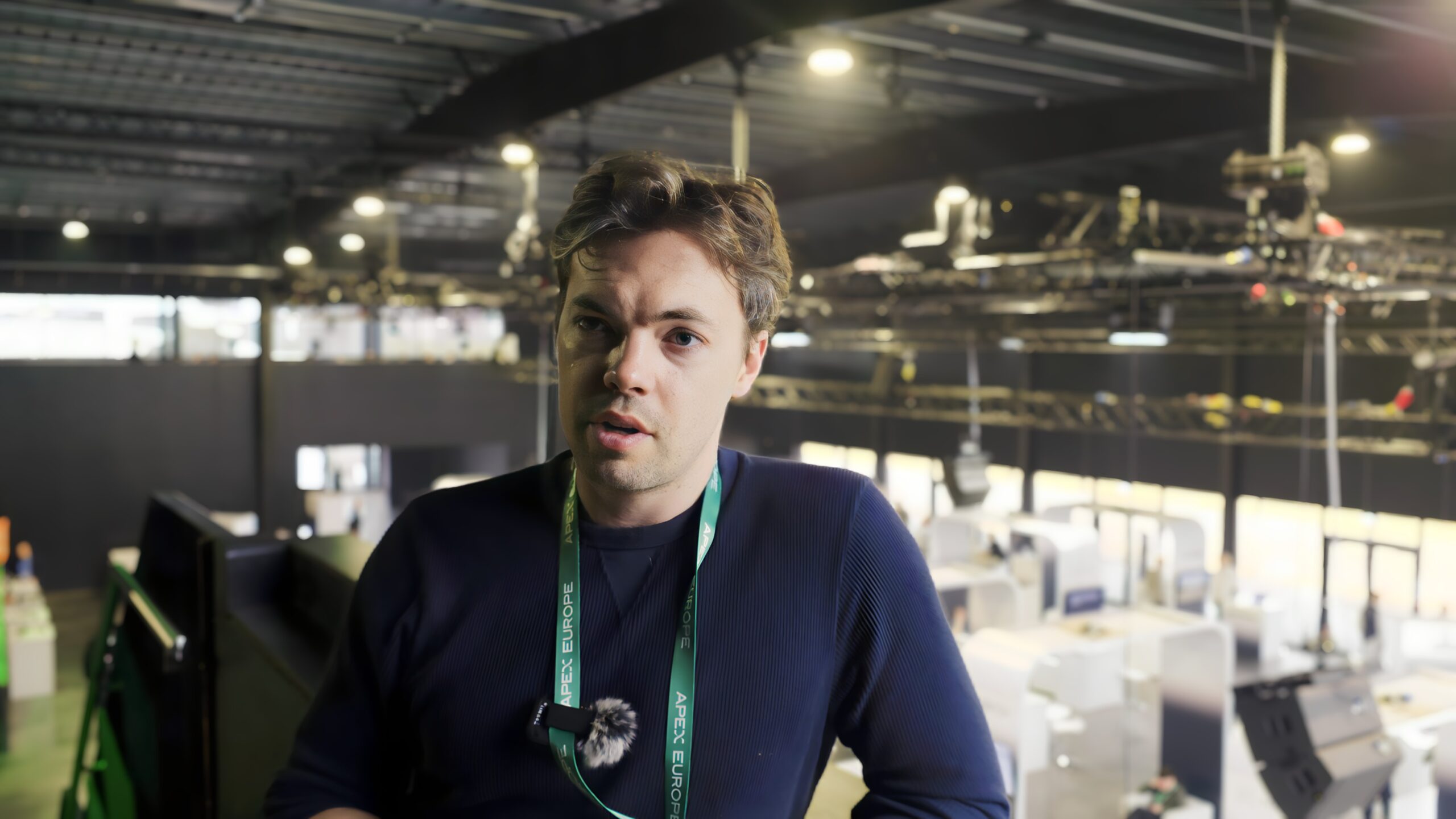
A British analytics company wants the cameras already watching the country’s critical sites to recognise hostile activity for themselves and pass what they see between each other, with no new hardware installed anywhere, co-founder and chief executive Harry Mead told the UK Defence Journal at the Apex Europe conference in London.
Asked to describe the company, Mr Mead said: “We are a national security analytics platform dedicated to integrating and connecting legacy sensor networks and pushing to the absolutely cutting edge for the purposes of beating the innovation curve of adversaries when it comes to threats to critical national infrastructure and our national security at large.”
“It’s not just visual sensors. We really can integrate any sensor or any source of structured or unstructured data, but I think there’s a huge opportunity to start with in just making our visual sensors, our CCTV, and our cameras smarter,” he said.
He put the number of attacks on critical facilities by Russian actors at around two hundred between February 2022 and April this year, with a further hundred and twenty since, a rise he described as forty per cent over six months. “This is the new playbook, and a lot of this can be spotted by an operator who is watching the right monitor at the right time,” he said.
“But the problem is, on average, we’re looking at 10,000 cameras to every one person who’s able to monitor them. We just don’t have the ability to keep an eye on every single threat that is facing us, whether it is our critical infrastructure or our streets, our transportation, our energy grids,” he said.
“For Augur, we integrate with these systems, and we change the way they reason about physical space, about human movement through physical space, and also what is anomalous behaviour,” he said. “You’re essentially creating a world in which these cameras can reason as a human would, and then talk to each other. So you’re able to create a huge level of networked intelligence.”
Asked where the company would be by the time Apex comes round in 2030, Mr Mead said the current work is integrating with as many parts of critical infrastructure as humanly possible, and the step after that is the networked piece.
“If someone does set fire to an energy grid or attack a vulnerable community, they’re not able to then rely on the fact that the state can’t conduct a fire investigation for two, three weeks, and they get out of country,” he said. “We can stop their movements there and then, and we can get a response immediately to that. We can massively improve the safety of everyday citizens and our national security without changing a single device.”
“And this is, I think, the critical final point. We do not have time to install new hardware when it comes to sensing architecture. The number of threats, the number of attacks, is just too vast. We have to learn to do more with what we’ve got, and that is the whole point of Augur. It’s taking what is existing and future-proofing it for decades to come.”
On what a customer gets by coming to Augur, Mr Mead put the weight on proving it in front of them. “First and foremost we aim to build trust with our customers. So instead of telling them this is what we do, this is what you get, trust our word for it, we say to them, give us a challenge nothing’s been able to solve, or tell us some things that your current system does not do well, and where your vulnerabilities are, and give us a week,” he said.
“And in one week, I guarantee we can turn around and show them how we can solve it, and we can integrate. Even if we’re not doing it yet, we can integrate a new capability that will solve that. That willingness to show that the technology works, but also that we’re there to solve their problems, not tell them what their problem should be, develops a real sense of trust and a real desire to use the application.”