

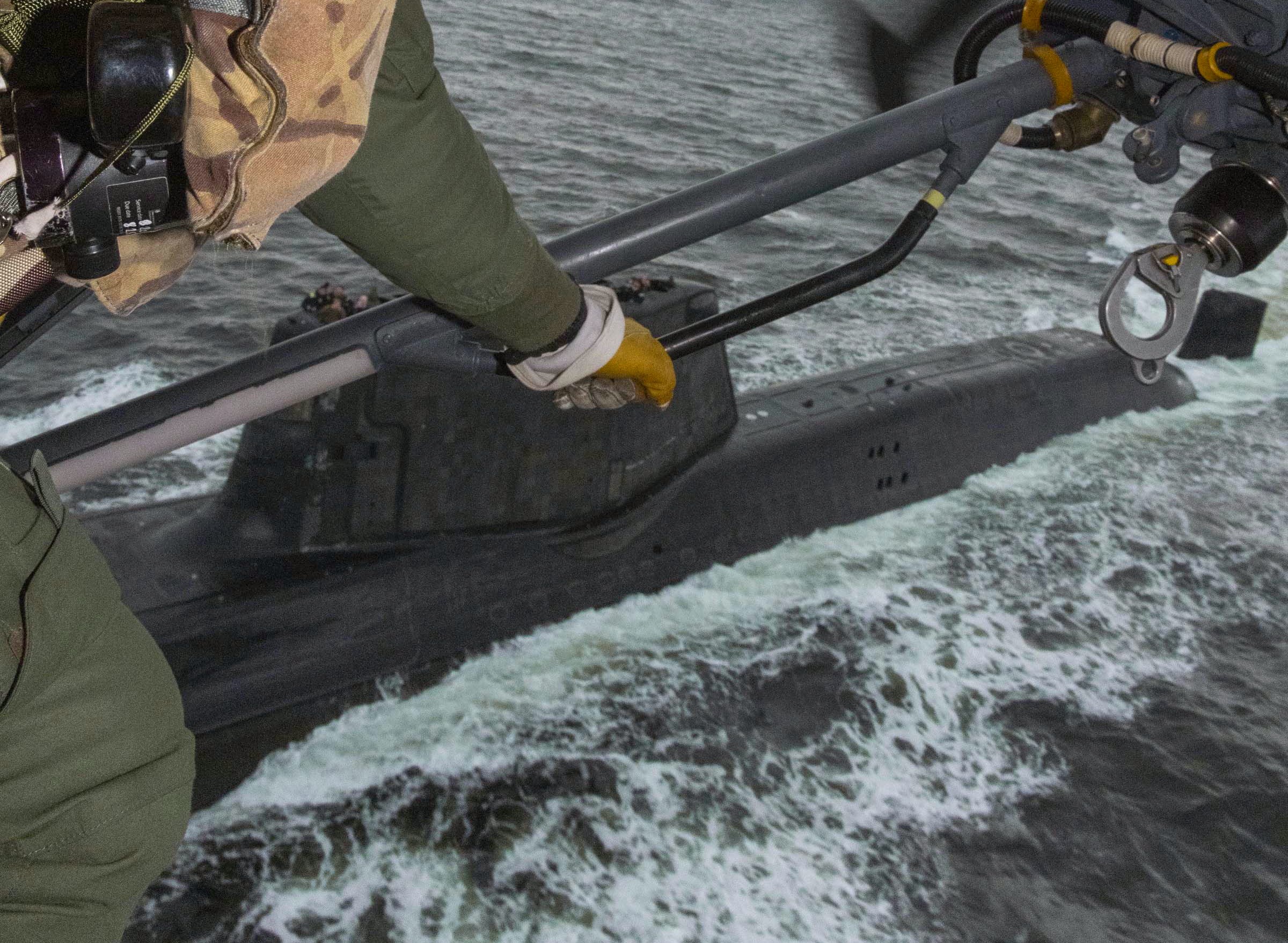
A recent article published by Plymouth Plus, titled “Disaster as broken £1 billion nuclear submarine arrives in Plymouth,” has prompted serious discussion. The issue is not simply whether its central claims are true or false, but how the story has been put together. It draws on unattributed sourcing, includes changes made after publication without acknowledgement, and contains factual inconsistencies that raise questions about editorial process.
The report states that HMS Astute arrived with a potentially serious reactor fault, relying on a single unnamed “defence source” and offering no supporting comment from officials, contractors or independent experts.
Anonymous sources have a legitimate place in defence reporting, particularly where security or whistleblowing is involved. The concern here is the combination of unverifiable sourcing, overlap with publicly circulating material, and quiet revisions after publication. Taken together, that creates a lack of transparency.
The central claims are serious. The article suggests HMS Astute was towed into Devonport with significant technical issues and that armaments may have been removed beforehand. However, the language and timing closely mirror a social media post published shortly before the article went live. That post came from an account with no verifiable defence background.
The same account shared footage of the submarine arriving in daylight. Both the post and the original version of the article claimed the arrival took place “under the cover of darkness.” This was later changed to “under the cover of dawn,” with no correction note or explanation. That kind of silent amendment matters, because it changes how the event is framed.
The footage used by Plymouth Plus appears to have been captured from the same vantage point, at the same time, and under the same conditions as the social media video. That suggests either a shared source or reliance on publicly available material without attribution. Either way, it raises questions about how the information was sourced and verified.
When reporting on nuclear submarine safety, the origin of information is not a minor detail. Readers should be able to understand whether claims come from a qualified insider or from unverified online commentary.
Transparency
The issue is not anonymity on its own. It is the absence of context around that anonymity. There is no indication of why the source was granted anonymity, what role they hold, or how their claims were checked. The alignment with online speculation adds to the uncertainty.
There have also been unannounced changes to the article. Phrases have been softened, including a shift from “were seen” to “reportedly seen.” These edits alter the level of certainty presented to readers. Standard editorial practice would be to include a correction note or editor’s note explaining what changed and why. That has not been done here.
A reversal of journalistic responsibility
When asked about these issues on Twitter, Plymouth Plus responded:
“Plymouth Plus is trusted by local people and backed by verified facts. Our content has amassed over 20 million views in less than 6 months and we maintain one of the largest and most engaged followings in the city. It’s disappointing, though not surprising, to see yet another attempt to undermine credible local journalism by someone with a long track record of criticising the media rather than spending their time reporting themselves.
Instead of resorting to tired accusations about ‘sourcing integrity’ that don’t hold up to scrutiny, perhaps you should take the time to investigate the matter yourself and produce evidence that disproves our reporting.
When you do, we’ll be the first to apologise — but you won’t, because there’s nothing to find. In the meantime, we actually have a job to do — covering real stories for the people of this city — so we won’t be engaging in this kind of childish distraction any further.”
This response leans heavily on audience size and engagement. Those figures may be accurate, but they are not evidence of verification. Reach and reliability are separate questions.
More significantly, the suggestion that critics must disprove the story reverses a basic principle of journalism. The responsibility to substantiate serious claims sits with the publisher, particularly in defence reporting where the implications are significant.
Dismissing questions about sourcing and editorial changes as a distraction avoids the central issues. Why does the article closely track a non-expert social media post? What independent verification was carried out? Why were key details amended without explanation?
Raising those points is not an attack on local journalism. It is a routine part of scrutiny.
The bottom line
No newsroom is immune from error. We recently corrected a mistake involving the timing of a US submarine deployment and published a clear update. That is standard practice.
If there is a genuine issue with HMS Astute, it should be reported and examined properly. That requires verifiable sourcing, transparency around editorial decisions, and a clear distinction between confirmed information and speculation.
When online material is presented as sourced reporting, and when legitimate questions are met with deflection rather than clarity, it erodes confidence. That does not just affect one outlet. It affects trust in defence reporting more broadly.












the Media has the potential to be as destructive as an enemy of is cheap quick to produce and in a digital format can be more destructive, but, only when it is used responsibly which is why a big brother concert makes sense media censorship would be grossly unpopular, but when the nations safety and security is threatened by it’s misuse. then things to prevent it 😒 happening must be in place legislation to punish irresponsible reporting.
why astute (or Astute?) r
great
“Plymouth Plus proves why astute (or Astute?) reporting still matters” Clever pun, whther intended or not. 👍😁
Indeed USAF-well spotted 🙂 Great article George-nice to see the site hopefully secured again!
sad
I always thought the correction/apology must cover the same pages and size as the original article in newspapers and that should be the standard.
Now how you work that will internet media is different but should be workable.
Code of practice for editors, usually ignored
There are several mainstream media outlets that have refused to sign up to IPSO or any other independent regulator, including The Guardian, The Independent, and the Financial Times. Not surprised at the first two, as they’d be inundated. The moderation of the Guardian comment section is ridiculous too. Years ago when I used to contribute, I had multiple very tame, completely uncontroversial comments removed with very little explanation. The one time I queried why and I was told that the use of the term “swarmed” in reference to people was dehumanising, whilst at the same time hundreds of vitriolic comments on the same article, and hundreds of other articles, referring to people by genuinely dehumanising language were left unmoderated, sometimes with ‘guardian picks’ and hundreds of upticks. It genuinely felt scary how partisan the moderation was, and eye opening for someone who had always considered themselves to be in the political centre.
You really think that referring to refugees and asylum seekers as a “swarm” isn’t a problem?
The ward definitely has a derogatory tone, but then that is why you used it I expect.
This kind of behaviour is just discusting, reporting unsubstantiated claims and then telling critics to ‘do your own reseach’ and throw insults (thinly veiled or otherwise) when challenged is the mark of a conspiracy theorist or an outrage merchant not a respecatble source of information
Sensationalist stories planted to destabilise and “stir sh*t up.”
Who’d have thought it!?
I dug into this some more and found the original source for this to be a twitter user who claims to be an activist from Lebanon who now lives in Plymouth. However while their account is old it’s only been active for about a year. And their profile picture shows a selfie in front of smearing tower in Plymouth. However when you actually look more closely you can see the windows of the tower don’t match the real thing so it’s definitely AI generated.
This has all the hallmarks of a foreign disinformation campaign. Where you create a fake news website and fill it with their own fake sources. Some of it will be real for legitimacy sake. But most of it will be to sow discontent and rumours designed to lose trust in institutions.
I think must news agencies put a few extra ingredients in to take one part or the other.inventing fake news should be considered a crime but then our government does it every day.
TBH fake news organisations like Plymouth Plus aren’t uncommon. Some are run by grifters, some by conspiracy theorists, and others by Russian disinformation organisations. What is guaranteed is sensationalist stories without creditable references designed to undermine faith in the state.