

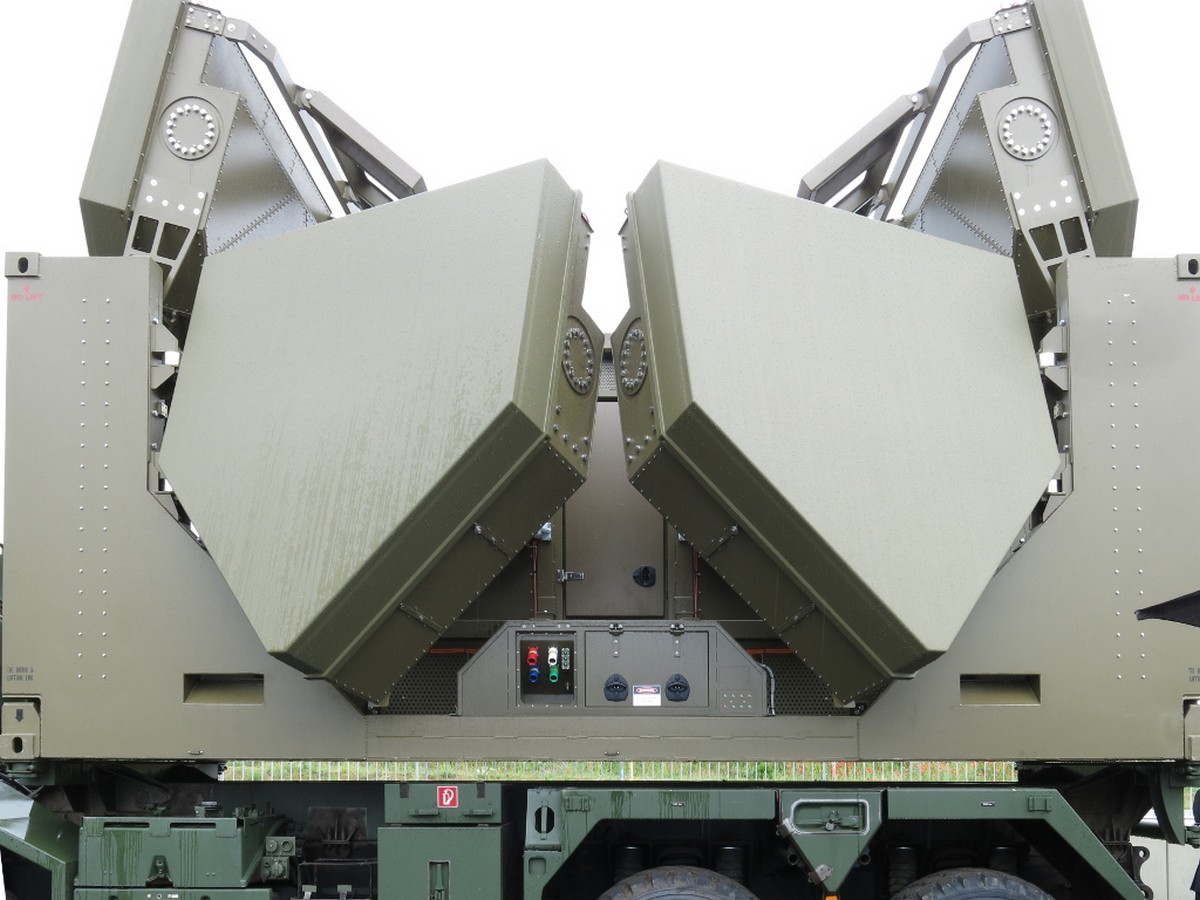
QinetiQ is in line to handle the integration, testing and assurance of Australian CEA radar technology across the UK defence enterprise, under a statement of intent signed in Canberra covering the potential adoption of the radar by British frontline forces.
The four-way agreement brings together QinetiQ, the Ministry of Defence, the Australian Department of Defence and Canberra-based CEA Technologies, and covers the potential adoption of the radar by British frontline forces. Luke Pollard, the UK Minister for Defence Readiness and Industry, and Pat Conroy, the Australian Minister for Defence Industry, both attended the signing at the CEA factory.
Steve Wadey, group chief executive of QinetiQ, said: “QinetiQ’s unique expertise positions us as a strategic and trusted partner to the UK Ministry of Defence and its allies. Current conflicts remind us of the importance of air defences, which are increasingly under pressure, and QinetiQ is proud to play a key role in bringing this vital technology to the UK.”
The role is the one QinetiQ is built for. The company holds the Long Term Partnering Agreement covering the Ministry of Defence’s test and evaluation ranges, a 25-year arrangement signed in 2003 that gives it the instrumented sites, trials aircraft and assurance staff that any foreign radar would have to pass through before it could enter British service.
Integration is the harder half of the job, as a radar bought from another country has to be made to talk to British command and control systems, tested against the electromagnetic environment it will work in, and assured to a standard that lets commanders rely on what it shows them, none of which is supplied by the manufacturer.
The signing follows commitments made at the Australia-UK Ministerial Consultations in June, where the two governments announced they would explore joint development and production of an active electronically scanned array radar capability.
Mr Pollard said: “Today, we are deepening our industrial cooperation with Australia on cutting-edge radar technologies. By bringing QinetiQ’s expertise together with CEA’s world-class radar technology, we can strengthen the warfighting readiness of both our nations while backing jobs and growth on both sides of the world.”
Alan Clements, chief executive of CEA Technologies, said: “Today’s signing is an important milestone for CEA and the Australian and UK defence industries. It reflects the confidence both governments have in CEA’s world-leading radar technology and the important role industry partnerships play in strengthening sovereign capability.”
The parties describe the document as a framework for continued co-operation while future opportunities are explored, which stops short of any order.
CEA Technologies is unusual in being a mid-sized Australian company whose products have displaced those of much larger firms. Its CEAFAR phased array family is fitted to the Royal Australian Navy’s Anzac-class frigates, where it replaced the original radar during the anti-ship missile defence upgrade and produced a marked improvement in performance.
Active electronically scanned array radars steer their beam electronically rather than by turning a dish, using a face made up of many small transmit and receive modules, which lets one set track many targets at once and keep working at reduced performance if individual modules fail.
What the UK would use the radar for has not been stated. Britain has an acknowledged shortfall in ground-based air defence, with the Army fielding Sky Sabre in small numbers, and the Strategic Defence Review of 2025 committed to strengthening air and missile defence without settling on the sensors that would underpin it.
QinetiQ employs around 7,500 people and describes itself as focused on mission-led innovation, testing technologies and systems to confirm they meet operational needs before customers field them.
Image Boevaya mashina, CC BY-SA 3.0, via Wikimedia Commons








Six face GBMMR is so cool! The panels fold flat to the walls of the container footprint and then pop out to form a hexagonal fixed set.
At least according to Gabriele Molinelli this agreement relates to the Multi-Mission Phased Array Radar, which is a rotating truck set which is more practical but less cool, for the SERPENS deep find requirement.
I hope the Army isn’t still planning on gold plating by sticking Serpens on a Boxer.
What’s wrong with a flatbed truck?
I don’t know much about the requirement but I assume the deciding factor would be how close to the front lines it needs to operate. Could also go on Patria 6×6 as a dedicated vehicle if that has the capacity, though it looks like a big system.
The way I see it, if the antenna takes a hit it’s knackered, why does the carrier need to be an armoured box?
There is the small matter of 3 human crew!
Also there is the potential, though it may not be used, for the antenna to be better protected in its travelling position as moving vehicles have been those most vulnerable to being spotted and attacked in Ukraine.
Of course, and do they have to remain with the vehicle for the radar to work?
Got to give some credit to the Aussies and CEA for pulling this one off. The CEO is a pretty modest chap. Might change some people’s simplistic view of this country and its people. Really good seeing the AUKUS relationship working and investments being shared. These great radars might then need some interceptors and please!
Seems this is part of offset agreements with the Aussies buying our SSN tech.
Yes, very likely a two way street and covering multiple projects.
Don’t know the answer to that though highly unlikely that they would be onboard lets be honest, but we do know that Americans have been killed while operating their radar while not on the move, in the Middle East. I suspect we won’t learn much more information beyond that however.
Evidence of a hole in high end naval radar development in UK.
Not much GBAD development, we were dependent on SAAB and Elbit for Sky Sabre so unless we scale up to their larger designs CEA are a good fit.
Though I think BAE are trying to move back into GBAD with their updated Commander SL which is a handy static trailer.
Dear god no. Surely they can’t rebadge a Plessey based system again?
What GBAD or maritime radar have BAE developed from scratch?
I put this in an earlier post
BAES have been doing work on the next gen AESA to replace Sampson. Like a lot of newer ASEA radars available today, the Next Generation Radar Demonstrator (NGRD), is based on a modular and scalable format, meaning you can build the array to suit the cost/requirements. This is a clean-sheet S-band Gallium Nitride (GaN) solid-state design, which can be used for maritime and land based systems. They are using this architecture in the Artisan Next Generation radar, which they’re hoping will be a future upgrade path for the T26 etc. From the images I’ve seen, it can be used in either fixed panel, or fitted to a mechanically rotating assembly.
Definitely. No major radar developed since Artisan and SAMPSON started development during the Cold War. The UK is now depedent on foreign companies for naval and ground radars.
Leonardo Seaspray radar, based on Edinburgh.
Eurofighter Typhoon ECRS v2, again Edinburgh..
None of these are naval radar.
Could this be what we use to make SAMP/T ABM capable? Apparently a lot of the problem is the radar, rather than the Aster30s that they launch- although the block 1NT missiles are better.
What problems have been reported?