

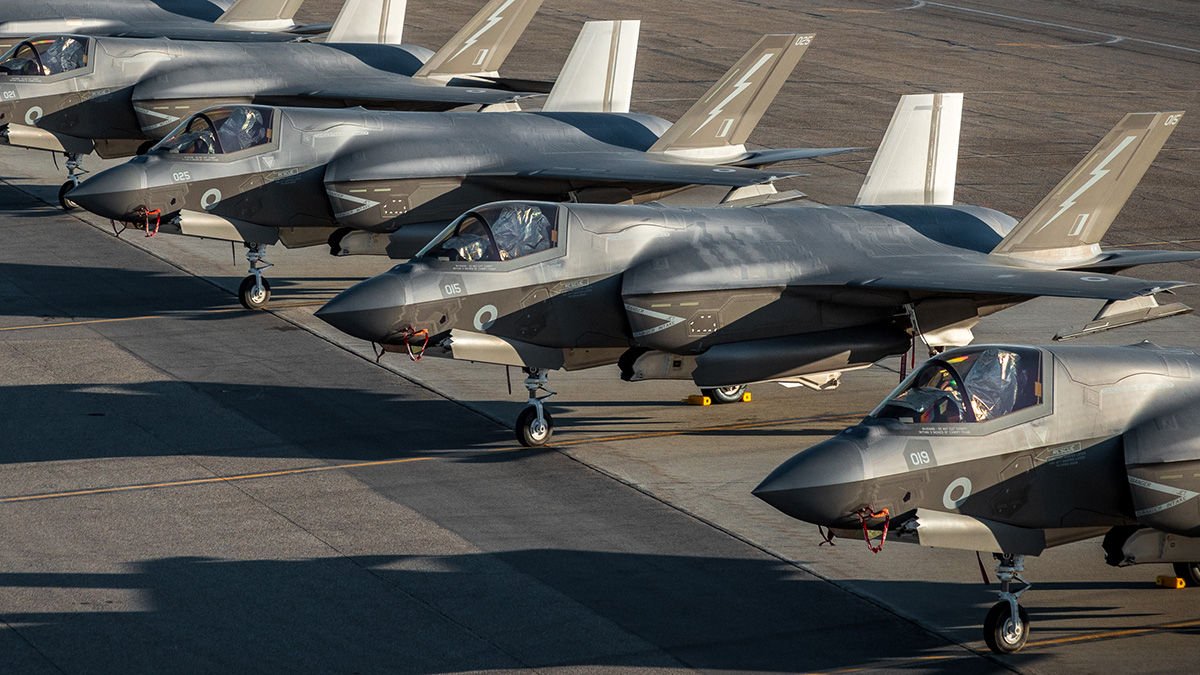
The Royal Air Force has assessed the possibility of allowing reservist pilots to operate F-35 fighter jets but concluded that such a model is not suitable for the UK at present, the Ministry of Defence said.
The response came in a written parliamentary answer from Defence Minister Louise Sandher-Jones to Conservative MP Steve Barclay, who asked whether the UK had considered adopting an approach similar to a partnership between KLM Royal Dutch Airlines and the Dutch Ministry of Defence. That arrangement allows airline pilots to serve as reserve F-35 pilots in the Royal Netherlands Air Force.
According to the minister, the RAF has examined the potential for reservist pilots to support the UK’s F-35 force but determined that the model would not currently provide sufficient value. “The Royal Air Force (RAF) has assessed options for reservist pilots to bolster our F35 force and concluded that this model is not appropriate for the RAF at this time.”
The Government said the primary issue relates to the time and cost required to train and maintain operational proficiency on the aircraft. “The investment in time and money to train a part-time pilot on F35 and keep them sufficiently trained and current to operate the aircraft is similar with that of a full-time pilot.”
Sandher-Jones added that the current stage of development of the UK’s F-35 capability also influenced the decision. “At this stage of growth in the UK F35 Wing, the cost is not justified by the amount of service a part-time pilot could offer compared with a full time regular.”
The UK operates the F-35B Lightning as part of a joint RAF and Royal Navy force, with aircraft based at RAF Marham and routinely deployed aboard the Royal Navy’s Queen Elizabeth-class aircraft carriers.








Seems daft expecting airline pilots to just switch to a fast jet?
The RAF have a reserve Sqn for aircrew, but that’s rightly for the AT and AAR force.
The day we have RAF Reserve Sqns with their own aircraft assets ( RAF, RN reserves have no assets ) is the day hell freezes over.
It’s traditionaly been the other way round.
Works well in the US Air National Guard. The idea is very much to retain older pilots on a part time basis and retain much of their knowledge. It’s better than the never ending placements we send RAF pilots on to keep them interested for more than ten years.
And the air national guard has consistently lost fast jet units over the past 3 decades based on costs and availability. Many have transferred to drones.
thats simply not true. the air national guard are very good at what they do and regularly get deployed to combat.
The US is in the process of upgrading US Air National Guard units with the F-15EX and F-35. Four Air National Guard wings fly the F-35 and, most importantly, the air defense of the Continental United States is the responsibility of the Air National Guard.
Right…..
It is actually to do with our favourite of in-year accounting.
It is much cheaper in, the long run, to keep pre trained pilots trained up as reserve pilots because RAF are not responsible for the full salary and pensions costs.
Whereas a reservist is mostly paid by their day job but can continue their love of fast jet flying part-time.
Obviously the cost of keeping both group qualified to the same level are pretty similar but it is the usual UK Forces arguments of exquisite excellence trumping mass. And it is far better having a pilot trained to fly the F35 but not necessarily versed in all roles rather than being a full multi role pilot. It is easier to accelerate backfill of some extra skills than to start from scratch.
Really just another excuse to keep things small and elite. At some point that is going to have to be broken open as most of countries to have reserve forces for fast jets.
If we had a reserve force of say 100-200 former pilots in some reserve force that could be an accelerated path to gain aircrew in an emergency, it would be far more beneficial than waiting years for the private contractors to come up with the numbers.
What happens if we lose our initial squadrons? You can buy second hand fighters on the market, but pilots, i don’t think so.
Finding sufficient pilots for our pitiful few aircraft seems hard enough let alone keeping a reserve force even vaguely current is just fantasy island time from a government that has run out of ideas already.
It was suggested by the Cons, Trigger.
Its just about money. 30 full time pilots is all they need for f35 and if Reeves gets her way that’s all they will ever need.
UK should team up with Canada to buy up 36 F35A to fulfill the paid up portion of the Canada F35A order plus a UK RAF top up to meet the NATO requirement. The UK and Canada can then share the use of the purchased aircraft. This help solve a number of issues for both countries surrounding their acquisition of the F35A.
1. The issue of trusting the USA/Lockheed with a large order of F35s that they control (kill switch issues etc.)
2. UK manning pilot availability issues. The crews can largely be Canadian with a small contingent of UK pilots and support personnel from the UKF35B force
3. Shared costs which reduce strain on the respective budgets. UK can then focus its saving on the Tempest acquisitions or additional Typhoons for the RAF.
A final suggestion I will make is that the UK limit its F35B acquisitions to 60 units maximum and look to either drones for the carriers or at the major refit point, one of the carriers be converted into a CATOBAR carriers and embark either refurbished FA18 E/F or Rafale F5 fighters until a suitable 5th or 6th generation carrier strike aircraft is available on the market from either a UK, USA or European manufacturer.