The Royal Navy has completed a four-day trial of the NATO Submarine Rescue System in Scotland, testing the alliance’s ability to respond to a distressed submarine, the service say.
The exercise, held in Fort William between 23 and 27 March, brought together military and civilian personnel from the Royal Navy, Submarine Delivery Agency and JFD Ltd, alongside French and Norwegian partners. The NSRS is a tri-national capability jointly owned by the UK, France and Norway and is designed to rescue submariners from disabled submarines anywhere in the world.
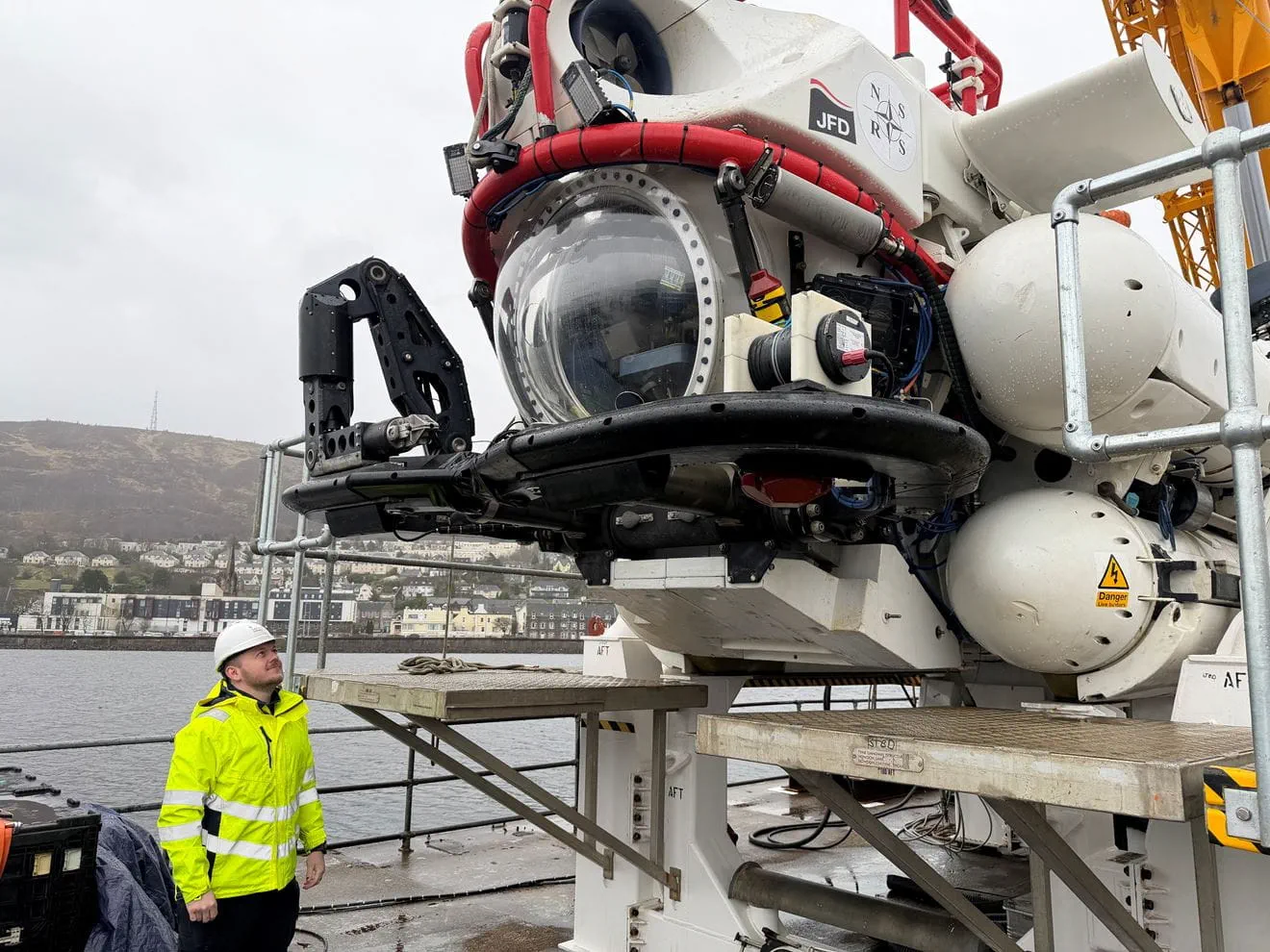
More than 150 personnel form the NSRS Operations Group, including divers and medics from the participating navies, as well as hyperbaric nurses from QinetiQ and specialist contractors. The exercise followed a maintenance period for the Submersible Rescue Vehicle, known as Nemo, and was intended to ensure both equipment and crews remain qualified and ready for deployment.
The system was transported to the site using a specialised low-loader vehicle, with the 35-tonne rescue vehicle supported by technicians and operators throughout the deployment. Training in the deep waters around Fort William allowed pilots to practise manoeuvring and docking Nemo onto a submerged target, as well as rehearsing the process of opening the rescue hatch to recover personnel from a stricken submarine.
“The NSRS continues to be the most effective system within NATO for most conceivable submarine rescue situations, and it leads the world in its training regime,” said Commander Andy Sharp, team leader for the programme. “Exercises like this one prove to my submariner colleagues that we stand ready to assist.”
The NSRS is regarded as one of the most capable submarine rescue systems in service, with regular exercises forming part of a continuous readiness cycle. While the likelihood of such a system being required remains low, it provides a critical safety net for submarine crews operating at sea.