

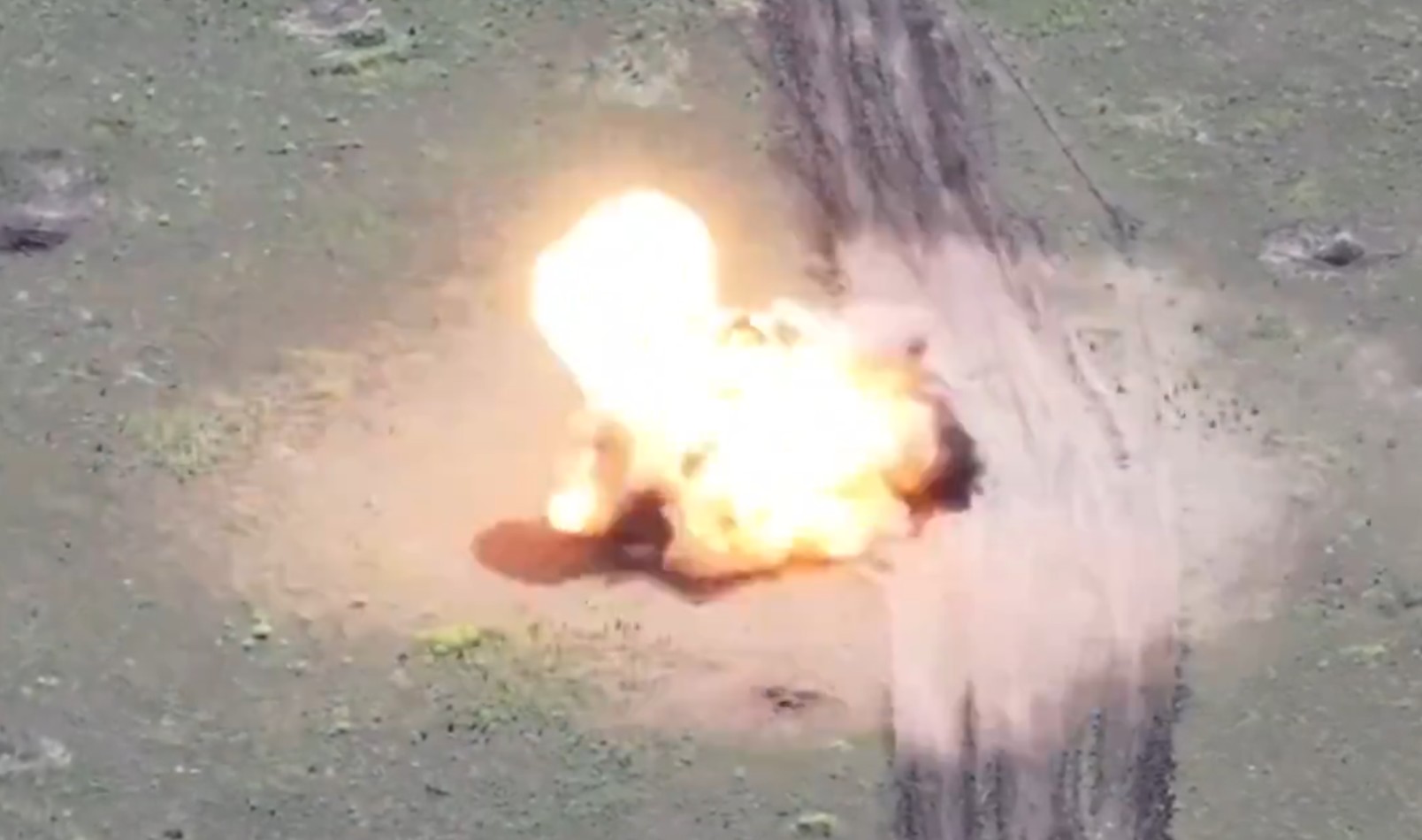
The Ukrainian General Staff recorded 2,090 Russian casualties, killed and wounded, in the twenty-four hours to 28 September, the highest daily total it has reported since the full-scale invasion began in February 2022, according to British Defence Intelligence.
In its daily update on the war, the Ministry of Defence organisation set the figure against the rest of the record. Three previous daily totals above 2,000 were recorded during 2024, and the fourth-highest, of 1,960, came earlier this month on 16 September.
British Defence Intelligence stated: “The casualty rate has remained high since the summer, highly likely as Russia maintains its intensity in the fortress belt region, particularly in the vicinity of the Ukrainian stronghold of Dobropillia.”
The fortress belt is the line of fortified towns in Donetsk oblast running through Sloviansk, Kramatorsk, Druzhkivka and Kostiantynivka, built up since 2014 and the principal obstacle to any Russian advance across the remainder of the region. Dobropillia sits to the west of that line, north of Pokrovsk, and became a focus of fighting after Russian forces pushed a narrow salient towards it, which Ukrainian units then worked to cut off.
Casualty figures in this war have to be handled with care whichever direction they come from. The Ukrainian daily total counts killed and wounded together without separating them, covers the whole front rather than any one sector, and is compiled by one of the belligerents. Western estimates of total Russian losses have generally been produced separately and with wide margins, and the British assessment has for some time been that Russia continues to accept losses at a rate it can sustain in manpower terms while taking ground at a pace measured in fields rather than towns.
What the figure does indicate, if the trend holds, is the cost of the tempo Russia has chosen to maintain through the autumn rather than pausing to reconstitute, with the highest and fourth-highest daily totals of the entire war now both falling within the past fortnight.
British Defence Intelligence has published updates on the war since shortly after the invasion began, releasing them through the Ministry of Defence account most days, and the format has settled into a short set of observations drawing on open sources alongside its own material. The updates carry the probability language deliberately so that readers can distinguish between what the organisation knows, what it assesses and how confident it is in the assessment.










‘Ukrainian 3rd Army Corps Commander Brigadier General Andrii Biletskyi reported on September 28 that Ukrainian forces liberated 51 square kilometers of land in the third phase, for a total of 176 square kilometers over Operation Vivaldi’s three announced phases. Biletskyi stated that Ukrainian forces feinted from Shandryholove (northwest of Lyman) toward Zelena Dolyna (northeast of Shandryholove), distracting from Ukraine’s main tactical objective of Nove on the northern flank of the Russian forces in the area.
Biletsky noted that Ukrainian forces used BTR-80 armored personnel carriers (APCs) converted into vehicle-borne improvised explosive devices (VBIEDs) to break through Russian defenses and destroy Russian heavy fortifications.
It is notable that Ukrainian forces were able to field and drive APCs up to heavy Russian fortifications without coming under Russian drone strikes, indicating that Ukrainian forces neutralized or otherwise negated Russian drone defenses. Ukrainian forces conducted extensive shaping operations and an intermediate-range strike campaign to mitigate the threat from Russian drones and electronic warfare (EW) systems and achieve tactical drone overmatch, aiding Ukrainian mechanized advances in the Lyman direction’
ISW Russian Offensive Campaign Assessment, September 28, 2026
The technical battle between offense and defence continues. Plus ca change etc. ‘intermediate-range strike campaign’ replicates counter battery battlefield preparation; ‘vehicle-borne improvised explosive devices to break through Russian defenses…tactical drone overmatch’ replicate ‘creeping barrage’ indirect fire support to the assault artillery techniques.
The fundamental lesson is clear. Drone warfare aids the combined arms manoeuvre battle. It very much does not replace it.
So the British Army’s lack of an IFV, only three (small) CR3 regiments, looks increasingly like a glaring lacuna for a formation supposed to be providing a high quality two division corps to NATO land forces.