

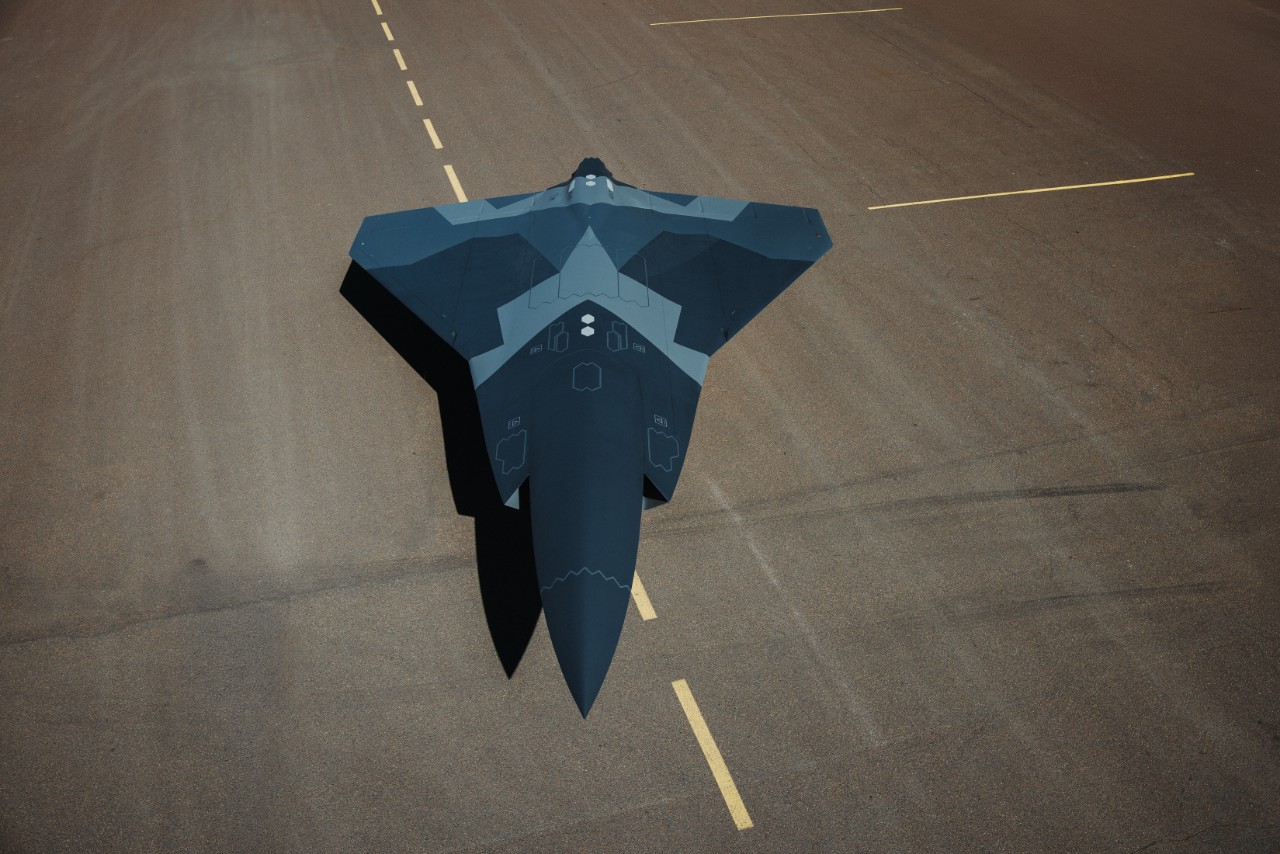
Saab has put a full-scale model of an uncrewed combat aircraft concept on public display in Sweden, and says it intends to fly uncrewed demonstrators with fighter-like characteristics before 2030, the company stated.
The concept, designated A3-001, is being shown at the Jubilee Air Show at Malmen Air Base in Linköping. According to the company, it illustrates how crewed and uncrewed platforms might operate together as an integrated system, complementing Gripen and future crewed combat aircraft.
The missions Saab envisages for it are the ones commanders are least willing to send a pilot into: electronic warfare, suppression of enemy air defences and precision strike in highly contested environments. The company describes low observability, a high degree of autonomy and the ability to operate across multiple domains.
Peter Nilsson, head of the Advanced Programs business unit at Saab, said: “We are currently in an intensive development phase where, together with Sweden, we are exploring technologies that will lay the foundation for the next generation of combat air systems. As part of this work, we intend to fly uncrewed demonstrators with fighter-like characteristics before 2030 as we support Sweden in considering their future options.”
He said: “This separate Saab A3 system is our own concept for what could follow in the mid-2030s should Sweden decide to build on the work we are currently doing. Saab is well positioned to develop the next generation of combat air systems building on Gripen and GlobalEye, combined with our long experience in advanced aerospace systems.”
The distinction Nilsson draws matters. The demonstrators are work being done with the Swedish state, while A3 is Saab’s own concept for what might follow if Stockholm chooses to continue, which places the company ahead of any government commitment rather than delivering against one.
Sweden joined NATO in March 2024 and has been weighing how to replace or supplement Gripen into the 2040s. It left the Global Combat Air Programme discussions with Britain, Italy and Japan at an early stage, opting to keep its options open rather than commit to a sixth-generation crewed fighter, and has since concentrated on incremental Gripen development alongside work on uncrewed systems.
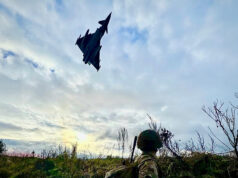
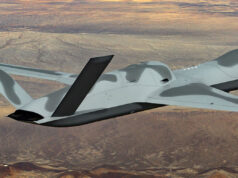
The A3 enters a field that has grown crowded. The United States Air Force is flying the YFQ-42A and YFQ-44A under its Collaborative Combat Aircraft programme, Britain is pursuing autonomous collaborative platforms alongside GCAP, France, Germany and Spain are developing remote carriers within FCAS, and Australia has the MQ-28 Ghost Bat. Turkey, South Korea and China are all fielding or testing comparable designs.
What distinguishes the Swedish approach is scale of ambition relative to force size. Sweden has built and sustained an independent combat aircraft industry from a population of ten million by keeping designs affordable and export-minded, an approach that has taken Gripen to Brazil, Thailand, Hungary and the Czech Republic, and that logic would apply to an uncrewed system built to work alongside it.
Saab has not disclosed dimensions, weight, propulsion or expected cost for the concept, and a full-scale model is not a flying prototype, of course.





suppression of the oppositions air defense, a battle of tech & software these days? the drone being more disposable and survivable
“more disposable and survivable”
Somewhat contradictory 😕
Why? Can be both without contradiction.
Better chance of it surviving and it’s cheaper and no humans inside so therefore disposable.
Seems to make sense to me. Smaller, more manoeuvrable, lighter so faster.
I feel like the market is already a bit packed with these things, not sure who would buy this besides Sweden itself and maybe licensed exports to Brazil and maybe Thailand.
You’ve got Kizilelma for the countries who can’t buy other European/American options. The host of American option covers a lot of export clients alongside Ghostbat from Australia and then Brontanax from BAE plus whatever Germany is working on and then the Chinese options cover everyone else.
Maybe India could be a candidate if they continue their trend of buying foreign?
If this is a gripen derivative then the uk should be interested as gripen has a lot of UK content already & I am sure could be 100% content. It may also help with offsetting any future deals for ships etc and reinforce our ties with our Scandinavian cousins. I like it, but it has to be cost effective.
Being Swedish it will be very cost effective.
RAF won’t be happy as it won’t have thickly gold plated specifications…..
I would agree, there is a tightrope to walk here, between capability and affordability, SAAB have historically excelled in this area, the Gripen E being the latest example of this.
I will be watching this with keen interest, as I suspect they will do their usual, 90% the capability at 70% the cost, with an order of magnitude lower costs of operating and support.
Is Gripen really cost effective at $80 million dollars? More expensive than F-16 Block 70? Before you say $7000 dollars per flight hour, this has been disputed on how it’s calculated by Saab. It’s like any CCA I don’t get most are coming in with ranges of less than the host vehicle so what’s the point in a deep strike profile, ok if your using it as a interceptor force multiplier but for a Strike package I don’t get it especially if you don’t have long range bombers. Is Saab going to get access to some sort of adaptive engines, I think that’s going to be doubtful. As for customers only Sweden will buy it, Thailand would have to buy Gripen E for it to work the databus and datalink isn’t good enough on Gripen C to work. It’s another concept for it to only work in Sweden only like Gripen they have not got there heads round that they are in NATO now. It’s obviously stealthy but do Saab have experience with modern Ram coatings not to mention the engine isn’t stealthy so frontal aspect only. Will it have radar and others sensors? Which is going to push the price up. It’s says fully autonomous, how’s it going to get round the legality of Rules of Engagement particularly for ground targeting, not a problem for air to air. If your in my airspace and your on a war footing your getting shot down. When does a drone become fully Attritable? $40, $50 or $60 million? You’ve still got the logistics chain attached to it?
More than anything, it’s Sweden continuing her defence independence. They want to be reliant on others as little as realistically possible.
The Gripen is a prime example. It hasn’t been very successful commercially and while it has a few niches, other aircraft are better choices for most countries. Yet Sweden would not be without it.
Sweden is reliant on others, Gripen E is 70% produced outside of Sweden. They are a glorified aircraft body shop integrator. Ok not that bad but they don’t produce the majority.
Is it sacrilege to suggest that the next gen aircraft for the RAF, does not need a pilot?
No. In my view it is sacrilege to say the next gen aircraft for the RAF must have a pilot.
If we had had the tech we have now at the birth of aviation the word pilot would never have been needed.
What happens if the comms are down, then?
No comms, return to base. Already decades old behavior in drone world.
Draken heritage on show.
Yes, stealth son of draken
Why don’t they just build the Delta Flyer from Star Trek Voyager?
It’s obviously the optimal design.
cant sleep got bk up see 2 girls tight shorts here giggling then more attacks my door from your queer boys so usual im going take 67 away for yet another assualt my door while it continue i will target your leaders famillies 5 ppl if your kids set 1 foot bk here you will be held responsable dickie joanne morrison boy lovers i want 5 there ppl taken away untill ur gone i dont like u u have nothing do m ur kids are faggots i know fine well ur doing terms 5 not my ppl not my problem few million dead your side ur ppl u are still attacking me that is y it kicked of li ju ukrainerussia germany asia please do go on i can ruin your lives as the lovly girls point out how sad u northren fags are.gd night any morrison will do
same for ranger wing jews terrorist sinn fien john some intell ppl make no mistake rangers u are told leave ill get around to you small island morons want support that be my said republican u are not lol no taste for pirate windsor fact good chrles ppl like that ur attitude new royal house i have no time for old fags im not dealing u simple simple told u and again you are beneath me
jap samurai saying that means your nonces not rock stars relation ships pokemon devices must be your grand martial arts shit .look u live very close fat headed dot dogs your pathetic i wouldnt have at cunt or pakie hector on same island ur problem 1 more mouth ill end all your sevice wanna fuck of bum fucked royal faggots lol juke fuck off kill ur self u lanky clown cunt. fuck no hope to never have to look u gook abused sad broken feral trash ever again rest of excisstence innferrior fags they are dumbest moronic dogs ever history uk seriously fuck of kill urselfs serious good do not let ur bum fucked children around my home then u do well warn mothers fuck of england israel certainly wouldnt u dirty sore hole gypse veron pathetic race long dead same inferrior trash reason please do keep annoying me you abusedsore hole fags
fyi i dont lose sleep over inferrior vermon or appitite or kids ukraine or orphans ur a vermon pile of dog shit 1 call dentist then harrasment pakies5 fags of appl playing games does ur get harassed like i said ur country is fucking dog shit 1 more time please do
its wrong see i be doing if not for ur hill billy dog pathetic ppl lovin women as i lie to then have move because ur arse fucked boys all cowardly family fucking whimps i will see u all soon enough
u are gooks dogs beat now thats u do trait those carry sad whores fucks u pricks uk kill urselfs fuck of
o see new budget proposed. 2 dont speak e especially reporters insult commie trash dot i will hurt u 41 years ive killed ppl ran a war created wars desease and still ur isulting attitude persist im seriously persob u nose ring gypse cock suckers dont fuck with some 1 has take the tramps just dogs mouth not for when some 1 dosnt like u wise to fuck and of listening u sad wankers a decade i have 0 intrest in u dog trash get a life u abused scum fuck off kill urselfs line drawen somewhere u r fucking usless dogs u disgust me dont speak me like take i want 5 ranger cia 6 5 like mcnabb that coaliton any pig shit fat wop cunt will do fucking gum ba lol c hi
i could tell stories months jail over head of charges2021 2 bladed article common was dropped are stealing ppls dogs being attacked home by said mentioned sad pathitic fruit cakes pull my hair steal my coat faggot belfast charming concerning u wop maffia pig shit catholic brittany fat tinker armeni cira u have to click on u are just dealing fat aging old shit talkingsad acts doe fuck all ur fat wop lives are improved single thing kids i took reds guns marty morrison kept sweet then u attack me i have them taking of then away bk rat holes yeah ur all really stupidsad wanker u likly already be dead so y is ur sad never walk alone ppl still annoying me if it keeps i am goingto sticku ground hector more of a cousins line cold bk you ppl are old fags cry hard finland ppl are not welcome in my family get fucked queers ok hector kids gay lords
my point i have killed couple 6 agents i dont do papers nor do they i simply live here coop 2 latest polish like ju others ignorant ppl no conceipt privacy or personal space they are mummy wank of retarded basiclly only listen to 1 person saddly very easy find you u do causing a situation ive detailed ur attitude towards men further cause not urs putting women children at risk consequnces should it continue if its an officer beseiged ill look after u creating that problem a load of sad tinkers old waysas if numbers would help abused fags to kicking doors to blame girls that fag attitude from weak sad acts thenkids mis informed by sad parents think rule the world by being a sad fat slob in a bar lastly no sense telling me things when i clearly know more u sad dicklees balless pathetic phycotic lowns 10 years all i heard was sound queers arse hissing big shout out shea jonne fag brian sore hole irish tiger have a day cousin mind that stone there hot like kept my loins warm any way i usedhave arse god persian forsaken me a v front t held in there ill bale e an
im so boared serious decade of a serious pathetic family fucking english dump gooks niggers baltic parasites they have to only way family fucking cunts could get a proper women not good news understand reaction they want them talk comes down to the dirt stuck old times it is failing it wont last much longer there never ruled world attitude easier if you simply do not associate or like sweet gale they will stalk harrass surround fat ugly o dogs happly deny rape or abuse they are bred dogs as are tramp women besides me them hill billy cunts all conspire to do that 5 sad cunts not best at there jobs r care as a brit we took world time clocks daylight savings year1800 years after that u sad boy bumming tinker cunts got rule now a spastic fany thinks ul reclaim wat u never had just fuck off die retards do not associate its a waste of life i cant stress that enough there fags tony fag arse fucked coward not his do fags them fags bred attack strong maize richard turnned same thing they are just dumbabused bred tinker no bodie young bonnie very pretty lovly eyes bright white blue kinky its true fishing game boat lol called it bonnie milligan like spike no relation spike murry granted probly diffrent type spike lol up me m8 id have u all on trains i mean that meth crack head wanna be police so y ur attitude like to night how long ago was that still this abused dog still attitude russian smoke there take ol toothless jew grannies fat clowns mcilroy big clap all wank weirdos best advice bail i dunno wat do time to think these sad dog wankers they disgust me fucking animals
fyi aye ur mums sweet too lu gd night l8r
further more ur boy child fiddling along willing sacrafices ppl bred think it normal let ppl kill them jade describe as a chink is actully a jew a chinks dog to old redundent dog shit fags were we morally and spiritualy im certain as to how this ends i think stevie wonder see outcome. u r weak your ppl i dont want they are free go ahead little pathetic gook plans they are not us you wont get anywhere but make a sad little dickhead of yourselfs martials arts that training million army u understand that i to buff ppl away not ttack any 1 mines worth 20 f uor more you look retarded to me u understand no stopping it bred they will continue when it starts you other nations will be held to account i try not annoy myself ur fag attitude we have serious beef now brain not cesar so no 1 miss monky giger cunt u met see urlikly by fucking wop on take look foward resignation. need get of my chest on rock front i says no im not going that kids so rain kid mum granny its guilting me walked then chvlry kid scooter move out way smile kids will be kids enjoy time as kid then couple other cheeky contact heart lutter fist bump basiclly as appossed li murry mint nonce here wanna baby sit u know i mean then leads leaving u c i do care they arnt same other ppl here if see j e w act i will be upset francis y ppl bother dickless thai jews ill never understand runts cowards specialize attacking friends neighbours bar that fags cant fight shit bags dot eye my attitude bred dogs same its really boring for me have keep looking ugly orgrd bastards @ dog shit ppl they thinkits nrmally sad old cunts stay away from me i dont careu think or want sad retarded wankers i cant sress that enough any 1 listeins them branch hun cunt rangers ppl u do well fuck off u are dumb to listien sad fat usless ugly cunts ginger fruit
we should do an exchange donna take recruit few kids be trained up educated say america or something finances willing it really is a sad pathetic shit hole like refuseal leave it will just get worse there dickless sad retarded attitude women lie kardasian purpose bred dogs bread shit filth make it easier to attack ive knowing that long time true how ever i wouldnt associate slap heads tans that respect gooks seriously tey are shite kills e look at the ugly retarded branch balloons drs aswell serious you vermon trash absolute rodent minded dogs wtf gave them dumb bastards jobs u know bit late ask still evacstill decnt ppl get out so bonnie bk up fine but but situation is shit reality is tibal fags stalking pullling hair stealling coats brian fag security junkie queer insemated 1 percent surrogate brian bliss ww2 raf bomber squadron nuff said ive told u fag jap ju to leave it aint going work outgook springstein
i do hate you ur mouth vrs my relation couldnt care less about u i litterly had fool them put ur coordinates in mon na fuck of fag
id prefer it if u mouthy abused dick heads were dead i dont like i havnt for quite some time fuck of and die mouth dosnt win wars cutting out the weak cancer that wins wars u fucking dog ur inferror to me just fuck up u abused faggots learn how raise kids and control ur fag mouth you are sikening me to have look at u inferror abused faggots genuinly hate u wasted too much my time you dumb hun wankers fuck of and die stop talking to me im having say it again i fucking hate u hun cunts stay away home u abused waster you r beneath me i dont listein ur fucking retarded fuck off away from me
Pmsl Saab Draken but stealth. Well it’s true stealth is going to be crap, the rear has no stealth features so won’t be used behind enemy lines. On top of that it’s not going to be very manoeuvrable with no thrust vectoring, and because of the cropped cranked delta wings where are the split elevons? Seems they haven’t thought about that bit in getting it to turn left and right in the yaw. Why have they shown a concept with a tailless design with no thrust vectoring or split elevons? Definitely going to be some big design changes! 😏. Without increasing the cost and to be truly attritable it needs to have canted tails so it doesn’t need thrust vectoring engine. If it’s going to be a increment 3 drone it needs to have stealthy thrust vectoring with split elevons.
Hi Ruth, according to Saab’s statement when released at Farnborough. The two A1 and A2 demonstrator versions, will differ in that one will have a V-tail, whilst the other will be tail-less. The findings of which will determine the design for the A3 version. Unless the aircraft is using forced air flight controls, it will have to run mechanical flight control surfaces, be that spilt elevons or wing spoilers for yaw control. A vectored exhaust would be the gold plated solution, as it could be used for both pitch and yaw.
There is an interesting piece in Janes Defence news this week about teaming manned and unmanned force components, where from a war gaming analysis, it states: “The US Navy (USN) should focus on developing operational concepts that rely more on only using unmanned or related remote autonomous systems (RAS) instead of teaming those systems with traditional manned forces, according to wargaming results and analysis of USN forces recently completed by the Hudson Institute.”
Where: “A stealthy platform like a F-35 Joint Strike Fighter or attack submarine (SSN) can only remain undetectable when teamed with RAS if the unmanned element can maintain the same stealth signature as its manned counterparts.”
“But a stealthy RAS with sufficient range to deploy from far enough away to avoid drawing attention will be expensive and complex, reducing its scale and expendability,”
However, “Ukraine’s military restored access to shipping lanes by pushing back the Russian Black Sea fleet to the far side of Crimea using RAS attack boats and undersea vehicles,” when operated independently.
Which raises a number of questions, which I feel is relevant for both the sea, land and air domains. I think the first is trust, especially on how the autonomous unit will conform to the rules of engagement? If a human in the loop is still required to make the “kill” decision, how effective will the unit be, if there’s a significant time delay before it can act? I guess the second part is attritability. When does a unit become too expensive to be considered attritable? If the unit needs to have the same level of observability as the manned unit to make sure it does not flag the general location of the manned unit. But also have the speed, range to keep up with the manned unit along with “good enough” sensors to provide better situational awareness to manned unit. Does this not make it significantly more expensive and therefore less likely to be considered attritable?
I have a feeling that developing the concept for operations for teaming manned and unmanned units together will be long and costly.