

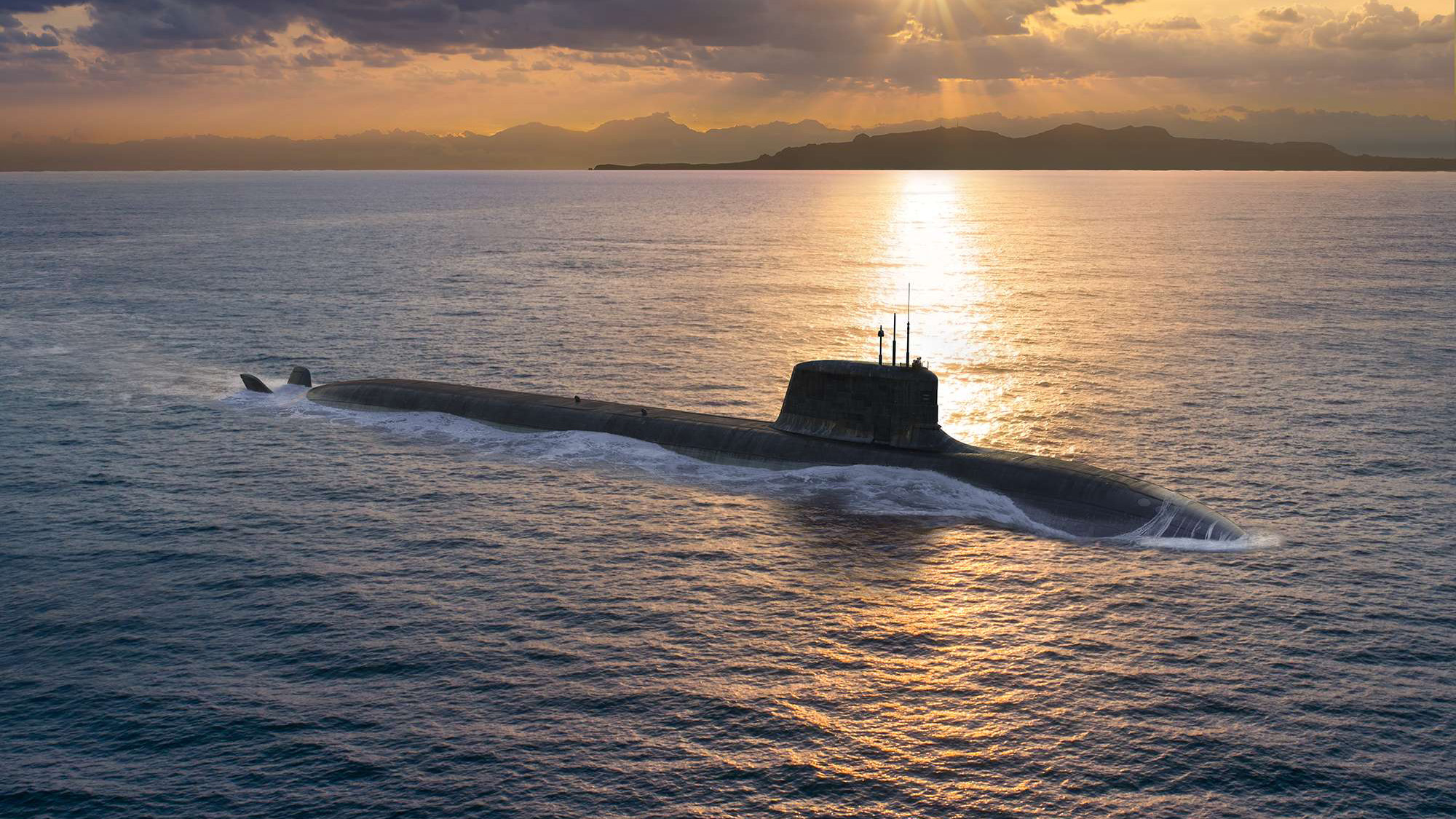
Steel will be cut on the first British SSN-AUKUS submarine in 2027 under current plans, marking the start of production on the class that will replace the Astute boats, according to the Defence Nuclear Enterprise annual update to Parliament.
The programme has already placed contracts worth around £4 billion, supporting development of the capability and the industrial infrastructure needed to deliver the next generation of attack submarines.
The update states that the programme “remains focused on delivering the first Royal Navy SSN-AUKUS submarine into service in the late 2030s”.
SSN-AUKUS is being developed through the partnership with the United States and Australia, and is based on a British design. It is currently progressing through the Detailed Design and Long Lead phase, with decisions on the total number of submarines to be procured expected before that phase ends in 2028. Construction of the British boats will take place at BAE Systems’ Barrow shipyard, while Australia will build its own at Osborne Naval Shipyard in South Australia. The next generation of nuclear reactors for all SSN-AUKUS submarines, including Australia’s, will be built at Rolls-Royce Submarines’ Raynesway site near Derby.
Britain will also supply key components to the Australian programme while Australia develops its industrial capacity, which the update describes as creating a resilient supply chain across both nations. Australia has invested £2.4 billion over ten years to boost Rolls-Royce infrastructure and to share costs on the submarine design, an investment the update presents as recognition of the importance of British industry to developing the capability.
The Geelong Treaty signed between Britain and Australia in July 2025 further strengthened the partnership, and the update describes it as an agreement for the next fifty years of bilateral defence cooperation under AUKUS Pillar I, enabling comprehensive cooperation on the design, build, operations, sustainment and disposal of the submarines. That was followed in March 2026 by the visit of the Astute-class HMS Anson to HMAS Stirling in Perth for a submarine maintenance period, which the update describes as a major milestone in delivering the Pillar 1 Optimal Pathway.
Preparing to build the class requires work on the yards as well as the design. In early 2026 the concept design was completed for SMITE2, a new submarine propulsion testing facility at Barrow, which the update says will deliver modernised and expanded engine and machinery assessment essential to sustaining an accelerated production tempo. At Raynesway, work includes the recent groundbreaking of a major Primary Components and Operations Facility alongside improved site access and advanced prototyping facilities.
The wider objective set out in the update is a drumbeat of one submarine every eighteen months, supported by £6 billion committed under the Defence Investment Plan for infrastructure at Barrow and Raynesway. A Submarine Production Alliance is being established to bring BAE Systems, Rolls-Royce Submarines and Babcock together with the Ministry of Defence to deliver future programmes.


Well we shouldn’t have any caps if this takes around 10 years.
First Astute would retire in 2035 if it’s ran for 25 years. However due to the fact they haven’t been used nearly as much as they were expecting I’m sure it won’t be too hard to push its life an extra years or two. Then move the crew to train up on the new subs before they fully get commissioned
The reactor has leeway to last just over 30 operational years so if it’s still in good shape by 2035 I see no reason by HMS Astute can’t be pushed another 5 years to 2040 if needed.
Up to 12 still it seems. Give us 10 and I’d be thrilled
Any increase will be welcomed, even if it were nine that would make maintaining three at sea much easier a be a huge leap.
We know 12 is 6 in Treasury speak. They are THE defence experts and when the War with Russia starts, they will be the first to volunteer for the Arctic Front. If the refuse, they will be sent.
Be happy if you get 7 and not 6. Because it won’t be 12 or 10.
May be a perfectly good reason for this but why can’t they take a few of the Astute boats back into the build hall and fix them as we seem a little short on dry dock space at the minute.
It’d be really hard to get the boats back into Barrow, once they leave.
the build hall is full to the gunnels with two Giant SSBN’s at the moment and Astute 7. Nothing needs fixed on the Astutes its primarily certification issues.
The reason is nuclear certification.
Barrow is not certified to have subs out of the water and has no shoreside facilities to look after a hot, albeit shut down, reactor.
This was known all the way back when the DIP came out.
Good to get them started. This means we’re probably getting at least one. Twelve would be great, but I think ten would be fine in terms of industrial management and more than good enough for the Northern Fleet.
it will be the one upside of the past five years and the abysmal maintenance situation that we find ourselves in that both Astute SSN and T45 in that both can have their service lives significantly extended. No reason HMS Astute can’t go to 2040 or even later.
The real naval threat the west faces is in the 2030’s and 2040’s as the Russian working navy remains small and China is only just getting to grips with SSN production.
The USN needs to seriously consider buying SSN AUKUS as well, it’s their only hope in growing their submarine fleet. The UK could spin up another submarine production facility at Cammel Laird with the kind of cash the US has available, and Derby could always build more reactors. They are gearing up to knock out two giant 400mw SMR each year so pumping out an extra PWR 3 every other year for a US boat is very doable.
You clearly underestimate the money, time and skilled workforce it takes to set up a new production facility. And it would come online too late to be of use to the USN which needs new subs ASAP. If it was so easy, the US would simply do it at home with a smaller design of their own.
You clearly overestimate US defence contractors and the navy’s ability to adopt a “smaller” design of their own. 😀
China are producing 2-3 SSN/SSBNs per year. That’s more than just “getting to grips with”.
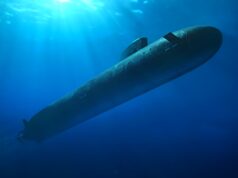
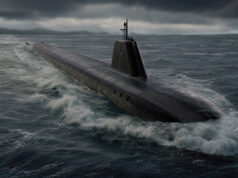
This render makes it look a lot like the french Suffren class.
It does on the surface. The full render is a little different.
I disagree, it’s twice the size of the Suffren and has a much more curved profile with the bulbous hull in front of the sail.
Read on another website that this is being pushed right by the Burnham clan and his merry muppets, to save some short term cash, anyone else heard this? 👍
No. The Telegraph made a hash of reporting it.
Streeting said the decision on final hull numbers will be taken in 2028.
Steel-cutting is still scheduled for next year, as per available information.
👍
No, kind of sounds like it’s made up. I can’t image anyone on a website you read having access to the Prime ministers office and some top secret deliberations on nuclear submarines, I’m sure if you think about it long and hard you will realise just how daft your statement sounds.
Bit harsh mate
Maybe 🤔
Not at all, you may believe your masters at all times Jim but there’s plenty of OS int, some good some bad, which can be sifted through to see a possibly different narrative. To be fair, the mainly daft statement many of us read is your blind belief in the current UK military power and the spin these clowns put in it. Read many of your posts Jim, I love positivity but your unrealistic outlook from a desk is what gets people killed. Bit harsh, maybe 😢
😂
😂
The idea of SSN-A being pushed to the right to save some money short-term begs the much bigger question, can we afford the vast expenditure envisaged on the future defence nuclear programme at all? It is not just SSN-A in the works, there is also the simultaneous building, at tremendous cost, of the four Dreadnought SSBNs AND the simultaneous high cost of developing the successor to the Trident missile, Astraea.
Doing any one of these three things would stretch the future 3.5% defence budget to its limits. Doing all three at once is just a pipe dream. The entire army, navy and air force procurement budgets total, from memory, about £9bn a year. The cost of the defence nuclear programme is set at nearly twice as much, £16 bn a year for the next four years (and in reality for the next seven years up to 2033). (1)
If we are spending so much of the budget on nuclear, don’t anyone hold their breath waiting for more fighter jets, warships or army replacement equipment, the money’s all spoken for. In Gen Barron’s words, defence nuclear is eating the defence budget from the inside.
Much of the reason we have this big spike in nuclear spending is that the can has been kicked down the road by successive governments, Burnham is just the patsy left facing the mess.
(1) The committed nuclear budget for the next 4 years is £63.6bn, made up of
– Submarines, maintenance and infrastructure: £47bn
– Trident maintenance and Astraea development: £13bn
– Nuclear fuel, workforce skills, other: £3.6bn.
The cost from now to end 2033 is £128bn, so average £16bn a year. That is all before we get the first Dreadnougt or SSN-A in the water, so that level of expenditure will have to be maintained for the next 15+ years.
The article in question was not about pushing boats to the right.. it was very misleading. They are still advancing production with steal cutting next year.. what they have said is the will not decide on final numbers until 2028.. so no firm decision on later boats until 2028.. which will not create any delays as these later boats will not be laid down for about 20 years anyway… the telegraph as one of the real bias papers.. wrote a decision on Aukus delayed by 2 years headline…
Hmmm … purchance, anyone else cynical enough to contemplate a fall-back AUKUS plan for the 2030s, that assigns not one, but two Astute class SSNs to the rotational force based at HMAS Stirling? Boats would, at least nominally, remain under RN control, and thus shield HMG from criticism re defence reductions. RN crews gradually displaced by RAN. USN extremely pleased by prospect of two additional SSNs patrolling the I-P, that USN did not have to source. Meanwhile, RN submarine maintenance infrastructure issues have been resolved and five remaining Astutes are heavily tasked w/in the E-A theater. BAES is financially incentivized to accelerate SSN-A IOC, and miraculously succeeds. HMG, including MoD and RN, and UK MIC (especially BAES and possibly Babcock) are all well pleased and self-satisfied. Perhaps the only discontented group would be UK citizens w/in the revised highest marginal taxation rate category. A strictly hypothetical scenario admittedly, but not beyond the bounds of possibility. 🤔😉😁
All,
FYI, interesting and informative article re same subject published on NL (9/17/26).
It seems the HMG are getting one thing very right and that is future SSN production.. (after hashing it up in the 1990s)
SSNs are so important. In reality the only capabilities Russia really worries about in regards to our military deterrence is
1) our ballistic missile submarines
2) our ability to place a CBG somewhere unpleasant
3) our offensive ASW capability for knocking out its SSNs ( that includes our SSNs)
4) our SSNs ability to strike Russian bases and attack its bastion
5) our perceived ability to convenience and bring in other nations as well as the British army leading the ARRC
That’s it really it, Russia does not really give two hoots about all our other capabilities ( if anyone thinks a British army battle group or RAF squadron here or there in Eastern Europe really interested Russia they are missing the scale Russia works at in regards to land warfare in Eastern Europe ).. infact I read a very good article where a senior British army officer was very open about this and that it’s more that the British army is there and has the structures in place to run the ARRC and a well constituted NATO army corps as an offensive reserve.
But British SSNs really do play on Russias mind… and the thought of the Uk building 12 will have them in conniptions…more than anything else the UK does… these will be a true conventional deterrent to Russia unilaterally attacking the UK to see if it can get a sneaky one in before NATO can or will react.
So it’s important to say historically HMG really dropped the ball on this one and of all our capability losses this is the one that leads us most open to attack. Russia would step more carefully around a UK with 12 SSNs in the water, infact everything else being as shite as it is would not matter as much geostrategically if we had 12 active SSNs..
The rot really set in during the very early 1990s, the 1980s had seen the design of the SSN-20 or W class develop, this was to use the PWR2 reactor, be a lot bigger and wider diameter than a Trafalgar to house the reactor and have an integrated sensor set…if this has been laid down in 91 it would have been very different. But it was cancelled in 1990 due to the fall of the wall in 89.. if it had not been cancelled all would have all been fine.. instead that last Trafalgar was launched in 1991 with no follow on boat.. in 1992 the MOD outlined the need for a Trafalgar batch 2 for pretty imminent construction and in 1993 VSEL outlined the plan for the Trafalgar batch 2.. essentially a longer and Beamer Trafalgar with a PWR2 an upgraded BAeSEMA submarine command system and a fully integrated type 2076 sensor suite as well as a none acoustic sensor system ( whispers say stolen from the Russians and related to wake following ). 3 batch 2 Trafalgars were put on the funding line ( with a possible 6 total for 13 Batch one and batch 2) invitation to tender for design was issues in mid 1994 with production contracts planned for 1996.. almost a decade after the last batch 1 Trafalgar was laid down and 5 years after launch.. it was planned the production contract would be for 3 boats with options on 2 more for a fleet of 12..in the end it was realised that you could not fit a PWR2 and all the systems into a cheap Trafalgar batch 2 redesign and essentially the 2 assessment phase designers from GEC-Marconi/BMT and VSEL/Rolls-Royce solutions were closer to the Original cancelled SSN 20… in the meantime problems mounted, the MOD in 1997 finally chose the GEC Marconi\ BMT concept and signed for final design and build on 3 boats, at the same Time VSEL were taken over by GEC Marconi who acquired Barrow.. the big problem was the last boat to from design to production that the UK had designed and built was the vanguards and that design had been about 15 years ago.. as the design matured they realised more and more there had to be a Complete redesign as the size of the PWR2 required a completely new and complex class ( essentially what the SSN-20 had been all about) in 1999 BAE took over the company and did not lay down the first keel unto 2001.. a decade after the launch of the last Trafalgar.. due to skill loss by 2002 both BAE and the MOD reckoned Asute would be delayed by 3 years and the programme for the three boats would be 430million over.. with a cost share.
By 2007 Asute was launched 16 years after that last Trafalgar and Ambush and Artful were being constructed. Boat four was contracted in 2007, boats 5 and 6 in 2010 and boat 7 in 2012.. at which point first 3 boat programme was 50% over budgets and almost 3 years late… the MOD was then forced to move to the Vanguard replacement programme for which first steel was cut in 2016..
Now that was a shite show of epic proportions and probably the biggest defence fuck up of John majors premiership.. as our SSN issues were essentially baked in by the time of Blair in 1997 and for all Cameroon deserves a lot of stick he cannot be Blamed for the SSN mess. So we can all thank John major for the fact we have 5 SSNs.
But it looks like HMG learn a big hard lesson and we can give pats out to all the PMs from 2018 for not fucking up in the same way.. since May in 2018 and the Maritime Underwater Future Capability, HMG has generally got on with it, with all PMs pushing it forward. This means that with the delay to the Astute programme we will be building 2 classes of SSN at the same time and not a decade later, so we will get the first steel cut on SSN AUKUS before that last Astute is launched, this is really closer to Cold War level intensity, it’s worth remembering the first Trafalgar was laid down 6 months before the last swiftsure was launched ( that’s how you do SSN programmes).
Also because of the dynamic interaction of three things it may be that the RN can get to over seven boats quicker than maybe thought and that 12 SSN AUKUS boats are a real possibility… so why
Skills and industrial capacity
1) SSN AUKUS is being designed quickly off the back of of Dreadnought.. no decades long delay.. they started the design work on SSN AUKUS as they are building the first Dreadnought..so design skills are current
2) hot production.. both Asutes and Dreadnoughts are still being build as SSN AUKUS is coming on line..with increasing capacity.. not a starting with a non existent workforce after years of no work.
So this means design or production delays are less baked in as they were for Astute.
Time to build
1) the Dreadnoughts will be build concurrently with the first batches of SSN AUKUS
2) the Dreadnoughts are being built last 35-40 years
3) the first dreadnought will not need replacement until say early 2070.. so it’s replacement will not need steel cut until 2055 and its keel laid until early 2060..by 2066 they will have 3 keel laid and will probably not have capacity for new SSN production that gives AUKUS SSN a possible production run of almost 40 years from first steel cut for first boat..
4) if they are planning first boat to be in services for late 2030s that’s ambitious as it’s going to be only 10 or so years from cutting steel to commissioning and a production run of 1 boat every 18 months that will be 12 boats by about 2055/56 so there should be time before the new SSBNs take over the production capacity.. but it’s worth noting the the batch 2 astutes have been painful at 13 to 15 years from first steel to commissioning.. and only 1 every 3-4 years if they built them at Asute rates by the mid 2060s they would only squeeze in about 9/10 boats
How can numbers go up more quickly
1) the Asutes have been very very late so they will decommission later..
2) they have 25-30 years of Reactor fuel.. but some of the boats have not been active with hot reactors for many years due to dry dock issues, this means their reactors may have fuel for a lot longer..
So when might we loss each boat due to running low on Reactor fuel ( this is the optimistic 30 years and including time out of service)
1) Astute: no significant periods not in service and been active since 2010 so probably decommissioned around 2040
2) Ambush: not been to sea for 4 years and probably will not until around 2029/30 ( storerobbod).. so although active from 2012, will have had 8 years inactive so extending reactor fuel for 8 years: decommissioning around 2050
3) Artful, not at sea for 3 years, but probably going soon. Active from 2015 so decommissioning around 2048
4) Audacious, not at sea for 3 years, will not return to until probably 2028 so 5 years out of service.. active from 2020 so decommissioning around 2055
5) Anson, active from 2023, decommissioning around 2053
6) Agamemnon, probably active from 2027, decommissioning around 2057
7) Achilles, probably active from 2032, decommissioning 2062
Because of being so late or so little dry dock capabilities a good five of the astute fleet could be capable of being run into the 2050-2060 period.
So let’s make an assumption that BAE can come close to do as they say with the AUKUS boat.. although I’m going to say 18 months is to tight and go for a two year drum beat ( the maths is easier ) we start from 2038
2038 7 astute 1 Aukus =8 boats
2040 6 astute 2 Aukus =8 boats
2042 6 astute 3 Aukus = 9 boats
2044 6 astute 4 Aukus =10 boats
2046 6 astute 5 Aukus =11 boats
2048 5 astute 6 Aukus = 11 boats
2050 4 astute 7 Aukus =11 boats
2052 4 astute 8 Aukus = 12 boats
2053 3 astute 8 Aukus =11 boats
2054 3 astute 9 Aukus = 12 boats
2055 2 astute 9 Aukus =11 boats
2056 2 astute 10 Aukus 12 boats
2057 1 astute 10 Aukus 11 boats
2058 1 astute 11 Aukus 12 boats
2060 12 Aukus
So possibly from 2038-40 they cooks have 8 boats, moving to 10 by 2044 and 11 by 2046 in 20 years. If they do get it down to an 18 month drum beat it will be 10 boats for 2042 and 11 boats for 2044.
Just some thoughts and a play around with possible outcomes…
Jonathan, the NHS is very lucky to have you, but you should be working as the government chief national security advisor.