

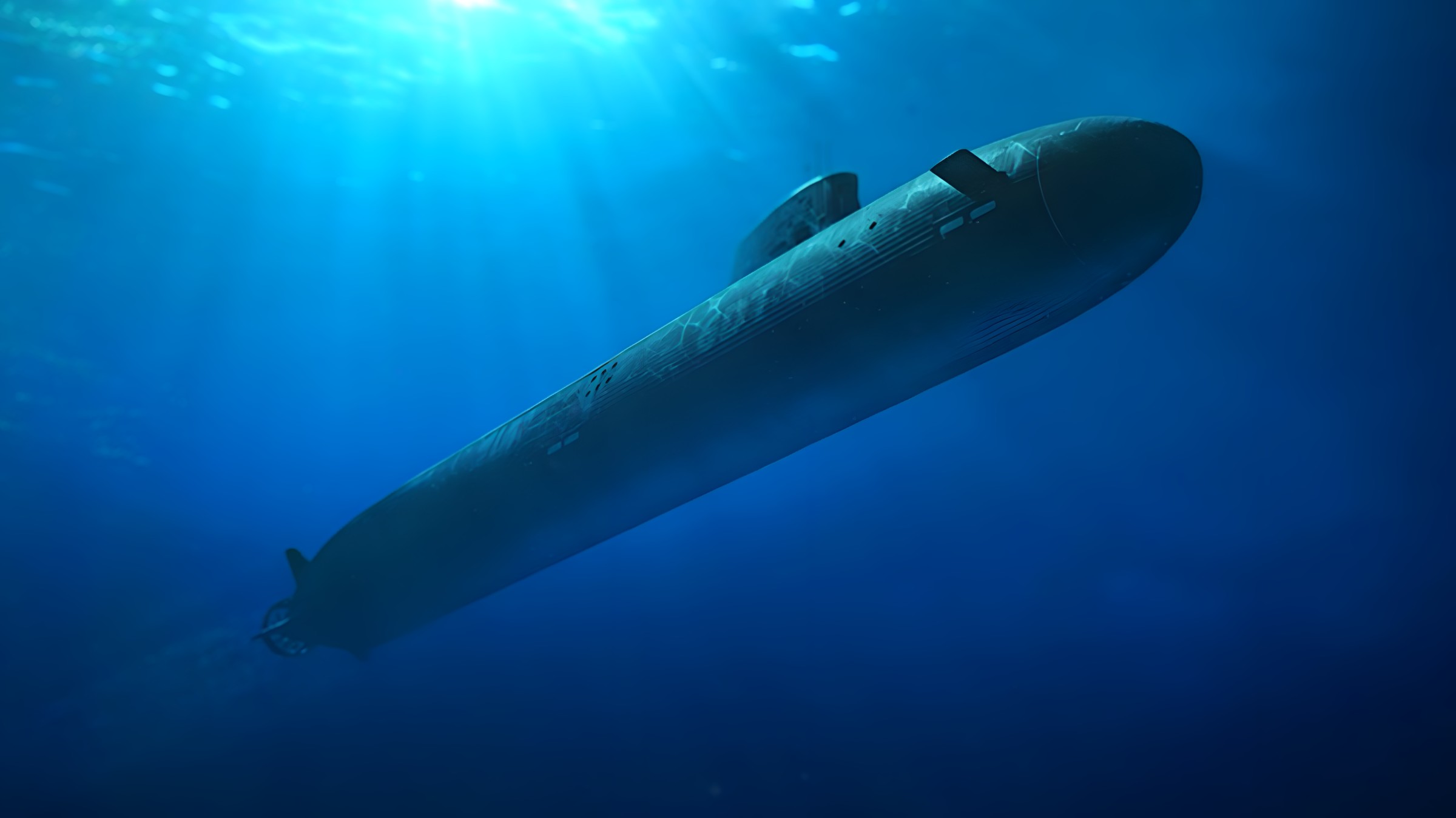
SMITE2, a new submarine propulsion testing facility forming part of the wider Submarine Build Modernisation programme, is in its development phase, with dates for the start of construction and for completion to be agreed at a main investment decision point currently expected in 2028, according to an answer given in Parliament.
Ben Obese-Jecty, the Conservative member for Huntingdon, asked when SMITE2 is scheduled to commence and to be completed.
Luke Pollard, the Minister of State for Defence, said: “SMITE2, a new submarine propulsion testing facility and part of the wider Submarine Build Modernisation programme, is currently in the Development phase. Dates for key milestones, such as start of construction and completion, will be agreed as part of the main investment decision point, which is currently expected in 2028.”
Propulsion test facilities let engineers run a submarine’s power and drive train on land before any of it goes into a hull, shaking out the integration problems in a building where they can be reached with a crane. The alternative is finding them inside a pressure hull after the boat is closed up, which is where cost and schedule go in submarine programmes.
Submarine Build Modernisation is the programme rebuilding the industrial capacity behind the Dreadnought class and the SSN-AUKUS boats that follow, and the work covers facilities at Barrow-in-Furness, at Derby where Rolls-Royce builds the reactors, and across the supply chain. The department awarded BAE Systems £2.4 billion for Royal Navy submarine programmes earlier this year, and separate investment has gone into the Barrow site itself.
An investment decision in 2028 puts construction into the back end of the decade and completion some years after that, which places the facility alongside SSN-AUKUS, well after the Dreadnought build. The first Dreadnought boat is due in the early 2030s and is already building at Barrow, with the keel laid for the next generation missile submarine last year.



You have to wonder how Russia manages to keep a “top class” nuclear submarine fleet without all these expensive extras.
But I’m sure the Yassen’s are every bit as capitals the Virginias and Astutes. 🤔
Because the Russians don’t care if they dump nuclear material into the ocean. They don’t care if they have a nuclear meltdown pierside. When you don’t care about such niceties, you don’t need all these safety checks and preproduction models to prove out the design before putting it in the ocean.
And yes, the Yassens are very capable. The gang of USN destroyers (and probably USN SSN) that followed one to Cuba (stupid move, Russia) can attest to that.
The fact they followed it very much attests to something as well.. the Burke is an adequate but not top draw ASW platform, what’s the realistic chance of a gaggle of burks tracking an astute or Virginia in open occean that was actually trying to avoid contact ( considering both an Asute and Virginia can run faster for longer than a Burke, hear a Burke from probably half an ocean away and would practically need to be run over by one to be detected)
I think it helped that they were doing wargames with a Gorshkov class frigate on the way and making a big production out of it, so the Burkes would’ve know where to look rather than having to hunt them down in the open ocean with no idea where they were. Ie at that point, all they had to do was listen.
Not saying they are not good boats, but are louder than Asutes or Virginias at comparable tactical and strategic speeds…
Russia has a land-based reactor and propulsion testing facility. It’s not far from St Petersburg.
Hi Jim, I read your comment about “expensive extras” and it looked a bit familiar, ever since the 1950’s when we started to develop our own Submarine PWRs “certain’ people like you have challenged why we in Britain have spent so much time, money and effort testing the propulsion systems of our boats when US and Russia didn’t see the need.
So I surmise you may have worked in HMT or finance somewhere and don’t understand why it’s been so important, but it was then and in a different way it still is.
We started small in the 1950’s by building a zero power reactor in Greenwich, that got moved elsewhere, then a facility at Harwell. Then once we had a handle on how to do it and started to build the PWR1 and its steam system we wanted to not only test the machinery, materials but be able to test the long term effects of how it all stands up to exposure over a few decades. So we went full bore and built the DSMP, Land Based Nuclear Submarine (HMS Vulcan) up at Dounreay (gorgeous place to live).
Why were we so cautious and how did we convince HMT to spend £££’s, someone high up pointed out that the huge difference to ourselves and US / Russia is risk and the cost of a failure aren’t the same and can’t be mitigated !
They have huge countries and can base their boats far away from the major cities, we can’t so we really needed to get it right.
And that seems to have paid off quite nicely because unlike those 2 we have never lost a boat yet ! FYI its was the UK that raised the suspicion about faulty brazing tech with the USN re the loss of the USS Thresher based on the work done here.
And then we look at what else we learnt, silencing a Nuclear Submarine isn’t easy but as we had a live powered up facility we were able to develop the tech to do so and share it with the USN.
Eventually however the bean counters won and Dounreay was wound up, but TBH with supercomputer simulators we don’t need it now.
What they are building at Barrow isn’t Nuclear Powered it’s the Propulsion Plant and as this one is a Generational Tech Uplift it really needs to be tested for reliability, noise, resonance and lots of other things before it all goes live.
Which is no different to what happened with the T26 Frigates and their new plants, as a contrast the USN didn’t build a test plant for the LCS1 class and look what happened to that.
Very good point, the UK cannot afford to loss a few hundred square miles of real estate for a few thousand years…
“Engage the caterpillar drive”
Why are subs not whizzing about at 600mph with supercavitation as they promised?
Because they would blind and even a T45 would hear them from half an ocean away and utterly impossible to manoeuvre… the same reasons why supercavitation torpedoes are a pointless heap of shite, unless you stick a nuclear weapon on the end and use it as a suicide weapon ( which the Soviets did).
Also how do launch anything 🤔
Well they would have to stop and collapse the bubble every time they wanted to find anything, manoeuvre or fire anything…
I suppose in theory you could use it for deep ocean strategic transit or to out run any hunters.. then cut the bubble when you got to the AO… so a theoretical Russian sub could blast through the bastion GAP at hundreds of miles an hour avoiding all possible ASW counters deep into the empty Ogin and close to its AO then cut the Bubble. Your enemy would know it’s in the Atlantic and where it cut the bubble.
Just for a fun comparison china and it’s SSN programme out of its Bohai Shipyard ( with its 24 SSN/SSBN slips) it seems it’s about launched 5 nuclear powered submarines in the first half of the year, in the last 4 years china has launched 10-11+ Type 93Bs with probably 8 commissioned by Feb this year.. with all the likely planned 16 93Bs launched by next year and fully commissioned by 2030 and these boats are not shite, even if they are duel reactor boats as they have pump jet and tiles, sitting them probably between a flight one and flight 2 LA quite wise. its also launched its first Type 95 SSN in Feb, with a second following soon this is a contemporary fully rafted, single reactor, pump jet and tiled 10,000 ton SSN ( nobody yet knows how good it will be, but the assumption must be it will exceed a flight 3 LA ).
Most worrying is china has launched what seems to be 2 news completely novel SSNs with no sail from Jiangnan and Bohai shipyards, with Wuchang Shipyard concentrated on what appears to be an auxiliary nuclear powered AIP sub. The novel sail less is a big 120meter long 11 meter beam SSN… this means at present china is actively launching three types of SSN..
So this adds the Jaingnan submarine construction yard to the Bohia capability of 24 laid down SSN hulls concurrently ( although it was though to be building a mix of likely 16 SSNs and 8 SSBNs..)
It likely means by 2030 china will have in commissioned ( not just launched)
2 type 93s ( runny dog poo.. victor 1 level )
2 type 93As early ( still dog poo.. but better formed victor 2 level )
2 type 93As late ( a useful if not good SSN, victor 3 level, an SSN still used by the Russian northern fleet)
16 type 93B ( a solid if not good SSN with 24 vertical launch tubes for cruise missiles, probably LA flight 1-2 or early Akula class level, held back by its dual reactor and to small beam to have a fully rafted deck )
2 Type 95s peer SSN
2 Type x SSN with no sail.
That’s 26 SSNs in commission for 2030 without any more Type 95s and type x SSNs being commissioned before then. After 2032 we will see the 2 Type 93s decommissioned but if in 5 years Bohia produces the 16 boats it’s capable of and Jaingnan produces say another 2-3 by 2035-2040 china will have 40+ SSNs as well as 40+ modern AIP boat’s.. at that point the US will have about 40-43 Virginia class SSNs..that will put the USN at a 2-1 disadvantage in attack submarines… and just for true joy for the USN, Russia is a pacific ally of china and junior partner and will have 12 Yasen by 2035.. and May just join china in any pacific conflict.