

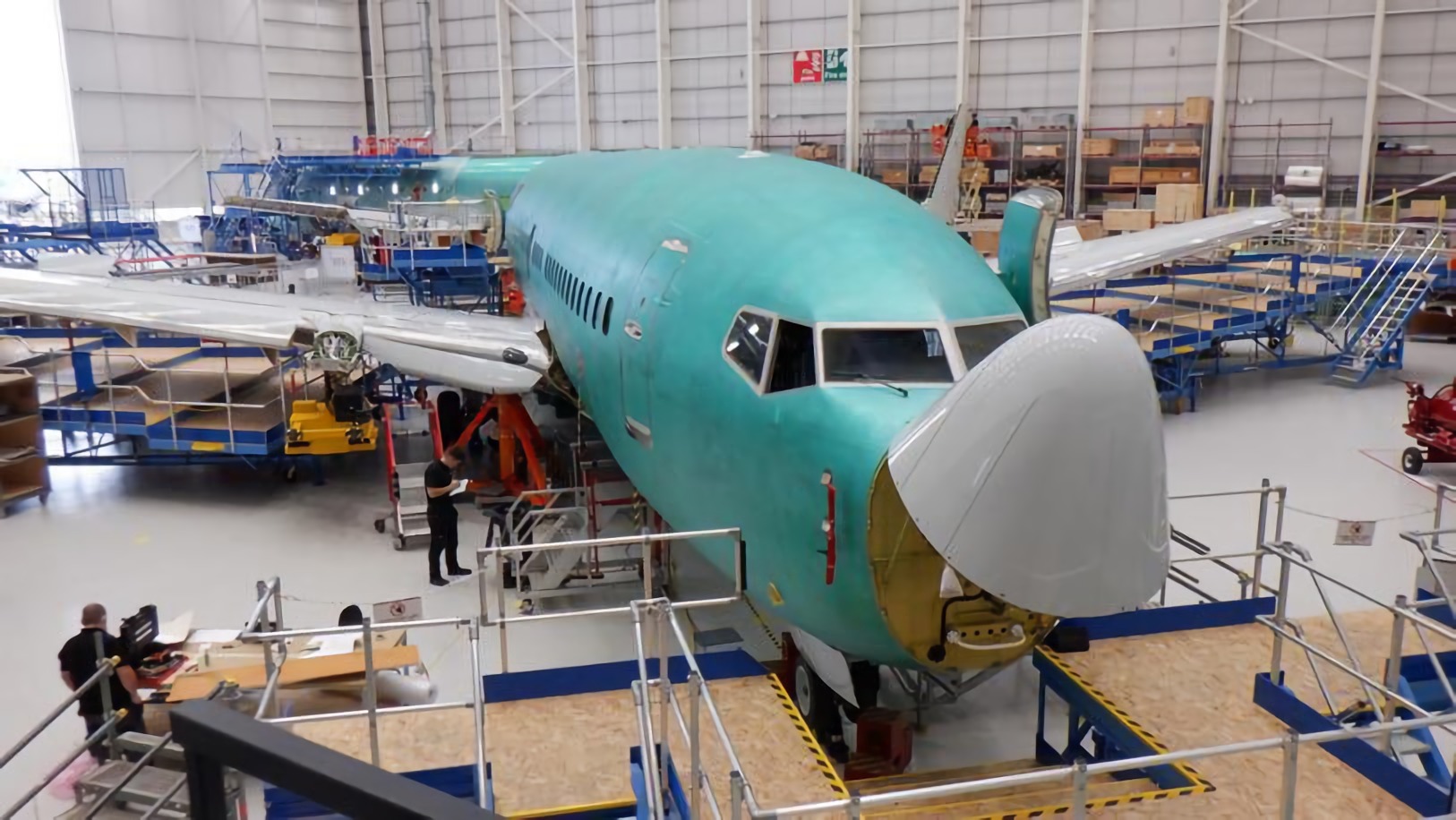
A UK-based aviation company has been contracted by Boeing to undertake the initial conversion work on the first two US Air Force E-7 Wedgetail aircraft, the Ministry of Defence has confirmed.
In a written parliamentary answer published on 17 February, Defence Minister Luke Pollard said that STS Aviation, based at Birmingham Airport, is already under contract to carry out the early conversion stage on two Boeing 737 aircraft that are intended to be configured as E-7 Wedgetail airborne early warning and control platforms.
Pollard was responding to a question from Liberal Democrat MP James MacCleary, who asked whether the Government could confirm that a firm contract had been placed with UK industry to convert two aircraft for end use by the US Air Force. Pollard said: “STS Aviation based at Birmingham airport are under contract from Boeing to undertake initial conversion of the first two USAF E-7 Wedgetail aircraft.”
The response follows a Ministry of Defence press release issued in September 2025 which said the UK was set to build military aircraft for the United States for the first time in more than fifty years, describing the work as a major industrial boost.
The E-7 Wedgetail is a Boeing 737-based airborne early warning aircraft equipped with a multi-role electronically scanned array radar. The platform is currently operated by several allied air forces and has been selected by the UK to replace its retired E-3D Sentry fleet.
However, while the US Air Force has funded development of two prototype aircraft, it remains unclear whether the United States will proceed with a full fleet purchase. Recent US defence budget proposals have signalled a move away from committing to large-scale procurement of the E-7, citing cost growth, schedule concerns and survivability issues, although the programme continues to receive political support in Congress.





At least it keeps the line open so once the DIP/dither crystallises UK can order the other two it should have ordered years ago.
The learning investment is in units #1-3 so 5-7 will be quicker and cheaper with the knowledge and skills built up.
wishful thinking. I doubt 5-7 ever exist.
I strongly suspect the two ‘spare radars’ we currently have for the two additional units for the RAF will be used in these airframes for the US, in which case it’s not such a great deal for the UK, but a bargain for our allies?
They are ‘basically’ having the RAF’s last 2 systems, fitted to US supplied airframes.
The RAF won’t get more than three now.
Maybe
The most important thing is that there is an E7 line running somewhere in NATO.
I suspect the US planes, 4 and 5, will differ significantly in their spec from the UK planes, 1-3. If we eventually take on planes 6 and 7 we’ll have to be careful not to dither between the two previous specs, trying to decide what’s the best of each, thereby creating another learning curve, not only for the planes but for training and future maintenance.
That simply won’t happen now Jon, horse fled, gate left unbolted and gone to a Romanian horse abattoir.
3 is all the RAF will get.
Built battle ships faster than its taken to convert 3 aircraft for the UK, money well spent, no AWACS just gap it, then reduce the order number , all part of the grand plan.
This is how Boeing operates, even simple jobs take them ten years to complete, look at Starliner, 777x, 737max.
Everything is ten years late.
We should bought from SAAB, be cheaper in service by now but no the clever people at MOD can not get any thing right. Afsin, same mess time after time
Wedgetail is already in service with multiple countries. RAF is the reason for delay in theirs.
starliner.. 777X.. You know, simple jobs.
Does anyone know if the USAF aircraft are using our two spare radars?
I believe they are going for their own fit out ?
There own avionics fit, but using our two radars…
Otherwise its one hell of a coincidence, we have two radars sat there and the US just ‘happen’ to want two prototypes built.
At least that is one bit of self sabotage the US has avoided.. not having a strategic AEWC platform would have been an insane loss of capability for a pacific power.
I thought STS Brum. is owned by Boeing anyway?
Believe it’s owned by a private equity firm, not Boeing.
*US private equity firm.
The two airframes undergoing modification at STS for the USAF are “prototype” aircraft and after fit out of all the US only equipment in the US will be flight tested to confirm the required performance of all the systems can be met before a full-scale production line is given the go ahead. Key to that decision will be cost of the full procurement. Given that there remains a political body of opinion against the purchase despite significant military support, it’s still 50:50 that the programme will go beyond the two prototypes especially if performance requirements are not met and a space-based solution can be shawm to be more achievable at that time.
Two prototypes…….and we had two spare radars, I really hope we have not been silly and sold them, but this is the MOD who sell everything so who knows !