

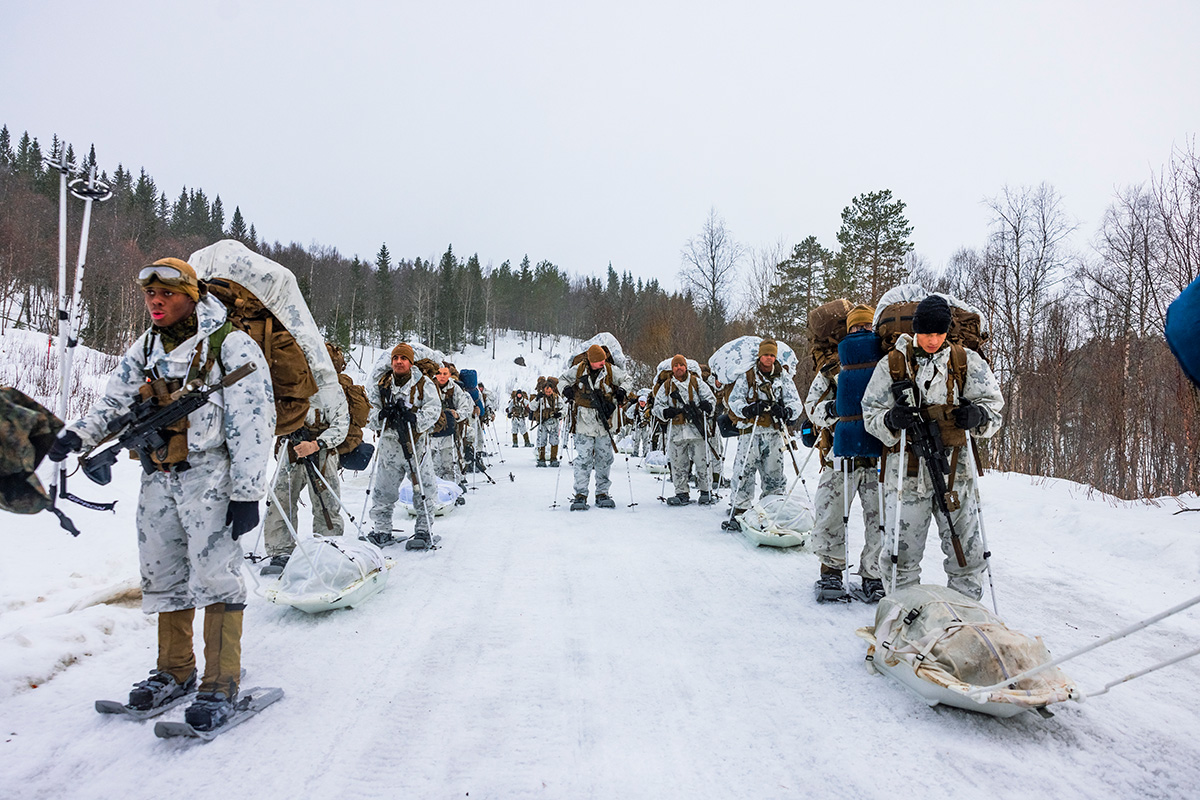
Royal Marines and RAF personnel will deploy to the remote Norwegian island of Jan Mayen alongside US and Norwegian forces for an Arctic operation combining sensors, command networks and long-range fires.
British forces are preparing to deploy to the Norwegian Arctic island of Jan Mayen alongside personnel from Norway and the United States for an operation designed to integrate surveillance, command-and-control and precision-strike capabilities in the High North.
Operation Atlantic City will run from 26 August to 4 September as part of NATO’s Arctic Sentry enhanced vigilance activity. According to a US Marine Corps news update, Royal Marine Commandos and personnel from RAF LXX Squadron will join Norwegian and American forces on the isolated island, which sits around 1,000 kilometres from mainland Norway and north of the Greenland-Iceland-United Kingdom Gap.
The US Marine Corps says the operation will connect multinational sensors, command-and-control nodes and precision fires into what it describes as a joint “kill web”. In practical terms, the exercise is intended to test how forces from different nations can detect activity, share targeting information and coordinate military effects across a dispersed Arctic operating area. The claims surrounding its ability to deliver rapid targeting and sea denial are those of the US Marine Corps and will be tested during the exercise.
Lieutenant Colonel David Palacio, fires officer for US Marine Corps Forces Europe and Africa, said, as quoted in the news update: “We want to prove the Marine Corps’ role as the contact-layer enabler of lethality for the joint and combined force.”
He added: “By deploying to Jan Mayen, we are ensuring the Alliance can instantly target and deny adversary freedom of maneuver in highly contested maritime terrain.”
The American contribution will include Marines from Marine Corps Forces Europe and Africa and II Marine Expeditionary Force, alongside elements of the 10th Marine Regiment and Marine Air Support Squadron 1. A High Mobility Artillery Rocket System platoon from the New Hampshire Army National Guard’s 3-197th Field Artillery Regiment will provide a precision fires element, while US Air Force Special Operations Command MC-130 and US Air Forces Europe C-130 aircraft will support air mobility and rapid insertion. Elements of the US Navy’s Sixth Fleet and Task Force 68 are also participating.
Norway will contribute personnel from the Royal Norwegian Navy and Norwegian Home Guard. The British contingent consists of RAF personnel and Royal Marines, although the US announcement does not detail the number of UK personnel involved or specify the exact aircraft and Commando Force capabilities being deployed.
Vice Admiral Rune Andersen, Commander of the Norwegian Joint Headquarters, said: “By operating alongside our Allies, we demonstrate that we have both the capability and the will to defend Norwegian territory. This includes the Arctic islands, the High North and our territorial waters.”
Jan Mayen’s position gives the exercise a particular maritime focus. The volcanic Norwegian island lies in the Norwegian Sea to the north of the GIUK Gap, the broad maritime approaches between Greenland, Iceland and the United Kingdom that connect the North Atlantic with northern European waters. Those routes are strategically important for movement between North America and Europe and have long featured in NATO planning for surveillance, reinforcement and anti-submarine operations.
Operation Atlantic City will take place at the same time as naval manoeuvres associated with Northern Viking 26, allowing participating forces to make use of overlapping maritime surveillance and sensing activity. Northern Viking is centred on Iceland and the strategically important sea routes through the GIUK Gap, while Atlantic City pushes elements of the wider Arctic Sentry activity farther north onto Norwegian territory.
Major General Frode Kristoffersen, Deputy Chief of Staff for Operations at Joint Force Command Norfolk, described the wider purpose of the NATO activity, saying: “Arctic Sentry is our way of synchronizing all Arctic activity conducted by Allies to increase Arctic security, gain the most deterrent effect possible from those activities, and make sure that we have increased our common situational awareness in the Arctic.”
The deployment will also test the more mundane but critical challenges of operating from an isolated Arctic location. Forces on Jan Mayen must contend with long supply lines, limited infrastructure, difficult weather and rapidly changing environmental conditions. Moving personnel, sensors and weapons onto the island and sustaining them there is therefore part of the operational problem being exercised alongside targeting and command integration.
For the British contingent, the exercise will provide another opportunity to integrate Royal Marines and RAF personnel with US and Norwegian forces in the High North while NATO develops procedures for operating dispersed forces across the Arctic and the northern approaches to the GIUK Gap.




They don’t look that happy do they.
Hope they’ve booked the local Hilton Hotel for the RAF contingent….
well, at least for the Officers.
Lets hope the Volcano remains dormant.