


The UK and Germany are jointly developing deep-strike options including a stealthy cruise missile and a hypersonic glide vehicle, with both countries working towards outline entry into service during the 2030s.
The UK and Germany are working on both stealthy cruise missile and hypersonic glide vehicle solutions under their joint Deep Precision Strike programme, with outline in-service dates extending into the 2030s, the UK Defence Journal understands.
Defence Minister Luke Pollard provided further detail on the programme in a written parliamentary answer to Conservative MP Stuart Anderson, who asked what the UK’s partnership with Germany on deep precision strike weapons entails.
Pollard confirmed that a Memorandum of Understanding signed by the two countries in March 2026 has allowed British and German teams to begin aligning their military requirements and jointly examining technical solutions with industry.
He said: “The UK and Germany signed a Memorandum of Understanding in March 2026 which has enabled joint activities, including with industry, to align military requirements and invest in technical solutions under the Deep Precision Strike programme.”
The programme is examining two distinct missile approaches. Pollard confirmed: “The programme includes Stealthy Cruise and Hypersonic Glide Vehicle missile solutions.”
A stealthy cruise missile would broadly pursue survivability through reduced detectability and a powered flight profile, while a hypersonic glide vehicle represents a different technical approach, travelling at hypersonic speed following launch and manoeuvring towards its target. The parliamentary answer does not provide performance figures, ranges or details of the propulsion and launch arrangements envisaged for either solution, of course.
Pollard said the two governments had reached what he described as “positive alignment” on some of the principal requirements for the programme. He said: “There is positive alignment between the UK and Germany on key programme parameters, including operational concepts and outline target in service dates into the 2030s.”
The wording indicates that the programme remains at a relatively early technical and requirements stage, with the two countries working towards common operational concepts before later development and procurement decisions. British and German teams are currently overseeing technical work already placed with industry while preparing the next stage of contracting.
Pollard said: “Joint UK and Germany teams are now focused on delivering the currently contracted technical work with industry as well as shaping follow on contracts, underpinned in the UK by the funding outlined under the Defence Investment Plan.”
The Deep Precision Strike effort forms part of growing UK-German defence cooperation and is intended to address future requirements for weapons capable of striking targets at considerable distance. The latest answer is significant in explicitly identifying both stealthy cruise and hypersonic glide vehicle solutions as components of the work, while also placing the anticipated service timeframe in the 2030s.
The current phase is focused on technical work with industry, alignment of military requirements and the preparation of follow-on contracts as Britain and Germany determine how the programme will progress towards development and eventual fielding.
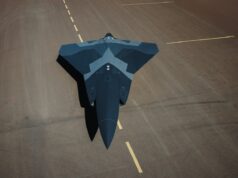



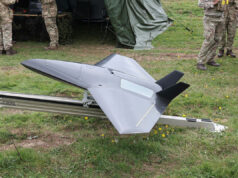




From Farnborough it looked like MBDA were pushing for us and Germany to adopt the Ariane Group’s ballistic missile boosters and use their new hypersonic glide body on top, which seems a good option if affordable.
The only thing is I believe the Ariana ballistic missile booster is French sovereign technology…
‘MBDA wants’ doesn’t necessarily get.
Ideally we would build our own but I haven’t seen anything about industry responses to Nightfall.
It’s good we are working on two solutions as we need both. We should role out the long range stealthy cruise missile first as both countries desperately need additional conventional deep strike capability to deter Russia.
We should seriously consider a nuclear option for the hypersonic glide vehicle along the lines of Chinas DF26 family. I would imagine this would also be of great interest to Germany giving them a latent nuclear ballistic missile capability that they could rapidly turn towards in the future should they find themselves without US nuclear protection.
Given UK remains the worlds premier military power in terms of global sovereign basing having a weapon like the DF26 would give the UK unparalleled global reach.
The UK does have an unusually extensive overseas military footprint for a country of its size. The 2025 Strategic Defence Review explicitly describes Britain’s overseas bases as a critical part of its global military network, including Gibraltar, Cyprus, the Falklands and Diego Garcia, alongside access and defence arrangements in the Gulf, Indo-Pacific and elsewhere.
However, calling Britain “the world’s premier military power in terms of global sovereign basing” is difficult to defend. The United States is unquestionably the premier global basing power overall, with a vastly larger network of permanent bases, personnel and pre-positioned equipment. Britain’s distinction is somewhat different: because of its Overseas Territories and Sovereign Base Areas, it possesses or controls strategically located sovereign military facilities across several regions. That gives Britain exceptional geographic reach relative to almost every other country, but not greater global military basing capability than the US.
A DF-26-type weapon is essentially a road-mobile intermediate-range ballistic missile. China’s DF-26 has a stated range of about 4,000 km, carries conventional or nuclear warheads, and is designed for rapid deployment from mobile launchers.
If Britain possessed a comparable 4,000-km conventional precision-strike ballistic missile and could deploy it from appropriate British territories or overseas bases, the combination would indeed produce a remarkably large potential strike footprint.
It does however make us an important ally. For instance, an act like deny UK components or trident missiles would almost certainly close down access to these facilities.
Hi David, yes, my claim was based on basing on sovereign territory as opposed to the USA which has extensive basing but it’s almost entirely located in friendly territory and requires the host nation to provide consent for military action.
As the USA just found out in Iran, “friendly” host nations are neither very friendly or useful if you use their territory to attack someone else.
With a 4000km range weapon the UK can reach any target in Europe, North America, South America and Africa. Only parts of North east Asia are out of reach. All from sovereign territory. Even the French can’t match that.
Hmm, America has more bases to make up for the strategic location of British ones. It’s got a straight line to the changing of American and British powers in the west so to speak, post world war
It’s really what the deep ally ship is based on.
Look at the mess they have with supplies and how that’s impacting sailors on the carriers – that’s despite their large number of bases.
Without British bases – it’s almost prohibitive to operate globally
I missed the quote marks for “deep allyship/relationship” lool
One of the concepts the Germans are working on is a 3* Land Component Command and a 1* multi domain task force that effectively will handle strategic level strikes.
O/T according to The Defence Blog the Germans are having a spat with Rhienmettal over delivery and quality of Boxer and Sky Ranger,might not bode well with our orders?
Are not RBSL Stockport and Telford up and running with UK complete Boxer build capability now?
Isn’t this missile reach needed sooner, next 3 years to more early 2030s at the latest? Will the UK be looking at getting more TLAMs for its ships and subs off the new 7k production run happening?
Hope there is some action in the GBAD department to seriously be able to defend the UK from whatever alreafy exists in kind that could come our way.
Everything is always needed sooner, because we don’t spend what we need to. By the time the priority has risen to the point where we agree the need to buy, it’s already years after the order should have been placed.
How many TLAMs were fired against Iraq? How many are available for export? That’s the other fallacy we work against: we assume we can always buy from allies if we find ourselves in a bind, but when the world goes to hell in a handcart, our allies will prioritise their own militaries and we will find ourselves in a long queue. Another reason for worrying about the F-35 supply chain. Working with Germany and France can only be a good thing so long as we have sovereign manufacturing at the end of the process.
Stratus RS is reportedly high supersonic but not Hypersonic and supposed to be entering service in the early 2030s compared to this UK-German hypersonic glide vehicle at some undefined point in the 2030s. My guess is that the UK-German cruise missile is also more ambitious than Stratus LO and a few years further away – maybe a much longer range and therefore bigger and ground launch only?
Hmmm … does this programme represent the de facto eventual inclusion of Germany into the AUKUS Pillar 2 hypersonics initiative? Would the UK be both financially capable and willing to support multiple siloed programmes? Certainly not arguing against German participation, and indeed deem it to be a virtually inevitable development. Probable selective additional ENATO involvement. Based upon recent developments between Oz and Japan, probable parallel inclusion of selective I-P. democracies? Virtually guaranteed AUKUS Pillar 2 will dwarf the import and scope of Pillar 1. Simply a matter of the realized timeline. All of the CRINks are duly concerned that this technology train will soon leave the station and develop enormous momentum which may well thwart various CRINK plans of coercion/conquest/intimidation. The CRINK window of geopolitical opportunism may well be slammed shut before 2050. 🤔
Hi Former USAF, my thoughts are, no, I believe it’s specifically not to include Germany in AUKUS and I believe AUKUS pillar II is largely dead from the UK perspective now. AUKUS pillar II is largely a research program for the UK now, almost exclusively naval and focused on fairly low cost items like drones or background science for items like propulsion rather than the development of real life weapons.
The UK has seen the need to ensure it has a sovereign deep strike capability that’s completely independent from the US, given the difficulties the UK has had with ITAR in Ukraine, especially regarding Storm Shadow employment, where even the map data in the weapon has been weaponised by the US government to restrict use.
The issue when a country try’s to use such powers is that it can do it but typically only once. It would be criminally negligent for the UK to continue down a path where even its own missiles required foreign government approval to use. This is why the UK has put so much emphasis on its relations with Germany now but it’s a completely separate relationship from its historic Anglo-sphere partners in AUKUS or its historic missile alliance with France which is more tactical than strategic.
The UK has seen a need to develop a third strand of deep alliance to balance out the now unpredictable and increasingly one sided US relationship and its historically turbulent relationship with France.
Now Germany has moved out of its historic pacifist phase the UK now sees Germany as its closest aligned Allie’s. Both are strong champions on free trade and both see Russia as an existential threat. Unfortunately this is no longer the case with both France and the USA.
If you want another leg to the nuclear deterrent, surely it would make more sense to fit a warhead into this hypersonic missile, rather than splitting the F-35 fleet by buying a token force of 12 A models. It would actually be a sovereign capability then as opposed to using US bombs. The STRATUS RS could be an interesting option for it too if a warhead would fit. Typhoon and any RN warship with MK41 could then be a platform for nuclear capable missiles. That would give the Russians something to think about.
The cheapest way to get a second leg of the nuclear deterrent is the F35A. Buying F35A for the OCU actually costs less then using F35B in the same role.
However it comes at the cost of a smaller less capable F35B force, reduced carrier aviation and yet more US dependence on our nuclear based deterrent.
“However it comes at the cost of a smaller less capable F35B force, reduced carrier aviation and yet more US dependence on our nuclear based deterrent.”
Quite. I don’t see any logic this small buy of F35A. A small cost saving and a brief headline (i fear that’s the beginning and end of the logic) but having a few more NATO F35As with a possible nuclear mission, when there are already more than enough, doesn’t seem to add any real capability or give Putin more pause for thought, when their use depends on the USA. They aren’t even scheduled to be available much before the first GCAP for Japan. The one thing the UK and France alone can offer, that sets them apart from the rest of European NATO is an independent nuclear warhead. I really hope sovereign UK tactical nuclear option is being pursued secretly but that seems unlikely.