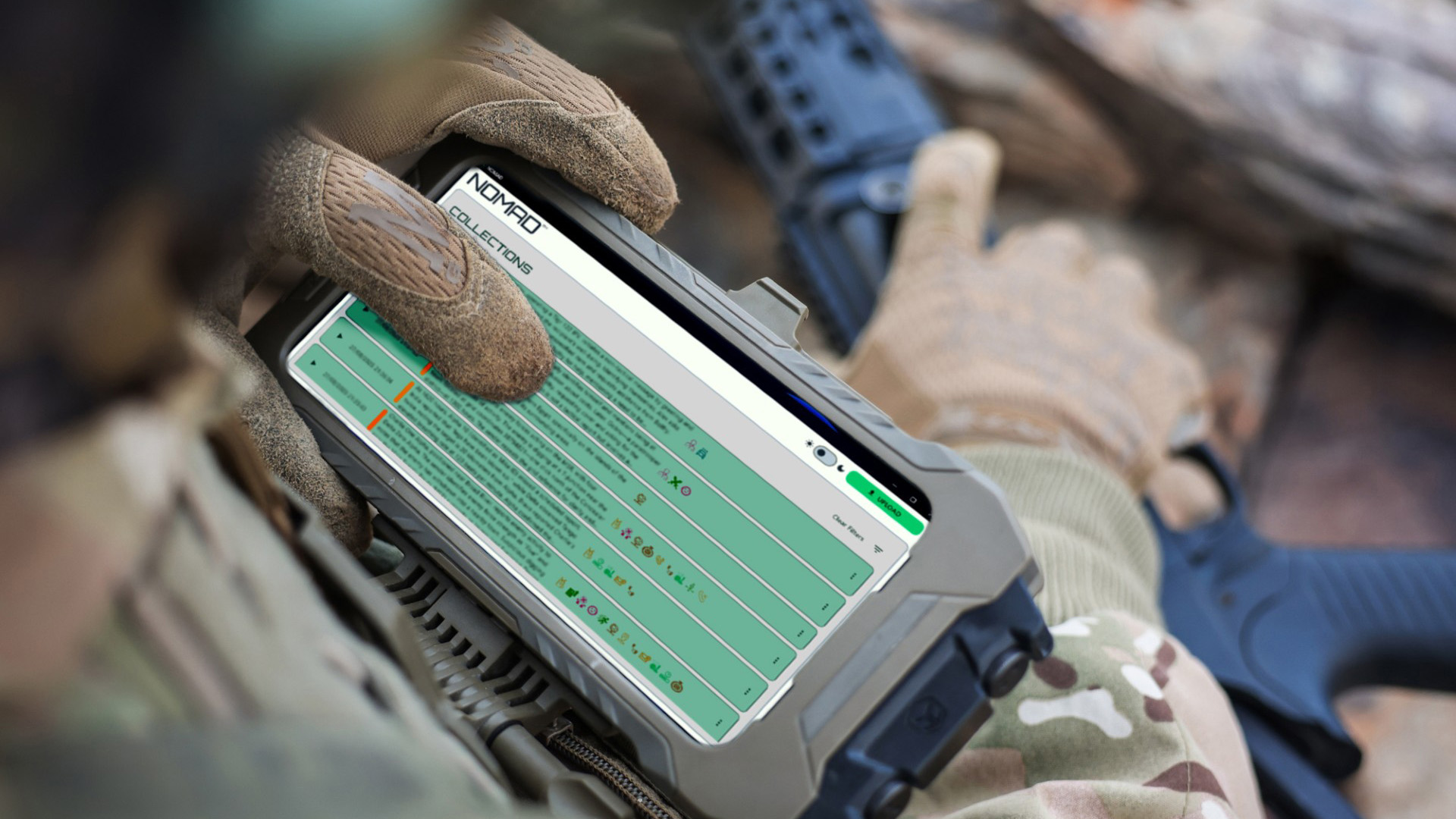
Babcock has supplied the UK Ministry of Defence with its AI-powered Nomad signals intelligence platform under an urgent operational requirement, giving personnel a system designed to process and analyse intercepted voice and text communications in contested environments, according to the company.
Nomad is Babcock’s first fully AI-powered product and is intended primarily for military and security personnel conducting Intelligence, Surveillance and Reconnaissance missions.
The system is designed to process communications close to where they are collected, cleaning, transcribing, translating and analysing voice and text before presenting operators with information that can be used to build a picture of a target’s position, movements and capabilities.
Babcock says the platform can operate across different domains and is intended to reduce the reliance on linguists deployed alongside frontline units by allowing personnel to interpret foreign-language communications more quickly.
The company describes this as analysis “at the edge”, with processing carried out close to the operational user rather than relying entirely on information being sent elsewhere for interpretation before it can be acted upon.
That is intended to shorten the time between collecting a communication and turning it into usable intelligence, particularly during ISR missions where operators may need to understand changing activity in real time.
Louise Atkinson, Chief Executive of Babcock’s Land and Mission Systems business, said: “In a more volatile and unpredictable world, our customers need the ability to connect people, intelligence and operations to deliver mission advantage. Nomad shows Babcock’s ability to innovate and harness the latest AI-driven technologies to better support our Armed Forces and Security Services and empower their front-line capabilities.”
She added: “We’re proud to use our sovereign expertise to solve complex problems and deliver our customers operational advantage at pace, wherever in the world they need it.”
The contract is notable because Babcock says it fulfils an urgent operational requirement rather than being solely a technology demonstrator or experimental programme.
Nomad combines several functions that would traditionally require separate stages of processing, including transcription, translation and analysis, into a single platform intended for use by personnel operating in demanding environments.
Babcock says the system can work with both voice and text material and is intended to help operators identify relevant information more quickly from large volumes of collected communications.
The company has positioned Nomad as part of a broader move towards connecting intelligence collection and analysis more closely with frontline operations, using AI to reduce the amount of manual processing required before information can be passed to decision-makers.