

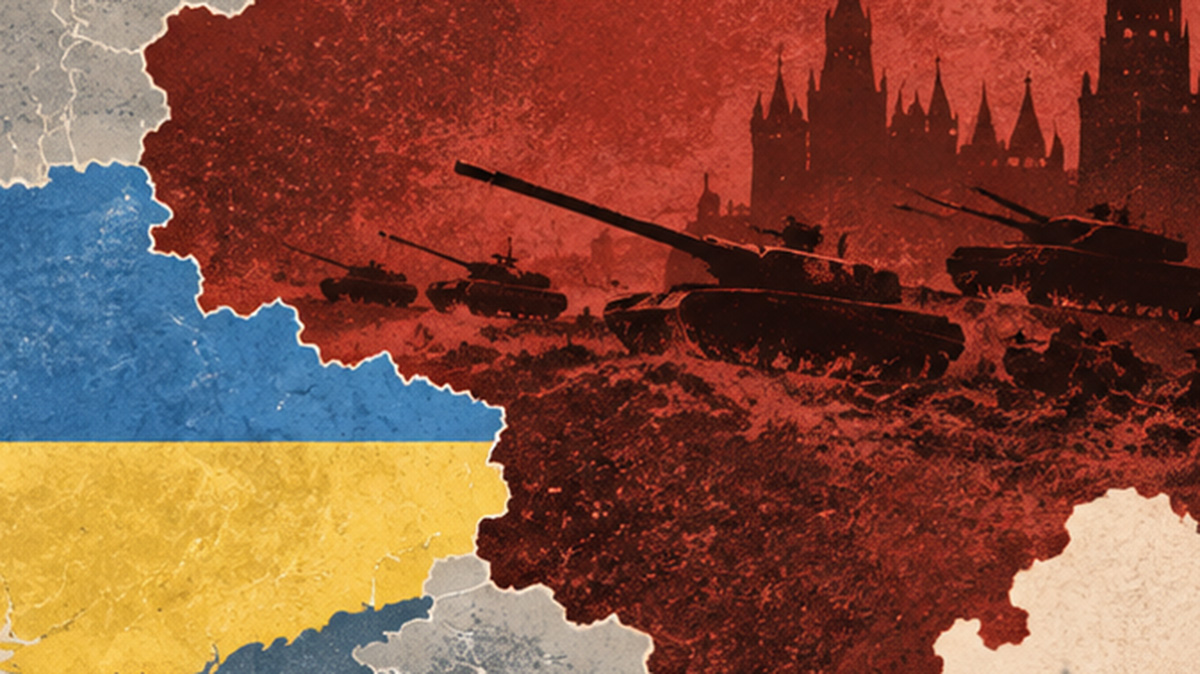
Britain has, in a statement to the Organization for Security and Co-operation in Europe, set out what it called the fundamental facts of Russia’s war against Ukraine, arguing that Moscow began the conflict by choice and has the power to end it, according to the Foreign, Commonwealth and Development Office.
The statement was delivered in Vienna on Thursday by James Ford, the UK’s Deputy Ambassador to the OSCE, at a meeting of the organisation’s Permanent Council. Ford told delegates he intended to “step back and return to first principles and undeniable facts,” before tracing Russia’s actions towards Ukraine back more than three decades.
He began with the 1994 Budapest Memorandum, under which Russia, the United States and the United Kingdom gave security assurances to Ukraine as Kyiv surrendered the nuclear arsenal it had inherited from the Soviet Union. Ford said Russia had committed under the agreement to respect Ukraine’s independence, sovereignty and existing borders. He then pointed to the seizure of Crimea in 2014 and the eight years of fighting in eastern Ukraine that followed, accusing Moscow of undermining the Minsk Agreements “while presenting itself as their guarantor.”
Turning to the full-scale invasion of 24 February 2022, Ford said: “Ukraine did not attack Russia. Russia’s invasion was unprovoked and a deliberate choice made in Moscow.” He recalled that Russian representatives had dismissed Western warnings of an imminent attack in the same forum, quoting them as having described those warnings as “unsubstantiated conjectures” and “scare stories.”
According to Ford, the invasion breached the UN Charter, the Budapest Memorandum and “every single principle of the Helsinki Final Act,” the 1975 accord that forms the founding basis of the OSCE. “States are sovereign. Borders cannot be changed by force. Disputes must be resolved peacefully,” he said, adding that Russia had negotiated and freely accepted those principles.
The deputy ambassador said the war had reached its 1,681st day and that Russia was on course to set new wartime records for missile and drone attacks against Ukraine this year. He cited findings by the OSCE’s Office for Democratic Institutions and Human Rights, United Nations bodies and experts appointed under the OSCE Moscow Mechanism, which have reported grave violations of international humanitarian and human rights law. Ford said those bodies had identified conduct they say may amount to war crimes and crimes against humanity, and that evidence from the killings in Bucha, the town outside Kyiv occupied by Russian forces in the opening weeks of the invasion, formed part of that record.
On the question of ending the conflict, Ford called for “a full, immediate and unconditional ceasefire” followed by serious negotiations towards a just and lasting peace. He said Ukraine had accepted such a ceasefire proposal and remained ready for meaningful talks, while Russia had so far refused. Kyiv agreed to a US-proposed 30-day ceasefire during talks in Jeddah in March 2025, a proposal Moscow did not accept.
Ford closed his remarks with what he described as one final fact: “Russia will not deter us from supporting Ukraine and its legitimate right to self-defence.”




Clearly Russia’s media is sucking the kremlin’s nipple. But, before 2014, hadn’t NATO basically forgot Russia. Tourism was high, trade was high, diplomatically, ppl listened to Russia (not any more with Sad Donkey as foreign minister). But now, Russia is a joke, strutting about, meat grinding men and dick measuring left right centre. It’s sad really, they actually think Operation Barbarossa II is in planning.