

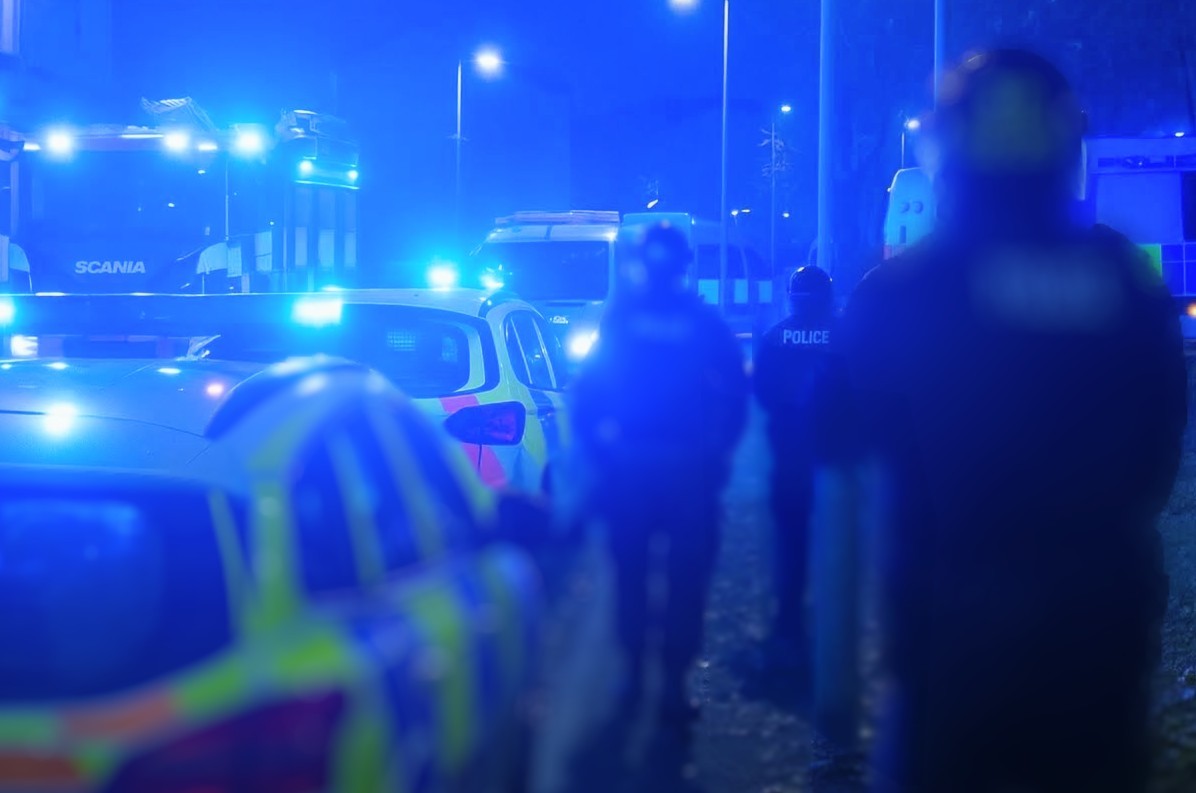
The UK has carried out a major national exercise to test its response to a large-scale incident involving chemical, biological, radiological, nuclear or explosive materials, Counter Terrorism Policing stated.
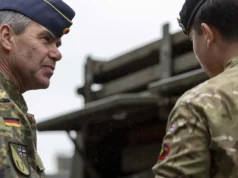
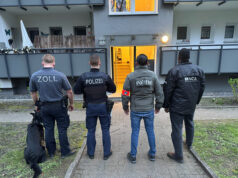
The exercise, conducted between 4 and 7 November in Papworth, Cambridgeshire, brought together up to 600 personnel from the emergency services, armed forces and partner agencies. It simulated a complex incident involving the malicious release of hazardous material and improvised explosive devices to test coordination, communication and technical response under high-threat conditions.
According to Counter Terrorism Policing, the event was “highly successful,” demonstrating strong response capabilities and supporting the government’s Plan for Change and UK Resilience Action Plan. The exercise formed part of the annual national CBRNE training series jointly delivered with the Ministry of Defence.
Deputy Assistant Commissioner Jon Savell, who oversees specialist operations for Counter Terrorism Policing, said collaboration across agencies remains essential. “Our ability to respond to complex threats depends on the strength of our partnerships. The close working relationship between Counter Terrorism Policing, local policing and our partner agencies is not just about systems and procedures, it’s about trust, communication and a shared purpose,” he said. “Exercises like this ensure we continue to build that collaboration so we can respond swiftly and effectively when it matters most to keep the public safe.”
Security Minister Dan Jarvis said the training reinforced national preparedness. “Joint training is vital to ensure that our policing partners, armed forces and emergency responders can work seamlessly together to protect the British public from a range of threats, including chemical, biological and radiological incidents,” he said. “Their ongoing preparation ensures that when an incident happens, the UK can respond rapidly, effectively and with confidence.”
Minister for the Armed Forces Alistair Carns praised the military’s contribution. “Our outstanding British Armed Forces bring deep expertise, demonstrating their critical role in defending the homeland. Exercises like this show how the military is integral to keeping Britain safe and secure at home,” he said.
Counter Terrorism Policing stated that while the use of CBRNE materials in an attack remains less likely than conventional terrorism, such threats remain a priority under the National Risk Register. Regular exercises of this scale are designed to ensure the UK’s emergency response remains ready, integrated and capable of saving lives in a real-world crisis.


Hopefully, the emergency services will receive new equipment to rectify any shortfalls the exercises might expose.
I know little about the NHS side, or the Police, who I recall have CBRN elements at Royston.
On the military side, I’d be interested in which military and MoD elements contributed.
MoD maintains the NARO, and the RAF Regiment, when it had the lead for CBRN, had elements on VH readiness as part of the HRF to deploy at short notice.
I assume now that will come from 28 RE, the CBRN specialists, and elements of the RS, RE, and RLC who have certain Sqns whose role includes short notice respone to UK incidents, whether CT or CBR,N, via a request to the SJC from local
authorities.
Add to these experts from the AWE, Porton Down, and DCBRN Centre Winterbourne Gunner could attend, we have plenty of expertise here.
Stop it DM, It’s so annoying !!!!
CBRN, NARO, VH, HRF, RS,RE,RLC, SJC, AWE, DGBRN. just WTF is wrong with you ? 😁😁😁😁
It’s not normal,
You ain’t normal,
I ain’t normal.
Best get studying then mate. 😉
After that senior officers article, it’s clear many don’t have a clue about defence but declare half or all the MoD and most the Officer Corps should be culled.
We’ll, if they understood even a smidgen of the simple acronyms I come out with ( and they are, really ) I might actually take note of what they say, as to their reasoning why.
This way, it exposes them as being pretty clueless, and also lets me have a bit of fun.
Well I’m fine with Bike related Acronyms (BRA’s)
CBR, GSXR, ZZR, CB, H2, BSA, SS, MT, RS, RM, DT, TS, TSCC, ER, EX, RD, GT, MV, ABS IMU, RMS, CABS, TC, AWC, RWHP, CHP, KH, CDI, KLR, KE, HRC to name a few.
I got one for you, how about MMFD ? It’s Tornado related, 1st Gulf War ?
Revenge of the Halwit!
Hmmm…nothing springs to mind. Give us a clue?
American Military Traffic control asking RAF crew for location !
Nope. My abbreviations concern the modern British military and the MoD, places, orgs, locations. No idea on this one.
In my finest English RAF Pilot voice,
“Miles and miles of fucking desert”.
True story.
Typical Brit humour. That’s not from Tornado down is it? I’ve read it, but don’t recall such a passage.
I really can’t remember but I did smile at the time.
Think It was on a TV program but It was so long ago.
Not forgetting the fire brigade
Of course not, I just cannot comment as I know nothing on them or the NHS.
This is one element the last labour government really did some serious work on civilian preparation for nuclear biological and radiological attack.. each district general hospital ( DGH) was provided with a decontamination capability, inflatable decontamination facility, as well as level A hazmat suits to equip a casualty decontamination team, we even had radiation detection devices as well as treatment pods for different attack types ( bio, nuclear and nerve agent). We had a team of nurses trained in decontamination who would decontaminate and triage casualties ( luckily me got volunteered to be the charged nurse running the decontamination units so me and 8 others once a year got to wander around the hospital in full level A hazmat suits scaring patients ( I’ve even got a certificate somewhere that says I was qualified to run an NBC patient decontamination facility).
That capability was in every DGH as a secondary off decontamination facility to the fire service.. ( allowing the casualties to be sent straight to the ED).
Beyond that each Primary care trust was category 1 responder under civil contingencies and was able to field and fully staff a major incident control room for an unlimited length of time.. ( when I moved beyond EDs it county level oversight of risk I then got volunteered to be a major incident room manager)..
Finally each acute trust had major incident stocks.. pallets of PPE.. and under the control of the cabinet office were vast warehouses of PPE ready for a pandemic as well as huge stockpiles of antiviral drugs.
The labour government has a very well kept up and put together national risk register.. that all cat A responders had access to.
I know it worked because during 2009 swine flu pandemic before we could blink ( and by the time I had filled up my shower with sacks of rice and bottled water) the cabinet office had us fully informed.. had us have our incident room full up and running, or vaccinators trained and our basements full of pandemic stocks ( PPE, flu vaccines and anti virus drugs).
That all changed with the Andrew Langley reforms and the Cameron government.. they essentially defunded the DGH capability. Closed down the PCTs and stopped the local NHS being a cat 1 responder ( so the NHS major incident control rooms moved from county level to regional level) the national PPE supply was allowed to rot in its warehouse.. and by the time we got to Covid civil contingencies was a bad joke.. I had filled my shower up with food and bottled water 3 months before the government reacted and Even got us to set up major incident rooms and at that point I was up at midnight taking calls in my incident room from hospitals receiving pallets of PPE that fell apart and nursing home staff crying as they tried to make PPE out of bin bags… as I tried to get staff to drive around with box’s of gloves between hospitals to make sure we could keep everyone who needed it supplied ( yes we were having DGHs run out of basic PPE).
Civil contingencies in this country is still an utter disaster and joke, it has been for 15 years it will not survive and function if a major concerned attack on our systems took place.
Morning J.
Sobering reading, you’ve outlined this before.
You said it moved to regional. What capability on the NHS side remains, or is that sensitive?
To be honest I’m not sure any more it’s all to in flux.. they had returned the cat 1 function to the integrated care boards ( the latest version of what were Primary Care trusts ) and so they had essentially returned to county level NHS major incident control rooms.. but the labour government are restructuring it all again and so NHSE and ICBs are merging to sub regional organisations ( covering about 3-4 counties ) so this will mean the whole NHS side will essentially go backwards..
Overall emergency care capacity has increased in the NHS since but demand has gone through the roof since Covid ( EDd which saw 70, 000 patients a year pre covid had post Covid spikes in demand of over 100,000 a year).. so although we have more capacity it’s brittle as fuck ( it’s hard to recruit the staff, vacancies are high, staff are all burnt out and it’s all running over the capacity it was designed for.. we have fitted more staff and bays in the same size units etc).
You have to member that as a nation we have never designed our emergency care structures to manage beyond an average day.. surge is none existent because we don’t every pay for spare capacity.. that means the emergency care side of the NHS is always at the point of overwhelm at its busy time ( it’s normal for an ED to have 50% -100% more patients than it’s designed for on a busy day )..
Consider this an average DGH ED can take no more than 3 major traumas at a time and average county of 800,000 to a million souls will have 3 DGHs one that may be a bit larger.. so on average we have the ability to maybe treat 10 major traumas cases per million population at any one time.. drop 20 cruise missiles into a city like Portsmouth see how many major trauma cases you get.. essentially in major incidents you know many will die who in normal times would not.. triage gets brutal and you move to things like.. the heart stops treatments stopped ( you don’t do cardio pulmonary resuscitation or basic or advanced life support in EDs in major incidents ).. all to preserve the flow.. but even working flat out it takes hours to trauma call a major trauma casualty and if you can only do three at a time..even then the definitive care is surgery and how many emergency surgeries can a DGH do at a time ( consider modern surgeons are specialists and a major trauma can need vascular, orthopaedic and others all at the same time) it is brutal… I’ve read reports that make it quite clear even the army no longer really has the ability to do mass casualty events in the true term.. it’s all been warped by coin operations in which you get a small number of casualties….
The worst of it all is the NHS is profoundly double hatted.. the people who staff the EDs are the same people who are the reserves for the forces medical services and the role four forces care pathway is the NHS.. the same services who will be managing the civilian mass casualty events in a peer war.. essentially our forces medical services were designed to be backstopped by the NHS.. because the whole system is not designed to even consider a peer conflict with the UK under constant attack….
Civil contingencies needs a massive re think as does NHS surge capacity and the likelihood of NHS role four failures and lack of ability to use reservists in a peer war..
Hmmm.
The killer as you say is the Reservist RAMS capability.
Only 2 Field Hospitals, or more accurately wity the latest deck chair rebranding “Multi Role Medical Regiments” are regular, the other dozen or so are all reservists and they form the bulk of 2 Medical Group.
For interest of all the officer haters on the previous number of OF6 and above article, 2 Medical Brigade was ANOTHER formation downgraded to Group status resulting in its commander reduced from Brigadier to Colonel.
Should please plenty here…..
Yep one of those reservist field hospitals used to be run by my old senior ED consultant.. which was fine for COIN operations across the globe.. once every couple of years we arranged a locum consultant and she went of to run a field hospital or whatever the army needed a ED consultant/colonel to do for a deployment..but we were an ED next to a port.. prime target land essentially.. if we were winding up to take casualties from a peer attack.. where does this person go.. strip a Key ED of its leader or loss a reservist colonel the choice is yours.
Hey Jonathan, do you use all your fingers when typing ? I can barely manage a couple of lines and an emoji using the one toe ?
Wish I were clever like wat you is !!!!
Then I could write lots of interesting stuff too !
Anyone seen my sock ?
Just to clarify, when I said “I can barely manage a couple of lines”, It’s not drug related !!!
Honest !
Mate when we are taking someone your age it’s always drug related.. pass the painkillers.. heart tablets etc😜🤪😜🤪
We’ll I’d chose the civilian NHS every time.
Not certain, I may be wrong here, but I think the reservist medical side is still a bit of a throwback to Cold War days as in the number of Field Hospitals? Does our best effort Army deployment, so the NATO SACEUR ARRC best effort of 1,3 Divs with added support elements, need that many Field Hospitals?
Because otherwise we’re rather snookered.
Example, could most be kept for home defence and say 4 allocated to the Army?