

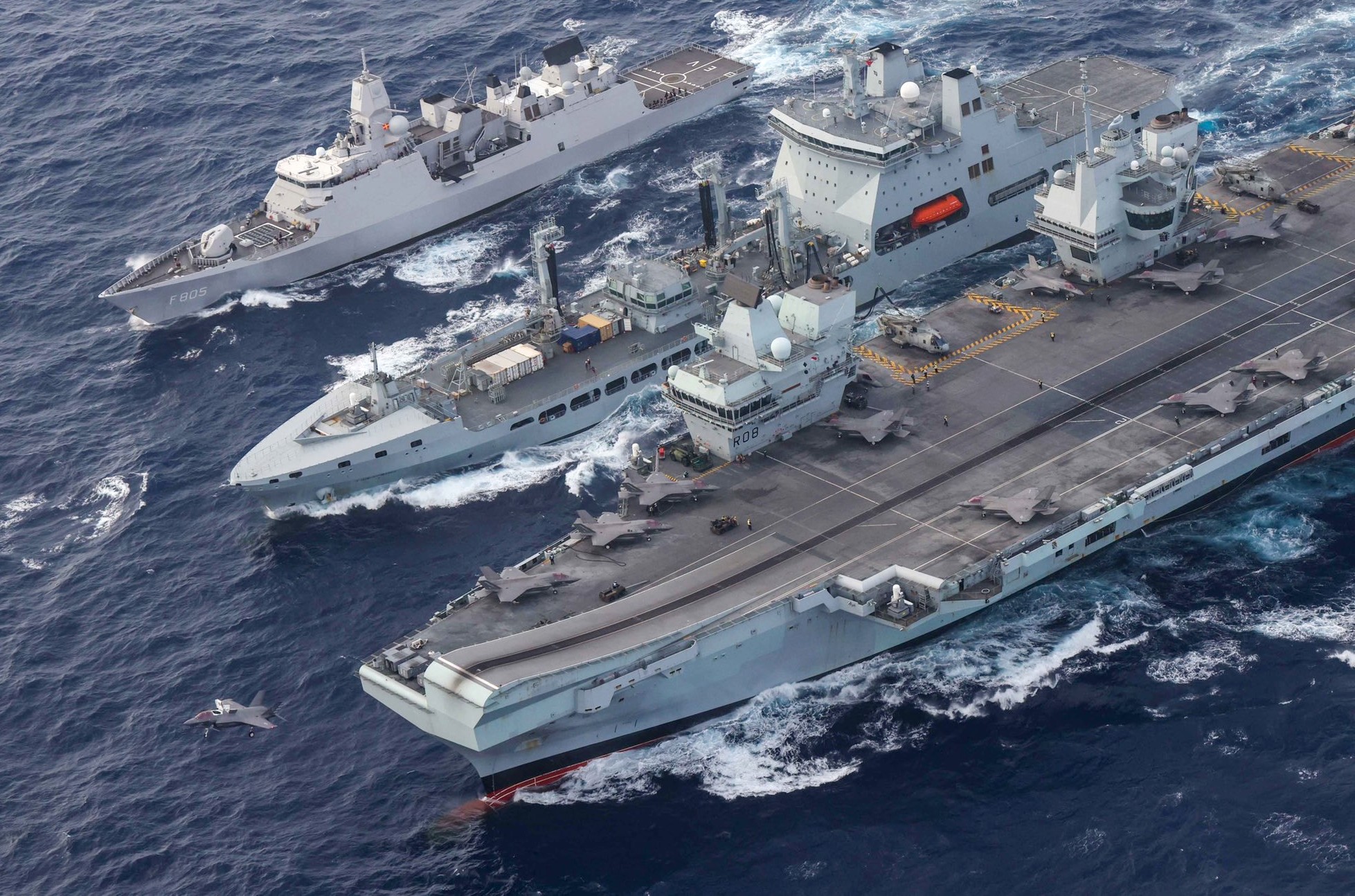
A new paper from the Council on Geostrategy argues that Britain can expand its long term influence in the Indo-Pacific by using its alliances, training strengths and regulatory expertise, the organisation stated.
The Primer, written by former Royal Marine Brigadier Rory Copinger-Symes CBE, frames AUKUS as central to the UK’s long term contribution to regional deterrence and highlights what it describes as Britain’s position as a trusted partner for the United States, Australia and Japan. It presents elite training, soft power and specialist regulatory knowledge as areas where the UK can strengthen its value to regional governments.
According to the release, the paper sets out how the UK can secure practical partnerships by matching military engagement with diplomacy. It identifies participation in the Comprehensive and Progressive Agreement for Trans-Pacific Partnership, further maritime security cooperation with India under the Indo-Pacific Oceans Initiative and a consistent alignment of actions with stated intentions as avenues for building influence among states seeking room between Washington and Beijing.
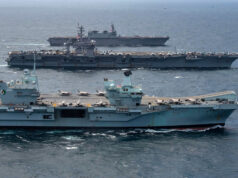
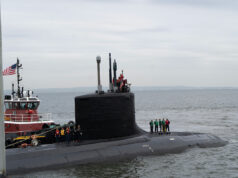
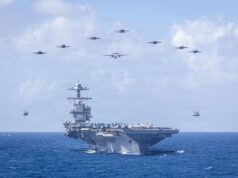
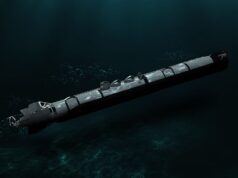
The report follows the Carrier Strike Group 2025 deployment and the publication of the Strategic Defence Review. It states that the UK faces decisions about how to maintain a steady presence in the region and recommends clearer articulation of long term defence commitments. British submarine rotations under AUKUS, expected to begin in 2027, are given as an example of sustained engagement alongside future advances under Pillar II.
The Primer calls for clarity in the UK’s strategic messaging, focusing on collective deterrence and safeguarding freedom of navigation in contested waters. It argues that effective deterrence against Chinese claims requires supporting partners such as Malaysia and the Philippines to develop their own capabilities. The proposed Indo-Pacific Open General Export Licence is presented as one mechanism for aligning exports of strategic goods with that goal.
The document reflects on the gap between British rhetoric and its available forces and concludes that alliance cohesion and reliable engagement matter more than matching the scale of United States or Chinese fleets. It cites the CSG2025 deployment as reassurance to regional partners who have concerns about American reliability.
Copinger-Symes is quoted saying ‘Britain’s Indo-Pacific strategy cannot rely on episodic deployments alone. It should be underpinned by a wider ecosystem of influence that only the UK can uniquely offer.’ He adds that ‘in light of shifting global dynamics, particularly the PRC’s rise as a central strategic competitor, Britain should navigate its Indo-Pacific defence strategy with careful consideration.’
He also argues that through sustained engagement the UK could contribute to a stable Indo-Pacific and establish enduring partnerships.



Historically, the UK has had a strong grip on naval activity in the area and reinforcing the commitment makes sense. However, it can only be achieved by combining principal powers in the region. South Korea should be encouraged to participate alongside a more determined Japan. I would still like to see a permanent carrier stationed there built and operated by a consortium of member countries, and not being solely dependent on Americans for flight platforms. Additionally, semi-permanent RN frigates would help to cement the long-term commitment in the face of Chinese expansion.
“Historically, the UK has had a strong grip on naval activity in the area”
As in when we still had HK? Or at some other point in fading sepia history?
Unless UK is serious about stationing significant assets in the area I am not at all sure what can actually be achieved if Suez canal is required. The first thing the Chinese would do is to engineer another Ever Given type incident maybe with some RPG’s fired into it so a fire took hold on the EVs and the ship sank blocking Suez. It requires zero imagination to know how that could be set up and how many weeks it would take to clear that mess.
So it is the long way round. By the time anything has left UK for that we are at best reinforcements and at worst too late to the party.
“The”, before The “UK”. Have some respect.
😂
Agreed, in the past, the jointly agreed upon plan was for UK carriers In the E-A to backfill USN CVNs redirected to the I-P to engage designated opposition. If UK CVs are subsequently dispatched to the I-P under those circumstances, safe to assume conflict not proceeding according to plan. Optimally, RN surface fleet assets would have sailed for secluded areas where they could shelter from radiological contamination, and participate in a second strike on any remaining PLA/PLAAF/PLAN assets. However, a flotilla of RN SSN-As, especially if/when equipped w/ SLCM-N (next gen USN nuke cruse missile) would prove valuable during the first phase of conflict. 🤔
If the US hadn’t stabbed Britain and France in the back in the 50’s we might have some control over what goes through the Suez.
I could see having a T31 based in Singapore permanently as well as an Astute based in Perth as being desirable and achievable but I can’t see a permanent carrier deployment being either.
With US commitments weaning to the Euro Atlantic, I don’t think we can permanently see such a large part of our combat power being stationed so far from home.
Which is why we need more frigates as even Nick Clegg stated.
One T31 doesn’t do a lot for presence as it will be being fixed/maintained for 25% of the time. Really we need 2-3 around the area working with other forces.
Hugo or his twin will pop along shortly to tell us that none of this is possible because we can’t crew anything ever even with more money and planning. He only appears to use two default thought processes ‘can’t’ and ‘won’t’…..maybe he is TreasuryMan[TM] in disguise?
Helo! Here i am, and yes youre correct, the government isnt likely to fund any increase in frigate numbers or crews to maintain more than 1 or 2 frigates deployed overseas, dont see whats surprising about that.
Unlikely is not the same thing as impossible.
The only way to ensure future rights of passage in this theatre is to have a meaningful naval presence in whatever form that is. The rapid development of drone surface vessels could rewrite the book on surface combat. The current methods of ocean policing could change beyond all recognition as AI and Robotics become more integrated into naval defence, requiring fewer manned vessels on and below the surface. Until then, conventional methods mean long-term stationing of expensive assets or simply leaving it to the local powers to maintain the rights of international passage.
IMO we should just say to the Americans “this is your problem. You deal with it.” If they want to wash their hands of NATO I don’t really see why we should lift a finger to help them anywhere else.
All sounds a bit 1942 Singapore-ry to me if one’s not careful, and we had the biggest fleet in the World back then, and as SB states the problems of reinforcing any such serious permanent basing is hardly negligible or risk free, even assuming we had no immediate European threat. China is producing 30 odd ships a year, makes the old Japanese threat look almost insignificant by comparison. Being flexible and keeping options open to support allies as and how possible is about the best we can hope for. But will likely be mostly token and political in nature than really making a difference and risking a carrier would be a potential disaster waiting to happen if China is involved.
What about it is 1942 Singapore to you?
The CSG 25 deployment as well as leading AUKUS and GCAP production shows the UK can have serious impact in the Indo pacific and that impact can have major benefits for the people of the UK.
The USA has come to a zero tariff deal with the USA today for pharmaceuticals, soemthing that the EU, Switzerland, Japan, Canada, Australia or even Israel would give their left nut for.
Why is the US offering us such deals and no one else. In large part because even the myopic trump administration can see the benefit we bring as an ally and the most visible part of that is the carrier deployment.
Britain can and should continue to form the nucleus’s that other smaller but capable powers like Norway, the Netherlands and Australia can form around to offer significant formations and capabilities in the Indian Ocean.
However we should not look to venture much past Singapore. We lack the mass, resources or national interest to operate in the far east and pacific.
In a war with China, Britains job is securing the North Atlantic against Russian and Chinese submarines and deploying a task force around Diego Garcia to enforce an oil embargo.
The pacific is a job for the USA and Japan
Spot on
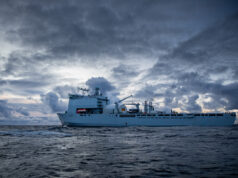
The tyranny of distance does matter hear.. the long way around its 16,000 miles or 2 months sea transit time from the UK to the South China Sea.. that is a very long way.. add in the 1-3 months to get a carrier battle group ready to sale and the UK Carrier battlegroup is turning up after the main event in the pacific.. this will always limit the UKs value as a strategic ally to western pacific nations.. it’s the reality of geography.. if we had a navy with 2-3 amphibious vessels and 30 escorts as well as 12 SSNs and a decent 12 ship replenishment auxiliary force the RN could have a meaningful forward based task group in the western Indian ocean ( an amphibious assault ship, 4 frigates and destroyers anSSN or 2 and 2 auxiliaries ) but it does not so it cannot..
The social media in China wants the North Sea remained as Asia North Sea, And the Baltic to be called Baltic Pacific sea. And hundreds of warships in Kaliningrad, for freedom of navigation. Or at least as many as US, UK in the Asia Pacific.
They also suspect drug smuggling from far North of Afghanistan. Heeee, heeee. Seriously, one of these days a China naval port in Mauritania, Senegal, Guinea is not out of the question– not far from Europe.
For all the PLAN is doing bulding a huge navy, the combined might of the USN, Japan, S Korea, RAN etc matches it at the very least. I’d love to see a RN flotilla out there, if we had30+ escorts in the fleet.
Better waiting until the Chinese come to us and have a growl at them instead of us putting on a show in the Pacific, leave it to the Americans and we can get on with making Europe and the north a sensor bonanza bristling hard core weapons.
indo pacific !
we don’t even have an influence in eastern europe, who are these jokers, what is their real aim ?
Swanking about, nothing more than a total waste of fuel. Leave any mess for the Yanks to clear up, chances are they will have started it. Perhaps concentrate on our little corner of earth while we still have corner
In the 60’s RN always had 2 carriers east of Suez with a Commander in Chief Far East Fleet in Singapore. Those days are gone. But CSG25, AUKUS and GCAP show we can still be play a leading role in the region, but only with local partners. Main risks are concerns on delays in AUKUS and GCAP programmes. Future CSGs must be supported by diplomatic efforts with China as a more reliable trading partner than Trump’s USA. Now China is building a nuclear powered carrier they will have less need for naval ports in Africa. They have less experience in naval aviation than UK. As suggested, CSGs should operate mainly in the Indian Ocean and Australian seas and include unmanned drone surface vessels.