

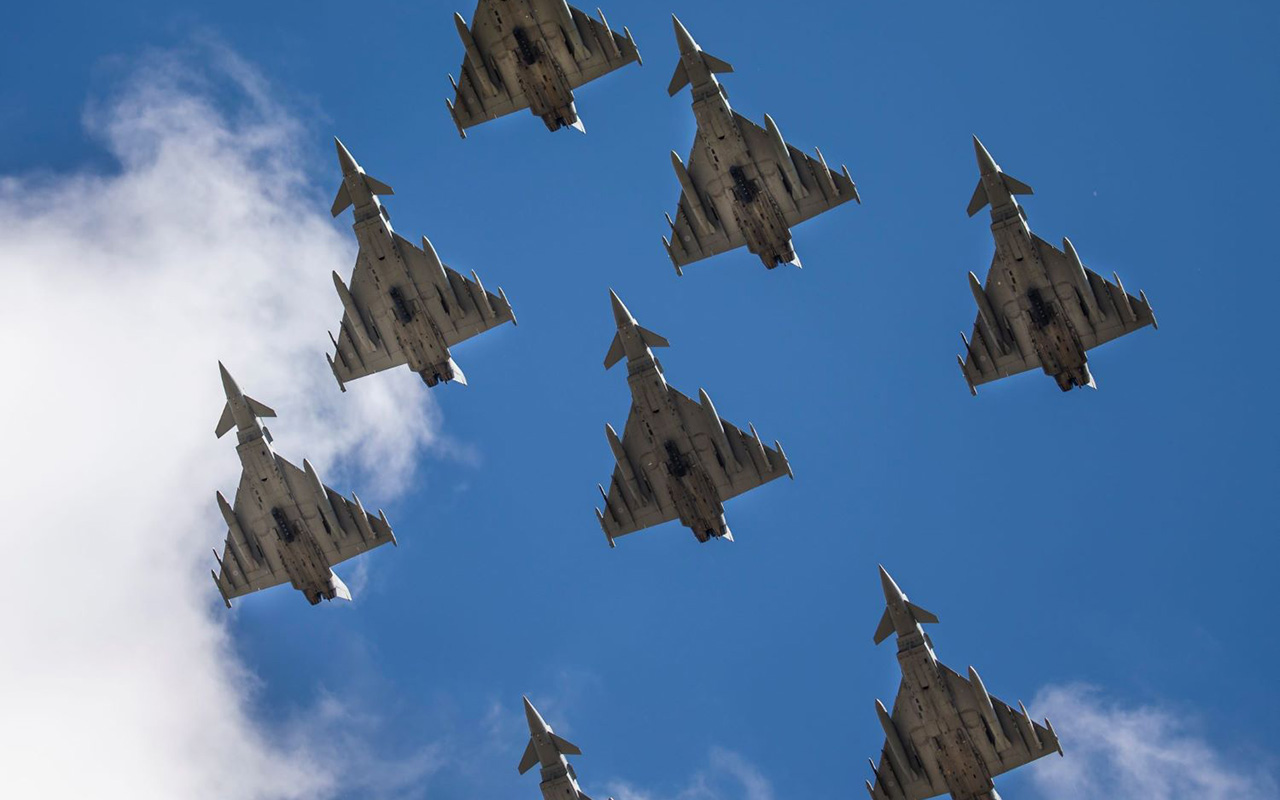
The Defence Committee heard this week that failure to reform defence finance and procurement could drive inflation across major equipment programmes, as MPs pressed the Government on access to private capital and the rising cost of military capability.
Giving evidence to the Defence Committee this week, Defence Secretary John Healey said the UK faces a growing risk of paying more for the same level of military output if structural issues in defence finance are not addressed, the UK Defence Journal understands. The exchange centred on the ability of banks and investors to lend to defence companies, particularly as industry seeks to expand production capacity in response to increased demand. Labour MP Alex Baker told the committee that regulatory barriers were preventing capital from flowing into the sector, limiting industry’s ability to scale.
Healey said attitudes within the investor community were beginning to shift, arguing that defence was increasingly viewed as a legitimate and necessary form of ethical investment.
“You do not have economic stability without national security, and nor do you have a stable society,” he told MPs, adding that defence investment was no longer seen as incompatible with responsible finance.
He said the Government was now focused not only on public spending but on leveraging private finance alongside it, including venture capital and foreign direct investment, while also seeking tougher contractual terms with defence suppliers. Healey pointed to the creation of a new defence exports office and growing overseas sales as part of a broader effort to strengthen the industrial base, noting that foreign direct investment into UK defence reached £1.4 billion last year.
However, Baker warned that despite progress, banks still struggled to lend to defence firms at scale, arguing that without sovereign-backed guarantees, industry would remain constrained. “All we are going to do is drive inflation,” she said. “We are going to buy the same amount of kit; it is just going to cost more.”
Healey agreed that inflation posed a serious risk if procurement reform and investment models did not change. “That is a really big risk if we do not do our procurement better and in different ways,” he said, adding that greater use of private capital and foreign investment would be necessary to prevent costs escalating.
Permanent Secretary Jeremy Pocklington told the committee that engagement with banks and financial institutions had improved, describing new dialogue as a way to overcome long-standing barriers to defence lending.










On the other hand the pound is quite strong against the dollar at the moment
Amazing. What a shock. Order something now and avoid the eighteen months of inflation cost increases that have already occurred.
Procurement of large projects are so drawn out that the compounded inflation takes a large chunk as well.
As PAC has said a very large number of times – speeding things up would save money.
Also on the financial side, Ben Wallace has seemingly just become aware that MoD has to pay VAT on all purchases of military equipment, goods and services, and is outraged.
If VAT could be waived, we would have an instant 20% boost to the defence budget!
Taking 2% down to 1.6% with VAT added. The nuclear deterrent was in a separate budget once. After pension payments as well it isn’t much above 1% in real terms so adding another 1% makes a big difference, when and if it happens. If Trump goes before the next UK election hmg may find something else more important to spend it on.
Richard, there are other things that are sneaked into the Defence budget – a lot of non-Defence Intelligence and the £bns of the Chagos deal (the latter should have been in the F.O. budget)
There was a statement quite recently that the FCO was paying the main part of the Chagos lease. I can’t remember which politico was quoted nor how much the FCO was going to pay, but it was in the 70-80% range IIRC.
Do we believe it? Mmm…
Surely the USA should be making a big contribution, as Diego is really only being retained for their benefit? US intelligence apparently encouraged us to do this Chagos deal, due to concern that Mauritius would take the case to the ICJ (Internationsl Court of Justice) and win, depriving UK and USA of the base and opening the door to the Chinese navy.
I think Trump.forgot that when he lambasted us over a ‘stupid decision”. He had just had Farage over there pouring poison in his ear about Chagos and no doubt Nigel’s list of what he sees as Britain’s other shortcomings, which triggered the sharp comment from POTUS.
.
no rush, every thing is fine