

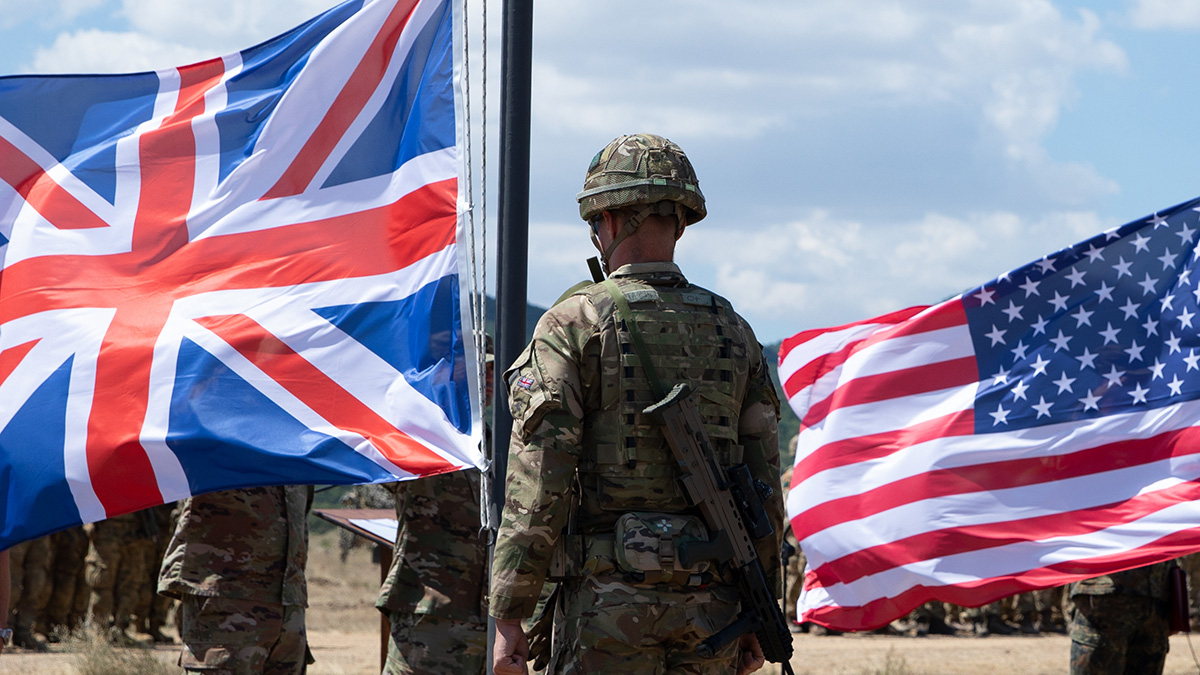
Claims on Greenland, attacks on NATO allies, the Chagos Islands, disrespecting British soldiers, and now Iran. The UK-US ‘Special Relationship’ may well be in trouble.
But if it is in trouble the blame lies solely at the feet of President Trump and the US Administration, despite what some members of the UK Conservative Party and Reform UK think.
Let me start with a clear statement about Iran.
I shed no tears for the Supreme Leader and those around him in his murderous regime. The world is a better place without a person who led a country that was a state-sponsor of terrorism, who supported Russia against Ukraine, and who murdered his own protesting citizens. So good riddance I say.
But there were legitimate questions about the US and Israeli approach which are now playing out (and how much these attacks were driven by Israel with the US following behind). The belief seems to have been that decapitating the Iranian leadership would lead to some sort of regime change which would allow the US and Israel to get in and out as quickly and as painlessly as possible.
Any of us who spent time working on Iraq will know the folly of that belief. And so it is playing out, with ongoing attacks on countries in the region and threats against the UK which have brought us into the conflict. President Trump is now saying this could last weeks. What is the plan? I hope there is one. Because we didn’t have a very good one for Iraq and look what happened there.
Meanwhile there has been much handwringing in the UK about our failure to support the US from the start including, as I say, from Conservative and Reform UK politicians who seem determined to put party and self-interest before country.
Anyone who has read my articles on energy policy in Scotland’s Energy Voice know I am no fan of this Government. But they were absolutely right on this one.
The case for attacking Iran was murky at best, and the justification of an immediate threat (different from what had been the case before) unclear. There was no UN Security Council Resolution justifying action. So, the UK’s initial response was correct and proportionate.
This led to howls of anguish and anger from the US. Claims that we were destroying the ‘Special Relationship’ and that we were no longer a reliable ally.
On 02 March, Pete Hegseth, Secretary of War, made his views clear about allies such as the UK (as opposed to Israel) when he said:
‘Israel has clear missions as well for which we are grateful. Capable partners, as we’ve said since the beginning, capable partners are good partners, unlike so many of our traditional allies who wring their hands and clutch their pearls, hemming and hawing about the use of force’.
On 03 March President Trump told The Sun the UK ‘hasn’t been very helpful’.
I’m sorry folks but I won’t let these go without comment. It appears the US believes it can say what it wants about its NATO allies, make claims against the territory of its allies, attack the sacrifices of its soldiers, and yet still expect those self-same allies to do whatever it wants it to do when it decides the time is right.
That’s not the way it works, especially when the justification for action is murky, and certainly not after you have destroyed trust with those allies.
In the past the UK may have been willing to give the US the benefit of the doubt, see for example UK support for US attacks on Libya in April 1986 when other European countries refused to provide support.
However, the actions of President Trump and those around him have destroyed that willingness, and they have no one to blame for this but themselves. If the shoe was on the other foot would those who are complaining about the lack of UK support think the same? Actions have consequences. Abusing your allies has consequences. There can, and must, be no assumption of automatic support.
In reality there have been questions around the nature and strength of the ‘Special Relationship’ for many years, from many US Administrations. Some of those are good questions focussed on the UK’s unwillingness to spend on defence or step up on the right occasions. So, let’s not believe these questions are new ones.
But this latest damage is the fault of the US, not the UK.
So what should the UK do? Well, the worst thing it could do now is to automatically support the US going forward, even if there are legitimate questions. We need to step up when appropriate. We need to spend more on defence. We need to build capabilities. We need to remove capability gaps. We need to play our part.
But we also need to accept that we are in a different world. A world where the US plays by its own rules. A world where you are either with the US, or against it. A world where sometimes you have to say no, and when saying no is part of the ‘Art of the Deal’. It is showing firmness and strength. If there is one thing President Trump despises it is weakness. He may get annoyed, angry and petulant, but firmness is the only way to earn his respect.
So, we need to remain willing to say no when, and if necessary, but also say yes when appropriate.
My former Foreign Office colleagues dealing with the US are not having an easy time at the minute. But the worst they can do is decide it is time to cave to US demands. Only by standing firm now is there any chance of having a mutual ‘Special Relationship’ based on trust and respect.
This article is the opinion of the author and not necessarily that of the UK Defence Journal. If you would like to submit your own article on this topic or any other, please see our submission guidelines







I think our government has played this as well as possible given the circumstances, not attacking Iran was clearly the right thing to do. Allowing US access to bases after Iran attacked us was clearly the right thing to do.
Sending soldiers to Greenland and calling trump out on his disgusting remarks about British soldiers was clearly the right thing to do.
Not responding to every late night Tweet or off hand comment by Trump in the UK gutter press is clearly the right thing to do.
HMG remain the grown ups in the room, if the special relationship can’t handle that then it’s not worth having.
Withdraw of access to Diego Garcia has shown the US and the Trump administration just how important Britain is in any war in the Asia pacific. The UK’s hand is now strengthened in dealings with Washington. No one respects a poodle and certainly not Trump. He has an entire gaggle of them in his cabinet.
100% 👍🏻
This may seem unusual Jim, but I agree that this time the government has got it right. Leaving the Chagos “deal” aside I think the PR side wasn’t particularly well handled but the decisions were correct. As for the “special relatiionship” it seems to be more a matter of the U.K. doing what it’s told or we get told off. That is not for adults, but then who is to say that Trump thinks like an adult!
I agree
Nothing like a good crisis to bring us all together 😉 🇬🇧
👍😊
Jim, agree 100% but let’s not carried away because our military preparedness has been poor with our allies not impressed at all, which will have consequences in the future. Any future US president will have witnessed this and our standing in their eyes has been diminished.
As for the special relationship overall it was born during a period when we were equals and that has been undermined by our concerted effort to disarm that has created a near total reliance on US military power that is unhealthy and dangerous for the U.K.
The current Government need to reassess our military, technological and industrial requirements and base our policies on being more independent whilst of course maintaining a working relationship with the US alongside European and Commonwealth allies.
Trump may well be a one off and I hope h is but it is warning that a reliance on others is not the basis of a sensible foreign policy so those suggesting throwing our lot in with the EU are equally misguided.
Finally, let’s be clear the current war with Iran was always on the cards which they have been preparing for since at least 2015. Those behind the deal with the Iranians in 2015 were deluded and we now have to deal with the consequences as they fire drones and ballistic missiles at as many targets as they can. We can thank Trump although it sticks in my throat because let’s be clear the Iranians would have developed ballistic missiles capable of hitting Europe and us in the next few years.
Being weak and appeasing those who would destroy you never ends well.
I agree Jim.
It’s worth remembering that both Trump and JD Vance recently attacked the UK for supporting and enabling the US in its wars in Afghanistan and Iraq.
Trump will be gone soon but his successors will be licking up the bills for his actions for a long time to come and support for his war will not carry us any credit with them.
Assuming
(a) Trump can be dragged kicking and screaming from the White House at some point.
(b) Operation Epstein Fury doesn’t turn out to be the initial conflict in a global conflagration…
He can’t live forever on Diet Coke and hamburgers 😂
TBH the dementia is going to get him first, and then we get Vance taking over – which is an even scarier prospect.. 🫣
Gotta keep fingers crossed that the Midterms at least give the US a Legislative Branch that will fight Vance and Trump at every level instead of rubber stamping.
Yes, although it’s clear Trump is trying to rig the MidTerms. First with unscheduled redistricting, which Democrat states like California are trying to counter by doing their own. Now with his “Save America Act” to ban postal votes etc. Homeland also won’t guarantee they won’t post ICE agents at voting stations to intimidate Latinos etc.
The mere fact US warplanes have been using all three UK bases is proof that behind the scenes things are as always. If Trump decides to withdraw his airbases from the UK, it would take around four years to draw down and time to reverse those instructions. Some suggest Trump will attempt to run for another term; however, his reputation is in the firing line due to the Iran War, and he may want out, but the Israelis and Iranians have other plans. 1926 – 2026 both dangerous years for the world economies, and the Iran War just may tip us all over the edge.
I agree, I think the “special relationship” rarely revolves around politicans and has much more to do with the military norms and integration much further down the chain of command and none of that has changed (yet)
If Trump tries to steal the mid terms and or next Presidential election or he invades a NATO Allie all bets are off.
Much will depend on what the US military does in any of those situations.
What makes it look bad is that we are also talking big on Ukraine, but failed to put military into play…But when the US started crying over Iran, we suddenly ran around looking for stuff to go and send over to the Middle East.
And with the state of our armed forces, a hole in our defences in Cyprus and no doubt many other places!
Its a mess!
And for this so-called “special relationship”. It’s time to dilute our reliance on the US
I think Ukraine is very much pleased with our support militarily and diplomatically,as for sending stuff to the ME that’s is not at trump’s request,it’s belatedly stepping up and defending our interests and Allies in the region!
As said on R4 today the nato agreement is defence pact, a member cannot elect to go off on a war and drag the rest of us with them. Secondly how could Israel/ America not have anticipated a blockade of the straight?
I think Israel, don’t care TBH
The UK leasing the Chagos Islands to the USA for a 99 years in return for say a $125M p.a. inflation adjusted payment makes a lot of sense. Perhaps give 10% to the Mauritius (no liability admitted!) to help smooth things out with them.