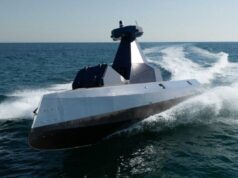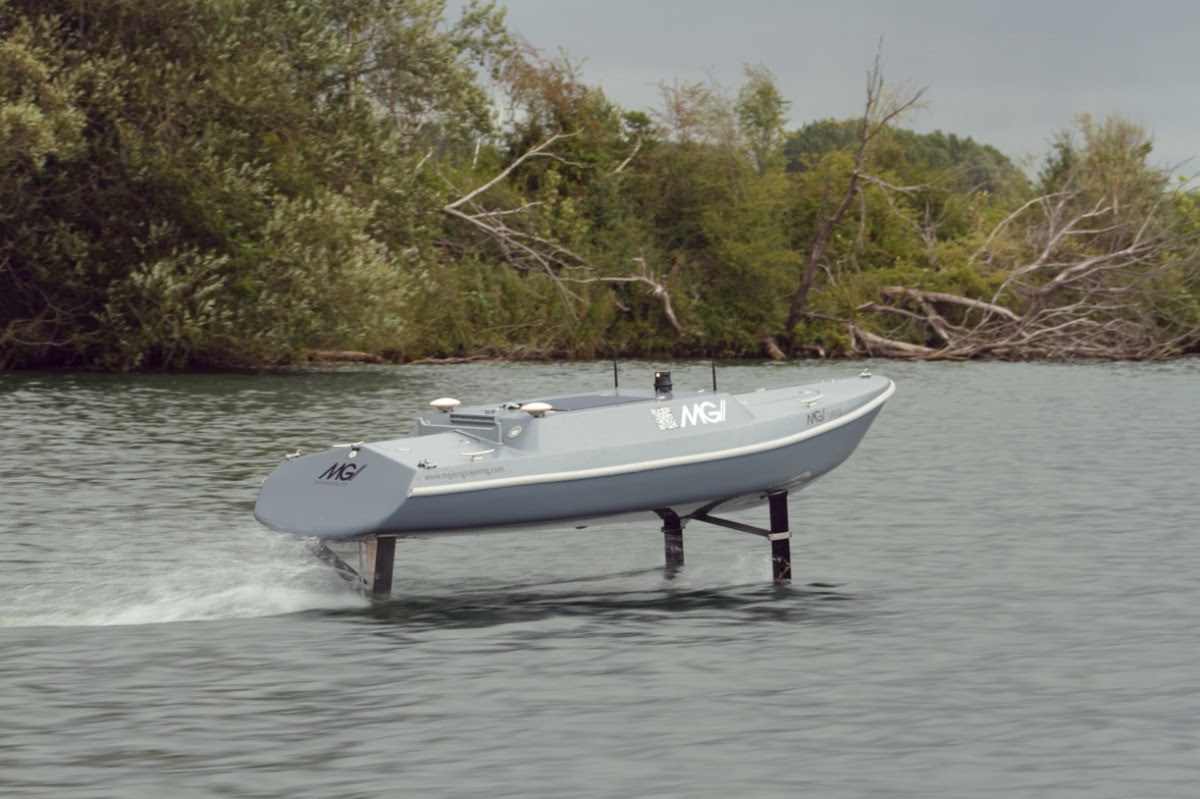
MGI Engineering has introduced SeaGlide, an all-electric foiling uncrewed surface vessel designed for low-signature maritime operations across surveillance, logistics and communications roles, the company stated.
SeaGlide is built as an autonomous platform intended for endurance and speed with a reported cruise capability of 25 knots and capacity to carry up to 200 kilograms of cargo for 150 kilometres on electric power.
MGI presents the vessel as suited to contested or denied maritime environments due to a combination of near silent propulsion, hydrofoil lift and reduced radar and acoustic signatures.
A central feature is its integration with MGI’s Mosquito cargo UAVs. According to the company, this allows for an air-sea network where unmanned aircraft can hand off payloads to SeaGlide for delivery to coastal or island locations without human intervention. MGI links this approach to wider defence interest in networked unmanned systems able to operate across multiple domains.
The company said SeaGlide’s motors are embedded in its fins and raise the hull on adjustable foils to lower drag and extend range. MGI notes that the design draws on Formula One experience in composites and control systems to give the vessel agile handling in varying sea states. Its autonomy suite combines AIS, radar and optical sensors with collision avoidance and precision docking software for beyond visual line of sight missions. A hybrid electric version is under development to increase payload and range.
MGI chief executive Mike Gascoyne said “SeaGlide is a direct response to the operational and environmental challenges we see in modern maritime missions” and argued that applying F1-derived engineering has produced a low-emission platform for persistent tasks that usually require crewed assets.
The release places SeaGlide within a broader shift toward uncrewed systems. It notes early market engagement by the Royal Navy for Project Beehive, recent remote control trials of uncrewed vessels during fleet exercises and experimentation by other European navies with robotic craft for surface surveillance. MGI frames SeaGlide as an entry point for defence customers seeking scalable and affordable autonomous maritime options.
SeaGlide is being trialled in UK waters and will be offered in four, five and six metre versions. The platform is controlled from a single ruggedised ground station and is intended for multi vessel networked operations. MGI states that the system is designed and manufactured in the UK and is available for collaboration or licensing to international partners.