

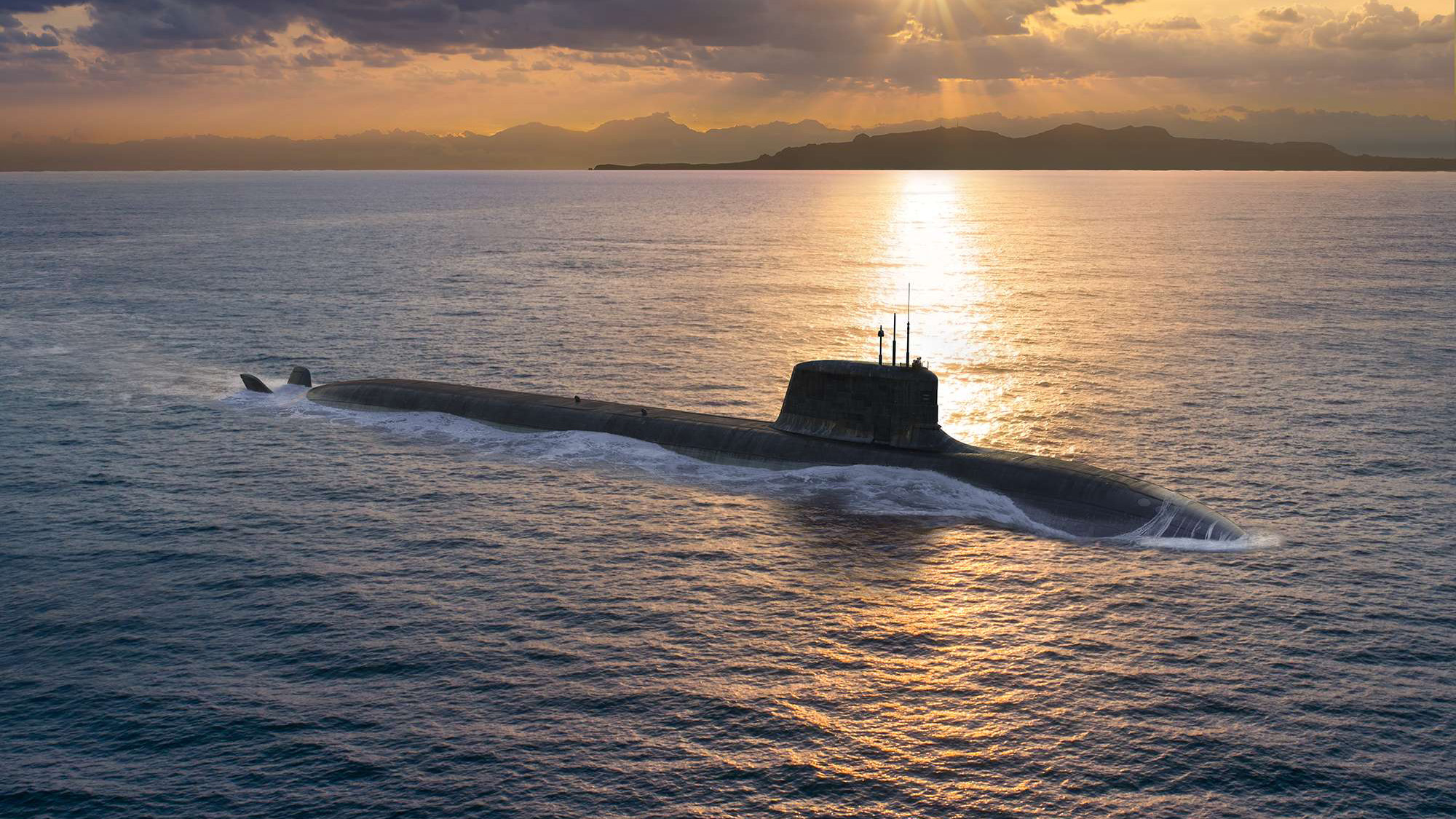
A senior figure steering Barrow’s regeneration has warned MPs that the government’s headline ambition to deliver a new SSN-AUKUS submarine every 18 months faces serious constraints far beyond the shipyard gates.
Appearing before the Defence Committee, Lord Case, chair of Team Barrow and former Cabinet Secretary, underlined that the timeline ministers cite for the next-generation nuclear fleet carries risks that have not been resolved.
Asked directly whether the programme is on track, he avoided any assurances. He described the target as “a very demanding target” and added that it would be “a real challenge to deliver.” Although the committee had previously taken evidence from BAE Systems on the shipbuilding schedule, the exchange exposed a parallel set of domestic bottlenecks that sit outside the MoD’s remit but still shape the feasibility of the AUKUS build rate.
Case argued that Team Barrow’s responsibility is not the assembly line itself but the town’s ability to sustain the required workforce. “We are under pressure to deliver housing, schools and hospitals to make sure that the workforce is there to produce the boats on time,” he said. He acknowledged that this supporting infrastructure is not in place. “We are behind where we need to be. We do not have the housing that we need for workforce growth.”
That admission raises questions about how credible the national commitment is when the enabling conditions lag behind defence planning. Case made clear that workforce readiness is only partly a skills issue. Even if recruitment targets are met, the physical capacity to absorb thousands of new workers remains doubtful because of long-standing underinvestment in local services.
The attempt to accelerate housebuilding has not yet produced material change. “We spent a lot of time together last month talking about how we can accelerate the house building,” he told MPs, but he stressed that operational details remain for BAE and the MoD.
Case’s comments show that the pace challenge is as much a civil-infrastructure problem as an industrial one, with delays in the former likely to ripple into the latter.






I suspect it is the roads as well. More dual carriageway to Barrow needed. Also Highways needs a less chaotic way to repair M6 bridges near Tebay.
I only spent a few weeks in Barrow and it was very rundown especially in the town centre could be a tough sell if they need skilled workers to relocate there.
Barrow isn’t great but could regenerate into something good.
Government has got to write the council a mid sized cheque to kick it off. Grants to regenerate rental housing. This is the problem no sane person wants to invest in private rental housing.
The surrounding area is quite lovely and house prices are very low. I agree, with investment it could regenerate very well just got to hope we don’t return to boom and bust shipbuilding.
It is a super beautiful area.
There is 40 years of work to do….
Should really be backed by all parties then. What an opportune time for the area and investment in people, industry and infrastructure.
The one town in the country that actually want new homes to be built there…
Or even existing ones refurbished.
And in some cases flattened so BAe can rationalise its site, the terraced houses off Bridge Rd effectively split the build sequence in half. It may look impressive moving the hull sections by Rd but it’s a process that is time expired.
Barrow needs massive investment in the local infrastructure not just the plant, same can be said for RR here in Derby. The plant is being expanded / modernised but the Rd / Parking is causing huge issues where basic timekeeping is concerned, some of it is just daft ! For instance they are building a purpose built multi storey car park for the extra workforce but as it’s on the other side of the Midland Mainline someone should be building a footbridge ! It’s a classic case of one Government owned body not talking to another and no one taking on the cost (Network Rail and MOD).
That footbridge would probably take 10 years and cost £500m. It would be a world leading footbridge of cutting edge ordinariness that anyone with a couple of brain cells could have put up prefabricated over two weekends. Some of this stuff is nutty.
What said you really need? Three or four teams to do the footings/piles on short closures.
Short closures to erect the verticals into the footings.
Two longer closures to crane in the pre assembled bridge elements.
People do prefabricate bridges for a day job…..they are a lot cheaper than you would think too….
BTW I’ve put prefabricated bridges up on some of our projects. So I know *exactly* what is required.
Many existing Barrow houses do not need refurbishing, they just need bull-dozing, the damp in the terrace homes can be appalling, they offer squalid back yards, kitchens that would make GWR kitchen staff think their on-board kitchens were spacious and their culinary skills fantastic (apparently, they are); whole areas of Barrow need re-developing.
Watch Roose push towards Dalton and Leese, towards the Coast Road, albeit, the gas terminal might be a problem but one day, parts of Roose will encroach the coast road.
Ulverston will probably see a need for a railway station to be re-established circa Lindal as Swarthmore pushes out past the massive roundabout (was that future planning or what) and eventually links up with Dalton as Dalton pushes into Askam.
That area will become a conurbation without the transport infrastructure links and the A590 / A595 not fit for purpose.
Aukus is a massive commitment apparently made without thinking through the full consequences. Much like building Astutes but failing to ensure there were adequate facilities to keep them at sea.
If workforce expansion at Barrow cannot be achieved, then Aukus on its currently envisaged timescale is undeliverable.
Maybe it’s time to take a long hard look at whether the spend on DNE is the best use of defence budget resources.
With no 10 year plan published since late 2023, and no sign of the defence investment plan, the exact numbers are unknown.
But with very little additional budget ( Starmers commitment to 3.5 % is about as sincere as his other promises) and funding for Tempest essential, how much more can sensibly committed to Aukus?
Hmmm…ummm…er…pardon, but time for an ignorant colonial’s question: Without parsing details, could/would this issue not serve as the archetypal example of an infrastructure investment scenario envisioned by the 1.5% partition of GDP for defence related, but not core, programmes? Extremely difficult to find a single politician on this side of the Pond who would not literally salivate at the prospect of a massive infrastructure development programme. Polar opposite in the UK? Dunno, curiouser by the moment…🤔🇬🇧
Timely article. The development of housing, schools, infrastructure could take years delaying military engineering even further.
To be honest, if we could start again, you wouldn’t choose Barrow as the main shipyard it’s too constricted by size, location and population/available skills and access – a 30mile cul-de-sac, not much better than a single track road..
It would have been better to have used either Liverpool/Birkenhead or the Clyde
Not the Clyde, the SNP have effectively made long term investment in Scotland a risk not worth taking !
I thought Reeves was copying their strategy?
Sticking the largest engineering project in Europe in a small town in one of the sparsest populated areas in Britain was always a mistake. We knew this in the 60’s which is why we built boats at Cammel laird and Barrow, if we want this kind of build rate then two sites are required.
Or a site with a proper production line approach with a linear build line that doesn’t involve sections being moved down the street!
Too late for that now.
and what happens when the work runs out, we cant keep 2 sites alive long term.
Most of the money raised through yet another tax hike should be going towards infrastructure, its vital not only to the economy but national security.
Oh sorry Heathrow is getting a £49billion expansion, silly me.
Two ways I look at this.
The grandstanding of HMG is given a reality check by industry, with their 12 SSN jam tomorrow waffle.
Or, industry is telling HMG give us even more money! Which they will no doubt oblige as that is where the money goes.
I give Putin as high credence with what he says alongside any grand statements HMG come out with regards Defence, sadly.
it sounds more like a push for more funding for local infrastructure, would be the local authority responsibility
Hi SB, I happen to know that Network Rail haven’t even been approached to start planning ! And they do get a bit fussy about what goes over the mainline especially when they want to electrify it. The suggestion has been made to put in shuttle buses but due to the Railway all the access routes are congested already.
It’s not as bad as you think, they have a housing shortage, those workers are in well paid jobs so provide the Road, Rail and infrastructure plus building land and developers will do the rest.
The thing is getting someone to actually plan and manage it properly !
Barrow is a simple albeit expensive fix.
First cast the net wider on services – peripheral towns could add to the bed spaces available/access to GPs/potential for NHS dentists to be located.
Second, OFSTED the schools until they all start achieving outstanding results.
Thirdly, transport is an issue. BAES had a sustainability team that was looking at rail as a way to take traffic off the roads; the roads do need improving however, operating between Sellafield, Lancaster and Barrow as the nexus, create a 95mph, electrified rail line for commuter and freight traffic with metro style intervals that would see a service starting at eg, Ulverston, taking the chord and heading for Sellafield bypassing Barrow completely.
Barrow docks has the ability to take freight but then again, so does the waste land that is the ‘bus park’
House building along the Ulverston canal coupled to start up office space – East Ulverston train station anyone – build across the canal a la London Bridge would rejuvenate traffic patterns with places like Warton (Carnforth) providing very high spec housing for the, ahem, discerning sailor and people from Derby that like bird watching and a commute that should be less than 30 minutes into Barrow.
Of course both Barrow and Millom have oodles’ of space – take out the old GPO and the current railway station and no reason why a platform could not be build over the GPO/Station and car park, to provide single person accommodation – probably kick the Army Reserve out to some more fitting for their needs with a range that worked, to boot.
Millom – look to the canal and Haverigg and the old K-shoe footprint (ditto Askam) or build along the railway between Millom and Green Road.
However, Simon Case is just a talking head who knows sweet FA when it comes to Furness but recognises a good screw when he sees one and when people like Michelle, ”there is always one Astute class SSBN at sea at all times” Scrogham MP gets involved, we’re stuffed.
To demonstrate the intellectual capabilities of Scrogham MP, at the DefSelCmtte… ”…all the people of Barrow can see are words.” (SIC).
Weep, Barrow in Furness, weep, this is your MP.
Perhaps a Northern expression, but, thick as mince, comes to mind.
That whole coastline is one of contradictions. You have BaE and Sellafield supporting thousands of often very well paid jobs the rest is just dreary rundown so called holiday towns and commuters who work in the Lake District but are priced out of the homes there. It’s the same everywhere, politicians live in cloud cuckoo land about how a new factory or something will regenerate an area, it never does because the high paid jobs are filled by outsiders. Hull and Grimsby are classic cases, huge green energy business on both banks of the Humber, massive chemical works and oil refineries too yet both Hull and Grimsby are grim bleak miserable unemployment sink holes.