

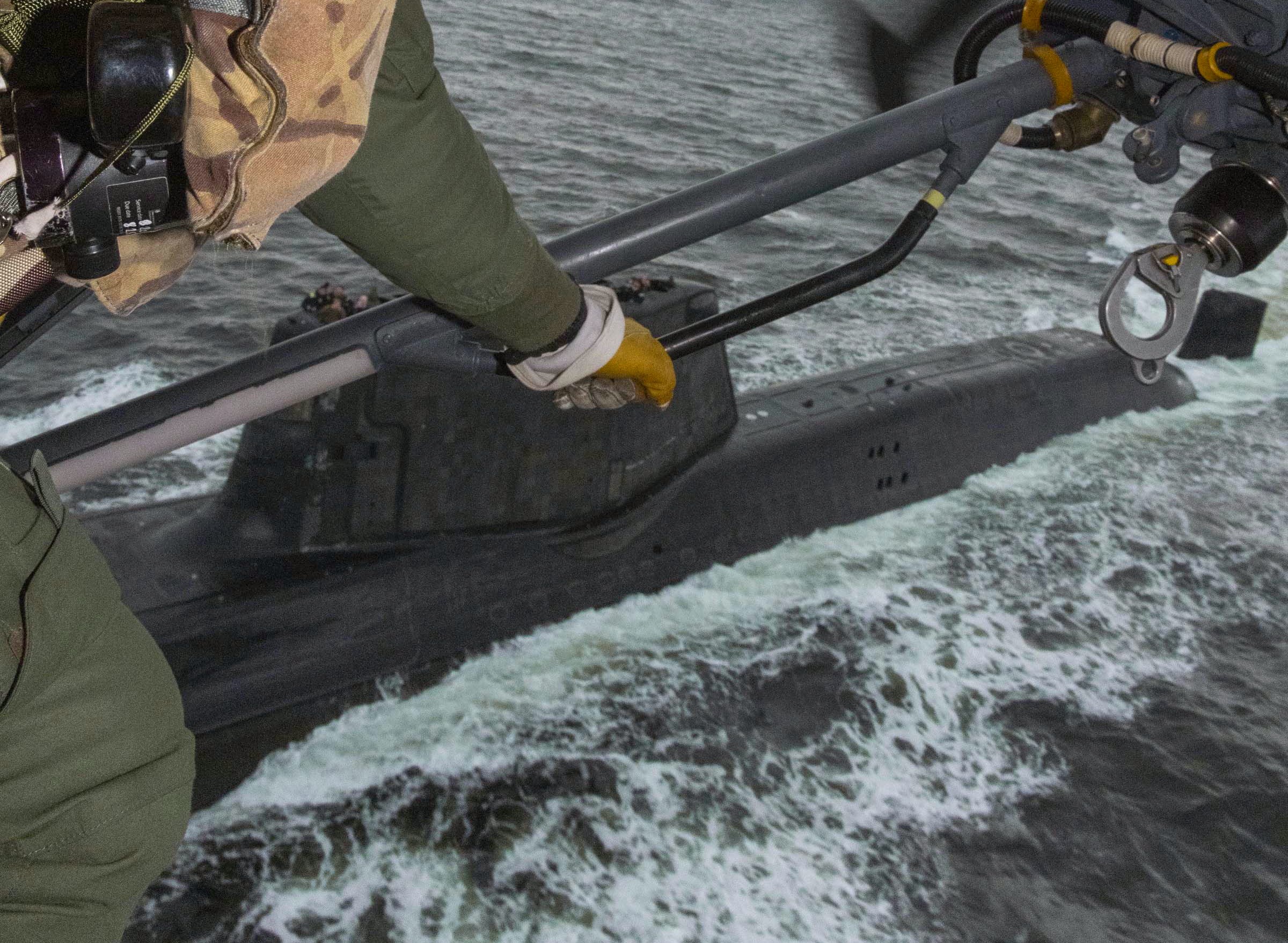
The government has faced sharp criticism in the House of Lords after former First Sea Lord, Lord West of Spithead, warned that the Royal Navy’s attack submarine force has reached what he called “the worst state in my 60 years of service.”
The debate, held on 8 December during a session on the Royal Navy Submarine Force, saw peers challenge Ministers over delays, shortages and maintenance failures that have left the fleet struggling to meet operational commitments and to sustain the nuclear deterrent with acceptable resilience.
Lord West delivered a stark assessment. He argued that years of underinvestment in dry docks, spares, engineering capacity and recruitment had created a situation where the UK has often been able to deploy only one attack submarine at a time. “Some of the time, it has not had one at all,” he said. “That is pretty horrifying for a maritime nation of our stature.”
He also raised concerns about the strain on the Continuous At Sea Deterrent. “At the moment, the boats are having to do 200 day patrols, with no fallback should something go wrong. We have maintained it, it is an amazing effort, but, my God, we should not be in that position.”
Responding for the government, Defence Minister Lord Coaker accepted that the challenges were real but insisted they were being tackled under the First Sea Lord’s new 100 day plan to stabilise critical areas of the Navy. He highlighted major investment programmes already underway. “There are now programmes of investment in the infrastructure of both Devonport and Faslane,” he said, pointing to the Dreadnought programme’s £31 billion budget and the £10 billion contingency attached to it.
Coaker also confirmed moves to expand the engineering workforce that sustains the submarine flotilla. “We have started to ensure that we recruit more of those,” he told peers. “Recruitment and retention of submariners have improved as well.”
When challenged by Lord Wallace of Saltaire on the root causes of the maintenance backlog, Coaker acknowledged that infrastructure delays had played a major part. He said the Navy was examining the floating dry dock concept as a faster option while long term investments mature. “It is certainly something that can be made available much more quickly,” he said, while stressing that significant funding was already flowing into the permanent facilities at Devonport and Faslane.
He also argued that the national shortage of specialist technical labour was a core issue, one that successive governments had struggled to resolve. “Getting technicians, engineers and the important skills that we need is a problem that has bedevilled our country for decades,” he said, adding that vocational training needed greater support to secure the workforce required.
Coaker urged peers to recognise the commitment of submariners who have sustained Operation Relentless without interruption for 56 years. But he conceded that more must be done to harden the fleet against rising undersea threats. “The First Sea Lord has announced further measures to protect the undersea environment to counter the new threats we face in that domain.”









I quite like their shape personally.
The only time lord west wasn’t screaming about cuts was when he was making them.
Absolutely Jim, he was all for swinging the axe ‘for jam tomorrow’ 20 years ago wasn’t he…
F#*king hypocrite, I don’t know how he’s got the nerve to be honest.
West crisis away but ask what he did when in power. Little but accept cuts like the other z chiefs of the day. None resigned as should have been their duty. Then this weasal took office in a Brown Government. He is a disgrace to his commission and in naval par
Since should pipe down. ZERO CREDIBILITY.
I don’t care who shouts as long as they shout loudly enough.
Waste of breath, a bit like his time as FSL.
Spot on, the RN was gutted under his watch…
It is only time before we all in Europe fall out with the US big time, and put the Dreadnought project in question along with a lot of others like the F35.
Just hope those in positions of power are thinking outside the box!!!
He is right.
But a lot of damage was done under his watch maintaining a navy that was too big by cutting capital investment. It really is that simple.
If you estimate the cash curves it is the critical point of fighting and supporting Blair’s wars on a peace time budget with little capital investment. Which was why Air Tanker was PFI.
An oxygen thief if there ever was one. Mr West was the biggest cheerleader of cuts in defence spending when he was in charge.
He should be before a tribunal.
I guess that with the DIP imminent (irony alert), the RN are making all the noise it can that if the UK is moving back to it’s NATO role as protector of the North Sea then the RN needs a lot of immediate money and a coherent capital and upkeep investment plan.
I’m afraid with this government there’s not much chance of that. My guess is Starmer, Macron et al are banking on Trump being gone in three years and a Europe-friendly Biden Mk2 installed in the White House.
Last month I predicted DIP in the middle of January. I wouldn’t start holding my breath before the 13th.
West is right, the Vanguards should have been replaced years ago and it is an uphill battle just to maintain one at sea.
The root of the problem doesn’t really lie back in the Blair/West era. It lstems from the painfully slow and troubled iteration of the Astutes, with the design issues accommodating the PWR2 reactor and umpty technical glitches since.
There is one submarine budget, one submarine yard and only enough money and workforce to build one, prohibitively expensive, submarine at a time. The fact that the Astute programme is years behind schedule means that the Dreadnoughts are years late entering construction, so the Vanguards just have to soldier on.
The current Government has been in power for 18 months. It has already initiated some infrastructure work at Faslane and Devenport, is exploring a floating dock for the former plus making a drive to increase the number of technicians and RN engineers. All of this should have been done years ago, but of course we had the 14 year interlude of Conservative governments with their 4 rounds of defence cuts and no money or action on such essentials. It is going to take a few years to right the ship. That is the price to pay for the 14 years of indolence.
Healey and team are at least addressing and attempting to overcome the obstacles and HMG is providing a good boost to the defence budget to do so.That is all a heck of a lot more than West ever managed to achieve as 1SL.
lets not forget defence cuts were hugely damaging under blair and brown as well. They are just as bad and culpable
Yet to see any actual urgent funding to fix say submarine maintenance from this government. They didnt start the floating drydock project and still havent ordered any.
Come along Cripes, though the Tories were dreadful regarding defence, it was absolutely gutted by Labour from September 11th. They let absolutely everything that wasn’t directly related to keeping a pointless infantry brigade engaged in combat in Afghanistan, wither on the vine.
Equipment plans postponed, cancelled etc, etc.
Glad to see money going into Greenock Dry Dock but unclear whether it will be upgraded for Nuclear. We’ve said this before but we need an additional 3rd nuclear capable dry dock for maintenance.
It wont be, too much work