

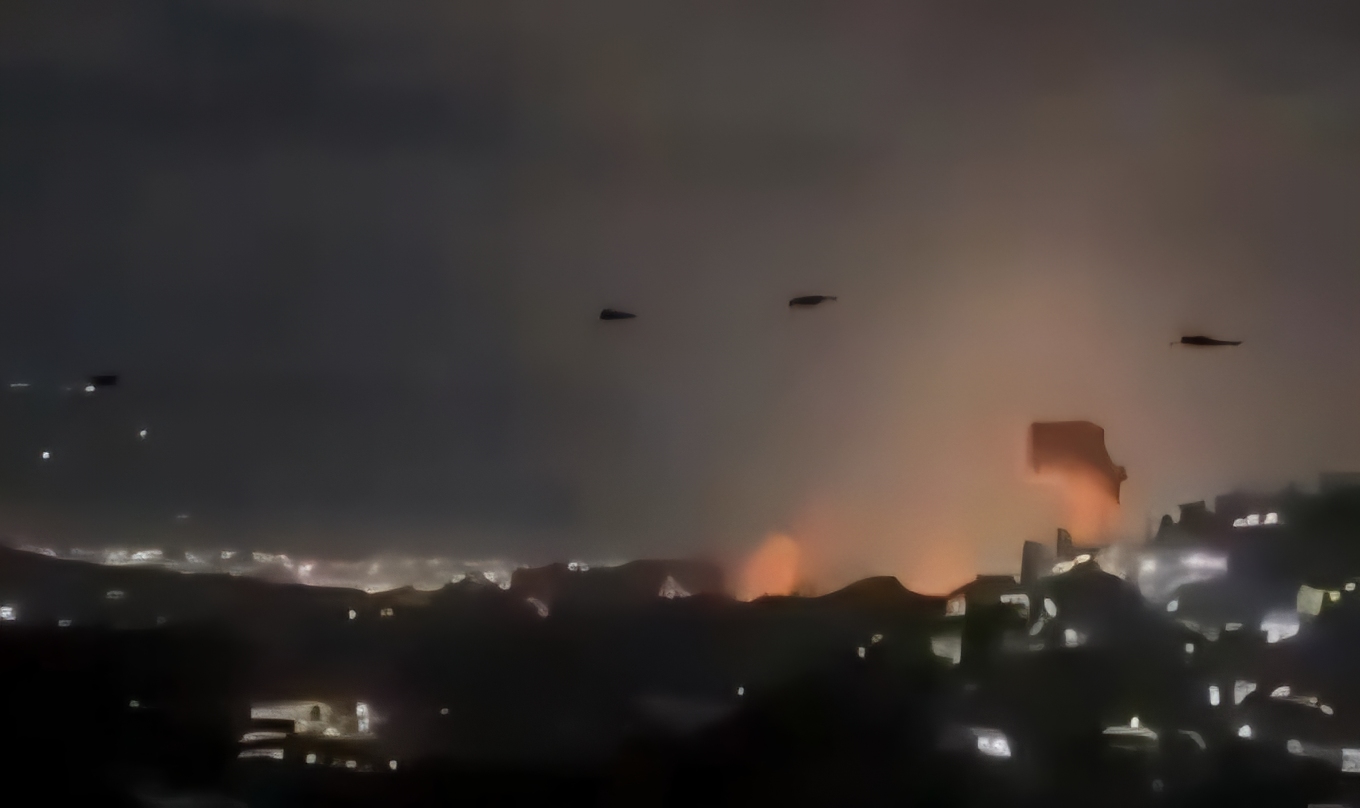
No one with a pulse can really have been surprised at recent events in Venezuela. The USA telegraphed its intent for months before finally taking action. We all knew something was going to happen, if not exactly what.
Now Maduro and his wife are in US custody and a semi-power vacuum prevails in Caracas, with Trump mumbling something incomprehensible, probably even to himself, about the USA “going in and taking over”. We’ll see.
Setting aside the legality or illegality of the US actions for a moment, the general consensus seems to favour the removal of Maduro from power, if not the means by which it was achieved. Only a very few have voiced an opinion that he was one of the good guys and should be immediately returned and restored to the presidency, except China, of course, never one to disappoint.
This article is the opinion of the author and not necessarily that of the UK Defence Journal. If you would like to submit your own article on this topic or any other, please see our submission guidelines.
What happens next in Venezuela is a much more interesting question, and my guess is that the Trump administration doesn’t really have a clue. Exit strategies have never been America’s strongest suit, as recent adventures in Iraq and Afghanistan amply illustrate.
Also interesting are the implications for future relationships between the USA and its erstwhile allies.
In the UK, our increasingly feeble Prime Minister is trying to walk the tightrope between two viewpoints. On the one hand he has welcomed the defenestration of Maduro, but on the other, no doubt due to his background in international law, he is unable to publicly condone the US action, which represents everything his very being stands against. And yet, despite the howls of protest from left-wingers in his own party, he is unable to bring himself to criticise Trump. He is truly a weak leader.
The big question on the international stage now is whether Trump might be tempted to replicate his actions elsewhere. He is already hinting that Colombia, Mexico, or Cuba could be next. The latter is a long-term political antagonist, whilst the former two are from where most of the cocaine being shipped into the USA is manufactured or transits.
Or could it be Greenland, which the President says is “needed” for US security? European leaders look askance at the very idea, which has drawn both criticism and denial from the leaders of Greenland and Denmark.
But what would Europe do if Trump made his move and occupied Greenland? Few states or alliances could resist the overwhelming military power of the USA.
It’s interesting to speculate too whether the USA’s actions legitimise, to any extent, the activities of other states. Will Putin take comfort that his illegal and widely condemned attempt to decapitate the Zelensky government in Kyiv and subsume Ukraine back into greater Russia is now somehow more acceptable?
Will China be encouraged in its increasingly obvious intent to invade and absorb Taiwan?
Whatever the answers to such questions might be, it is clear that Trump is a subscriber to the “might is right” philosophy of international relations and that, so far at least, nobody among international allies is prepared to stand up to him and tell him so. Nor is there any sign of credible opposition within the USA itself.
What happens next? Well, Maduro will be found guilty in the US courts and imprisoned for a lengthy period of time. Venezuela is likely to fall into a period of political instability and anarchy. And Trump, despite all his bluff and bluster, will probably wash his hands of the chaos he has created and turn his attention elsewhere.
Where exactly is the burning question, and I don’t think even he knows the answer to that one.
Lt Col Stuart Crawford is a political and defence commentator and former army officer. Sign up for his podcasts and newsletters at www.DefenceReview.uk





This is a well written piece. Dealing in facts. One fact is? Trump will abandon Nato and is not reliable in any sense. As with Bidens administration, US foreign policy is totally out of synch with the real world. Would Trump defend Taiwan? I doubt it.
As for the UK, we seriously need to look more to European alternatives for equipment, has the F35 not shown that?
I smell cozy deals with Putin and Xi, a not so secret deal to carve up spheres of influence.
Any Potus that openly talks of invading Greenland is a fruit loop of the first order, the British response from Starmer? Pathetic and expected.
Perhaps Europe needs to close down US basing incrementally to pass on a message, and stop purchasing US MIC equipment.
– obviously, the Orange king can do whatever he wants, legal or not.
– the world can do nothing to restrain him.
– it is an example that laws, norms, and agreements are worthless.
– US is no longer an ally, or a trusted partner.
– other strong nations will follow the US example
– Europe needs to be united to defend Greenland and Canada
– the rest of the world must trade without the US
Europe will never be able to ‘defend’ Canada or Greenland from the US anymore than they can defend Ukraine from Russia. Pipe dream.
Europe is out of touch with reality.