

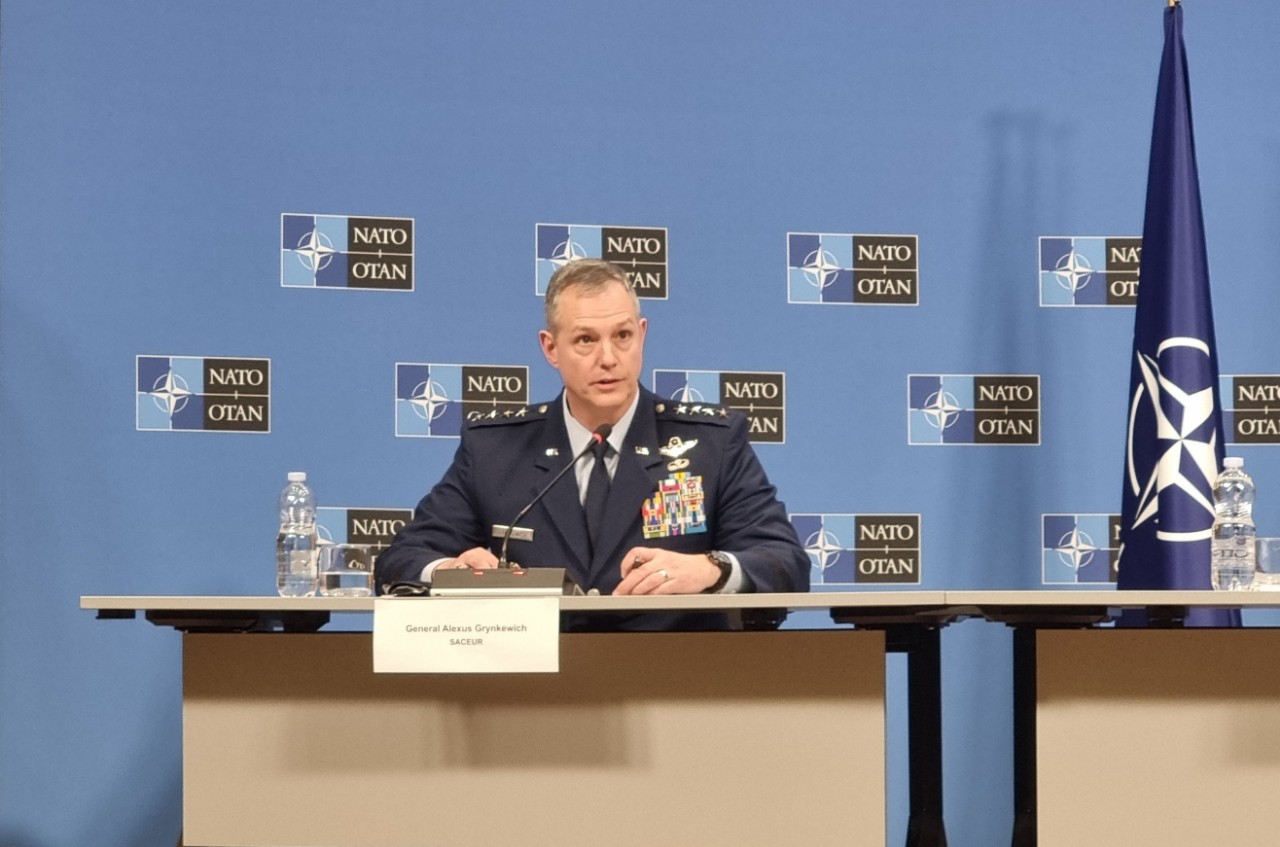
NATO senior military leadership has warned that the Alliance must remain prepared to respond immediately to escalating security threats, with Supreme Allied Commander Europe General Alexus Grynkewich stressing that readiness, speed and unity now define credible deterrence across the Euro-Atlantic area.
Speaking in Brussels following the Military Committee Chiefs of Defence session, NATO’s most senior commanders underlined that the security environment continues to deteriorate, requiring constant adaptation rather than episodic reform. Chair of the Military Committee Admiral Giuseppe Cavo Dragone said the Alliance remains focused on its core task despite mounting pressures, stating that “in spite of challenges thrown at us, we remain steady on safeguarding the security of more than one billion people across the Euro-Atlantic area.”
Cavo Dragone said the two day meeting had produced clear conclusions about NATO’s posture, arguing that the Alliance remains unified, resilient and adaptive. “We may have robust exchanges of views at times, but I saw a clear and distinctive convergence on the military threats we face and on the direction of travel we must undertake,” he said, adding that NATO continues to absorb shocks and learn rapidly in what he described as an increasingly demanding environment.
General Grynkewich reinforced that message by emphasising that Allied Command Operations is focused squarely on warfighting readiness, not political debate. He said NATO’s forward land forces on the eastern flank, combined with large scale exercises such as Steadfast Dart and the deployment of the Allied Reaction Force, are delivering real operational deterrence rather than symbolic reassurance. “We remain strong, we remain united, and we remain ready,” he said.
The SACEUR highlighted the growing importance of NATO’s northern flank following the accession of Finland and Sweden, describing their forces as uniquely capable in Arctic and high-north conditions. He said NATO has already adapted its command arrangements to reflect this shift and continues to operate across the region under a 360-degree deterrence posture. While confirming that no political guidance has yet been issued for a dedicated Arctic mission, Grynkewich noted that NATO is already active in the region and prepared to expand activity if directed.
He also warned of increasing cooperation between Russia and China in the Arctic, pointing to joint maritime patrols and long-range bomber activity as developments that NATO must monitor closely. “Any time our competitors are operating together, it is something we need to pay attention to,” he said, adding that future security in the High North will depend on long-lead investments such as sensors, detection systems and domain awareness capabilities.
Ukraine remained central to the discussions, with NATO leaders reiterating that support for Kyiv remains the Alliance’s top priority. Cavo Dragone described Ukraine’s fight as inseparable from Allied security, stating plainly that “Ukraine’s fight is not only about Ukraine, it is about our collective security too.” He added that Allied support is delivering tangible results but must increase and endure, praising Ukrainian forces for their “courage, discipline, resilience, adaptability and determination.”
The commanders also addressed future deterrence beyond Ukraine, including the need to accelerate capability development and industrial output. Cavo Dragone said Allies agreed that the time to invest faster and smarter is now, stressing the urgency of converting political commitments into real military capability. “Our objective is to have an Alliance ready to fight tonight,” he said, calling on both governments and defence industry to respond at pace.
The meeting also confirmed agreement on the distribution of command responsibilities across NATO’s military structure, described as a demonstration of fair and responsible burden sharing among the 32 Allies. Leaders further emphasised the importance of cooperation beyond NATO’s borders, noting deepening engagement with Indo-Pacific partners and continued coordination with the European Union. As Cavo Dragone put it, “security is not anymore regional. It is global.”









Commander SHAPE (Supreme Headquarters Allied Powers *Europe*) should be European, not American.
NATO “ready to fight tonight” as SACEUR warns threats rising! If Greenland / Ukraine are any indicator they will need at least 6 months notice of an invasion, then several months of Brussels meetings followed by NATO asking if they are indepedant or under someones control.
Events over the last few years are very worrying as regards chain of command, Equipment stores, Soldiers readiness, Equipment maintenence & repairs etc.
I won’t be abusive but it looks as though a thorough investigation is needed.
So if the US screw the pooch in Iran, they expect the rest of NATO to bail them out ???
And they say that stand up is dead?
US hasn’t greenlit arctic missions but ENATO are there anyway..