

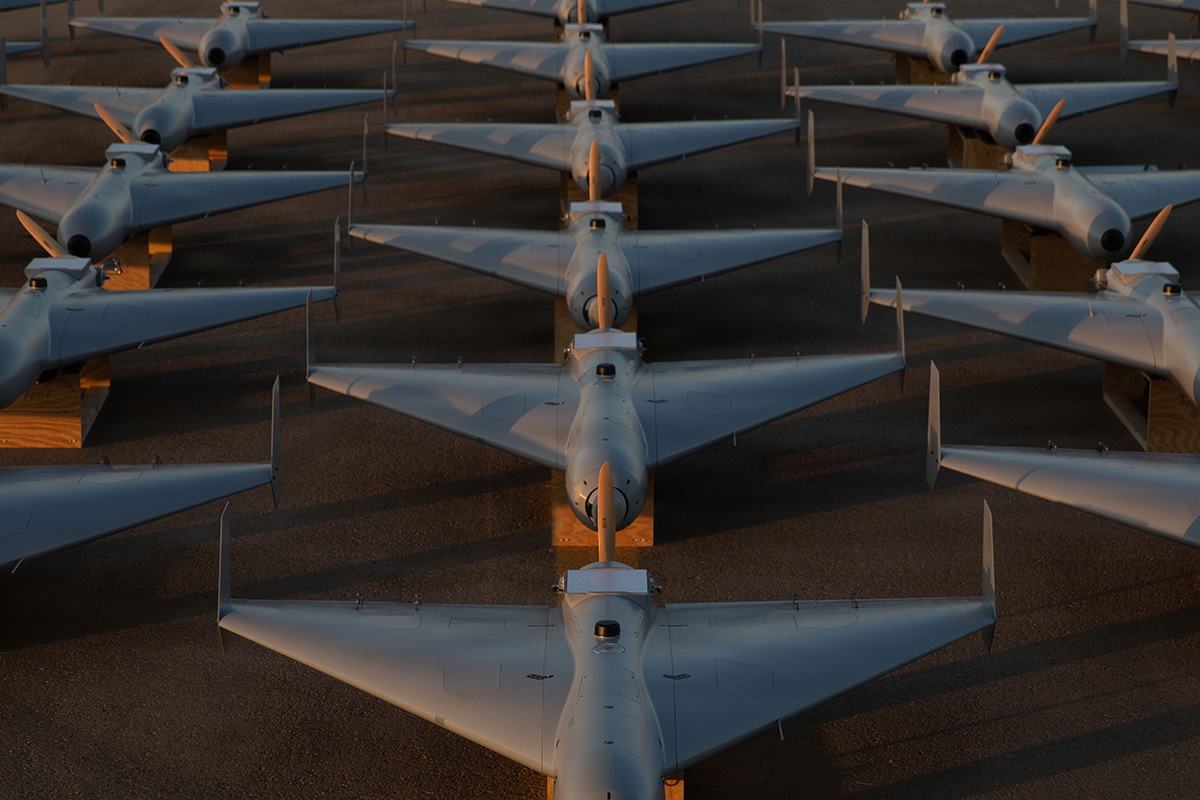
Defence experts have warned MPs that drones and artificial intelligence are reshaping warfare at a pace many armed forces still fail to fully grasp, cautioning that future conflict will increasingly be defined by the economics of mass and autonomy.
Speaking to the Defence Committee during a one-off session on the Future of Warfare, Air Marshal (Retd) Edward Stringer said he remained “staggered” that he still heard officers dismiss the relevance of lessons from Ukraine, describing the attitude as “complacent” and “rather arrogant”.
Stringer argued that while future wars would not look exactly like the conflict in Ukraine, they would inevitably feature many of the same dynamics, particularly the widespread use of low-cost drones integrated with conventional forces.
He pointed to Israel’s ability to rapidly establish air dominance over Iran during a recent 12-day campaign, suggesting that success depended not only on traditional air power, but also on “clever drone-based, cyber-based and intelligence-led capabilities”. He warned that he did not yet see this blend of thinking fully reflected in UK force development.
Dr Keith Dear, CEO and founder of Cassi, told MPs that debate on drones had shifted dramatically over time, from initial scepticism, to a view that drones mattered only as a supporting capability for crewed systems. He argued that this still misunderstood the scale and speed of technological change.
Dear said autonomous systems were improving at an accelerating rate, with AI models moving from completing tasks comparable to seconds of human work in 2023, to tasks taking humans an hour by 2025. On current trajectories, he suggested AI could reach the equivalent of a full working year of human output by 2029.
He rejected the argument that these advances were confined to software development, arguing they also applied to scientific reasoning, robotics and self-driving systems. Dear warned that assuming future combat platforms must remain crewed into the 2030s was “a fairly large bet against AI progress”, noting that predictions about the limits of AI had repeatedly been proven wrong in previous decades.
He urged the committee to consider the timeframe being used to judge future conflict, warning that continued advances could lead to what he described as a “Cambrian explosion” in scientific development and military capability.
Both witnesses argued that the direction of travel was clear, with autonomy and uncrewed systems likely to play an increasingly central role in how modern armed forces detect, decide and strike.





The problem is what and how many drones out today do you order/buy?As Ukraine is showing us drone technology changes very rapidly in an actual war situation! Anything we buy would have to be capable of rapid upgrades,can they be foreseen?I doubt it.
I think this is what a lot of people get frustrated about. While it seems nothing is happening, it could be that what is actually happening is the creation of ways to quickly mass produce drones when the need arises, ensuring that the designs are constantly evolving without committing to building a load that are out of date a month later. 3D printing methods can easily produce thousands of drones very quickly. We can’t keep expecting military production to be building things to fight wars the way they have been fought in the past.
Very much as the RAF was created from the RFC in 1918, Ukraine has set up its own Drone Command Service.
Britain should do the same and use the new service to work very closely with Ukraine so that Britain has a credible lobby, independent of the other services, within the MoD to ensure Britain stays up to speed on developments within this critical area of combined arms operations.