

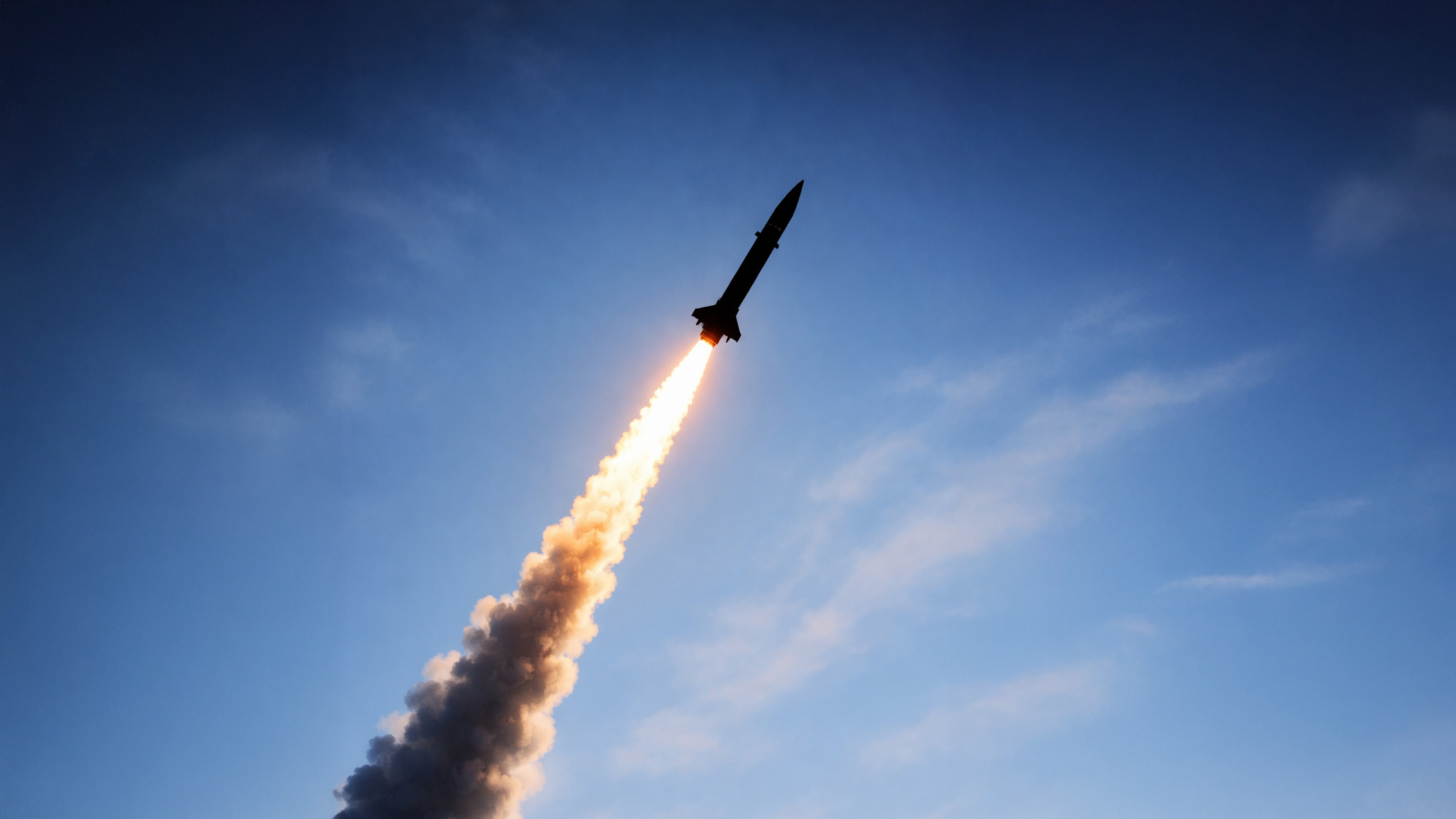
The Ministry of Defence has said it is too early to determine how much work will take place in the United Kingdom on a new NATO low-cost air defence weapon currently under development.
Responding to a written parliamentary question from former defence secretary James Cartlidge, Defence Minister Luke Pollard said the project is still in the early stages of selecting an industrial partner.
The weapon is being developed under the Low-cost Extended Air Defence (LEAP) initiative, which was announced in February as a collaborative effort between the UK and European allies to produce affordable air defence interceptors.
Cartlidge asked what percentage of the programme’s workshare would be carried out in the UK. Pollard said this had not yet been determined.
“The low-cost air defence effector project under the LEAP initiative, as announced on 20 February, is now entering the international industrial selection phase,” he said. “UK workshare will be dependent on the chosen solution.”
The LEAP initiative aims to develop a low-cost surface-to-air weapon designed to counter emerging aerial threats while reducing the cost per interception compared with existing missile systems.






OT – Iran’s nuclear story stretches back decades. In the 1970s, under the Shah, Iran signed the Nuclear Non‑Proliferation Treaty (NPT) and started building civilian nuclear infrastructure, including research reactors and plans for power plants. The 1979 revolution and the Iran‑Iraq war disrupted these efforts, halting many projects.
By the late 1980s and 1990s, Iran’s nuclear programme expanded again, reportedly including a secret weapons research effort known as the Amad Plan. This involved uranium enrichment, explosives testing, and delivery studies, although Iran did not yet have weapons‑grade fissile material. In 2002, dissidents revealed undeclared sites at Natanz and Arak, prompting investigations by the International Atomic Energy Agency (IAEA). Iran implemented the Additional Protocol voluntarily from 2003 to 2006 before suspending it, and brief talks with Britain, France and Germany (the EU‑3) to limit enrichment broke down.
In 2006, Iran resumed significant uranium enrichment. The UN Security Council, the EU and the US imposed coordinated sanctions targeting Iran’s nuclear and ballistic missile programmes. Countries including the UK, France, Germany, Australia, Canada and Japan implemented additional national measures, restricting finance, trade and arms transfers. Iran continued expanding enrichment and developing its ballistic missile capabilities.
After Hassan Rouhani became president in 2013, negotiations with the P5+1 (US, UK, France, Russia, China plus Germany) led to the Joint Comprehensive Plan of Action (JCPOA) in 2015. Iran agreed to limit enrichment, reduce stockpiles, restrict advanced centrifuges and allow enhanced monitoring, in exchange for sanctions relief.
In 2018, the US withdrew from the JCPOA under President Trump, citing its failure to address Iran’s ballistic missiles, regional proxy activities, and sunset clauses. Iran gradually exceeded the deal’s nuclear limits, including enrichment levels and stockpile size.
Negotiations in early 2025 failed to produce a new deal. In May 2025, the UK, France and Germany invoked the JCPOA “snapback” mechanism to restore previously lifted UN sanctions. In June 2025, the Israel‑Iran conflict broke out, with both Israel and the US conducting air operations against Iranian nuclear and military targets. Later in 2025, Iran formally announced it no longer considered itself bound by the JCPOA framework, and in October 2025 confirmed it no longer regards the deal as legally binding.
For the United States, the JCPOA was never a legally binding document. While debated in Congress, JCPOA was basically a Gentleman’s agreement between the then-heads of states.
All those negotiations was way back in the days when politicians had at least a smidgen of spine and moral fibre (such as it is). Now that Iran has itself admitted possessing stockpiles of highly-enriched uranium which can be turned into low-yield nuclear bombs easily, they still sit on their hands and do nothing. Worse, they castigate and lambast those who would take action, and use past grievances as an excuse to justify doing nothing. Failure to enforce a treaty tears it up as much as formal withdrawal does. One wonders, when tacitly permitting a hostile nation to acquire nuclear weapons, at which point do leaders stop being merely incompetent and cowardly, and cross the line to treason?
As long as our involvement includes the right to build them in the UK, in any quantity we wish.
I suppose it depends on components sourced from only one place, rocket motors from Germany for example.
As for quantity, will it depend on who gets the export orders?
Dont you just hate Liebores Lying on Defence. They will never order anything or come close to 3.5% GDP or REAL defence spending. I’m sure they will call the incredible spend on non pension Benefits Defence spending. The sooner they are gone the safer we will be.