

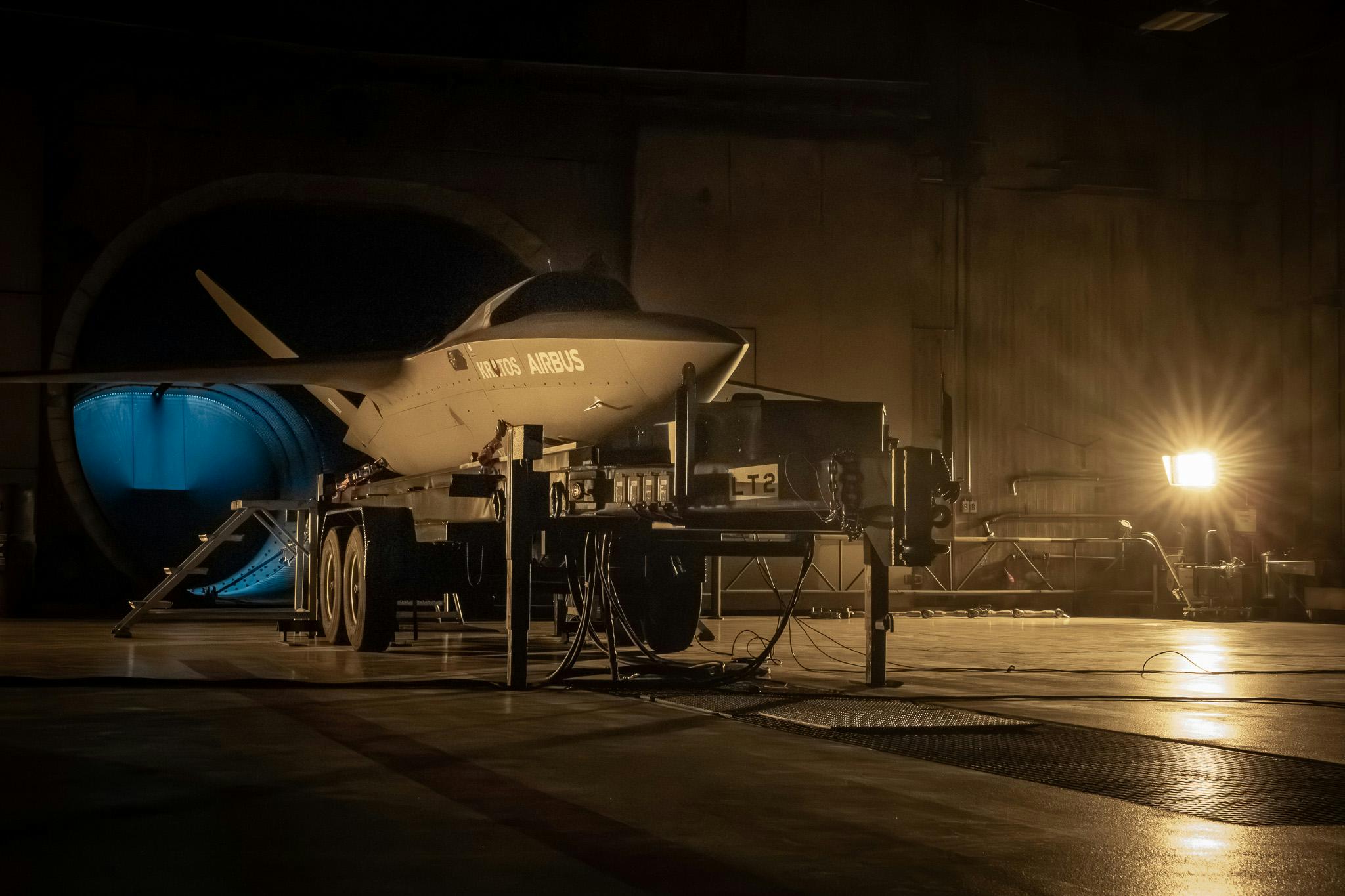
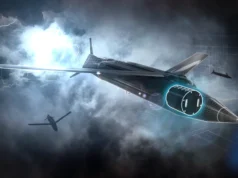
Airbus is preparing two Kratos Valkyrie uncrewed combat aircraft for their first flight with a European mission system later this year, as the company works towards offering the German Air Force an operational capability by 2029, the company stated.
The two aircraft are being equipped at Airbus’s Manching facility near Munich with the company’s Multiplatform Autonomous Reconfigurable and Secure mission system. MARS includes an AI-supported software component called MindShare which Airbus says can replace the role of a pilot and coordinate entire mission groups by being distributed across manned and uncrewed platforms.
Marco Gumbrecht, Head of Key Account Germany at Airbus Defence and Space, was quoted as saying: “By combining the Kratos Valkyrie with our MARS mission system, we are offering the German customer exactly what Germany and Europe urgently need in the current geopolitical situation: a proven flying uncrewed combat aircraft with a sovereign European mission system that does not have to be developed from scratch in a time-consuming and costly manner.”
He added: “Our objective is to deliver credible combat capability in time of relevance, while assuring key sovereign aspects. And we are confident that we can do this at a very affordable price, which is a key driver for UCCAs.”
Steve Fendley, President of Kratos Unmanned Systems Division, said: “By taking the flight-proven and in-production Valkyrie and integrating the Airbus MARS mission system, the Airbus-missionised Valkyrie UCCA is a multi-mission, affordable system that can operate independently, in teams of UAS, or in Manned-Unmanned-Teaming operations.”
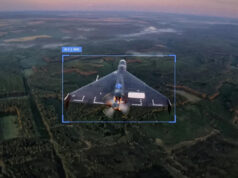
The Valkyrie has a length of 9.1 metres, a wingspan of 8.2 metres, a range of over 5,000 kilometres, and a maximum take-off weight of around three tons. It can operate at altitudes of up to 45,000 feet. The aircraft first flew in the United States in 2019 and has been flying regularly since.
To enable the Eurofighter to act as a command aircraft for the uncrewed system, Airbus and Rafael are enhancing the Litening 5 Advanced Targeting Pod, already contracted for the Eurofighter fleet, with a connectivity capability. Combined with minor avionics updates, Airbus said these changes would significantly increase the Eurofighter’s lethality in combat, according to the company.
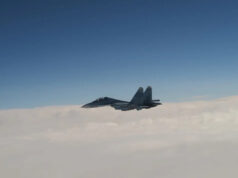
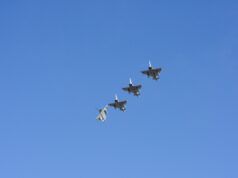
The Valkyrie would be capable of operating fully autonomously or under the command of a Eurofighter, taking on mission tasks that would pose too great a danger to a pilot. Airbus and Kratos said they are initially focusing on a specific role for the German customer to deliver what they described as credible combat air power.





Sticking AIRBUS on the side of an American drone doesn’t make it European. You would hope Europes largest aviation company could have more ambition than this.
Hopefully it does and that this is a more immediately focused transitionary option for a time period that no new specialist platform could meet. Such future platforms are likely focused on a more distant collaboration with what next gen fighter they go for in the thirties/forties while likely (hopefully) also retaining some cooperative ability with Eurofighters (and others) too in similar manner to this option. This looks like an excellent learning curve. If they can get this going by 2029 and as a fully independent capability too this will be an excellent fill in until a true European option comes on line well down the line unfortunately. I mean when will we have anything similar in capacity, have they even formed a Committee to consider it yet as Tempest is the priority, not as yet loyal wingmen to operate with it, let alone a more immediate Typhoon option, which would be a great asset. Germany (thus Airbus military subsidiary) as, if and when they get their 6th Gen fighter project off the ground, are supposed to be taking the lead on supporting autonomous vehicles in support of that, so I would presume this is part of their effort to evolve the systems/autonomy necessary for progressing that using an existing mature capable vehicle before the eventual in-house platform gets going. The only way they would jump ship by the way on FCAS would be if they got a similar lead role in collaborative platforms with Tempest I suspect, which would probably suit the other partners somewhat anyway.
Weird take, who said it was European ?