

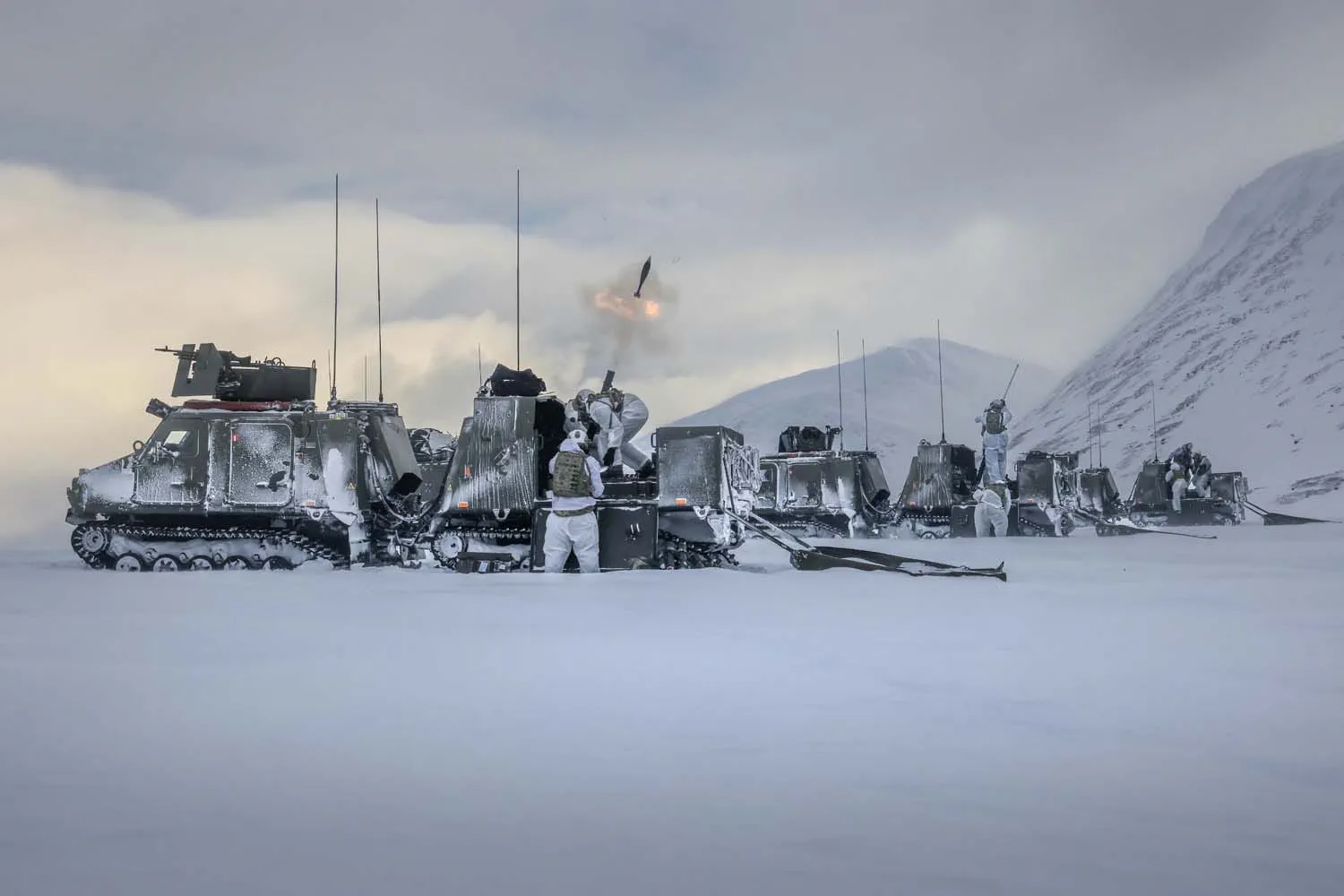
The Royal United Services Institute has warned that the UK currently faces a capability shortfall in the High North that will not be resolved until the early 2030s, and that this period of vulnerability could coincide with a qualitative improvement in the Russian submarine threat and a potential refocusing of US capabilities towards the Indo-Pacific, in written evidence to the Defence Committee’s Defence in the High North inquiry.
The submission, led by Neil Melvin, Director of International Security, Dr Sidharth Kaushal, Senior Research Fellow in Sea Power, and Darya Dolzikova, Senior Research Fellow in Proliferation and Nuclear Policy, describes the UK as facing “a radically different security and defence environment in the Arctic than has been the case in recent decades” driven by Russia’s efforts to rebuild its Arctic capabilities and the consequences of its full-scale invasion of Ukraine.
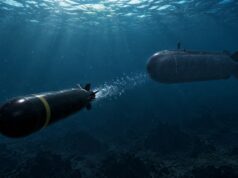
The threat from the north is described as more credible than from any other direction, with the submission noting that Russian submarines which slipped into the Norwegian Sea or beyond the GIUK gap could fire cruise missiles at critical infrastructure in the UK, and that Russia’s bomber force could launch a large number of cruise missiles from the same vector early in a conflict. The Yasen-class submarine is described as “judged to be competitive against top-tier Western analogues” and capable of plausibly threatening submarines being surged in a crisis if it breaks through the GIUK gap, making maintaining friendly control of the gap “of increasingly critical strategic importance.”
The UK’s ASW capabilities are described as being in “a temporary trough” that will be alleviated with the arrival of the Type 26 and the delivery of the Atlantic Net underpinning the Atlantic Bastion concept, but RUSI is clear the shortfall is real in the near term. A “paucity of under-ice operational experience” within the submarine force, which has conducted only one ice exercise in the last 20 years, is identified as a constraint on the UK’s ability to operate deeper within Russia’s defended bastion until those skills are rebuilt.
The achievability of the UK’s High North policies is described as “a matter of resourcing”, with gaps in amphibious reinforcement capability expected to persist for some time, temporarily mitigated through cooperative mechanisms such as the UK-Dutch amphibious force. Questions are also raised about whether Atlantic Bastion vessels will have sufficient endurance and payload capacity to contend with an early Russian submarine surge into the Atlantic, particularly given the potential for such a surge to draw significant US assets from the theatre.
On allies, RUSI describes uncertainty about US commitment to Europe as having raised concerns about the future utility of NATO, particularly if Washington shifts to a western hemisphere-centred approach to Arctic security. The JEF is described as “a key UK interest but remains under-resourced and lacking sufficient political support.” Trilateral coordination with Norway and the US is identified as the cornerstone of the UK’s peacetime ASW capability, likely to be reinforced by the shared Type 26 frigate class, while the UK-Dutch amphibious force is described as capable of standing up a one-star headquarters afloat to set conditions for larger forces such as the US II Marine Expeditionary Force to enter the theatre.
The Royal Marines are described as being in a process of refocusing on the High North, with elements beyond the regional specialists of 45 Commando to be rotated through the region more regularly. Finland and Sweden’s NATO accession is identified as creating both extended deterrence challenges and opportunities, with the two countries having shown interest in contributing to NATO’s nuclear deterrence posture through participation in the 2025 Steadfast Noon exercises, requiring efforts to raise what RUSI describes as their “nuclear IQ” in which the UK should have a role to play.
The submission closes by warning that the period in which the UK expects to see an increase in its own capabilities in the early 2030s could coincide with the period in which the Russian submarine threat becomes more pressing in qualitative terms and US capabilities become even more overtasked between regions, saying the challenge “depends on the rapid delivery of capabilities.”



I’ve gained $17,240 only within four weeks by comfortably working part-time from home. Immediately when I had lost my last business, I was very troubled and thankfully I’ve located this project now in this way I’m in a position to receive thousand USD directly from home. Each individual certainly can do this easy work & make more greenbacks online by visiting
following website—.,.,.,.,.—>>> JobatHome1.Com
Please send it to the MOD. Thanks.
What a good submission from RUSI, clearly identifying the challenges, successes and future solutions without hyping up a threat. We need more analysis like this.
If there’s any soare monies is their any talk or thought of maybe increasing the T26 fleet by 1-2 and extra P8s 1-3 for increased effectiveness rather than overfocusing on uavs, usvs and uusvs? Long range, large payload, speed to station and easily redeployable.
And while waiting on MRSS any possibility of regenerating of the Albion? Could be a Multi-role mothership of allsorts to complement the Bays. Or, order some T31 MNP variants?
*spare
Buying 2 wedgetails should be a priority above more P-8 so we can maintain a constant surveillance.
I do also wonder if buying some MQ-9B Seaguardians instead of P-8 would be good. The Poseidon can’t be refueled by us and does have a relatively short range, the Seaguardian, whilst lacking in complete sensory quality is much cheaper, can still carry massive numbers of buoys but most importantly has an incredible range and loiter time.
I think RAC want to fund boom refuelling as there are now so many types that cannot be AAR’d for sovereign use.
*RAF
With the Wedgetails there’s the 2 spare radar sets sitting around somewhere, that just need the airframes unless they’re being used on the 2 E-7s for the USAF? The SAAB Global Eye is also another option.
High north and Eastern atlantic is the right focus area for IK, either within or outside of NATO (maintaining JEF ability to operate outside of NATO).
Standing up a further combat ‘commando’ ( and pro rata enablers) over coming few years will be critical to support that mission and avoid overstretch.
In the end it goes down to a few key capabilities that the UK should never have let fall below minimum levels
1) SSNs this should never have been allowed to go below 12
2) high end ASW frigates should never have dropped below 10 with 10 supporting GP frigates
3) 20 asw fixed wing aircraft in three squadrons
We need more of everything, we should have mothballed so much stuff in the past…. The list is actually mind blowing….. Let’s hope we don’t see old men with pitch forks again or wooden rifles cos I don’t think it will work this time.