

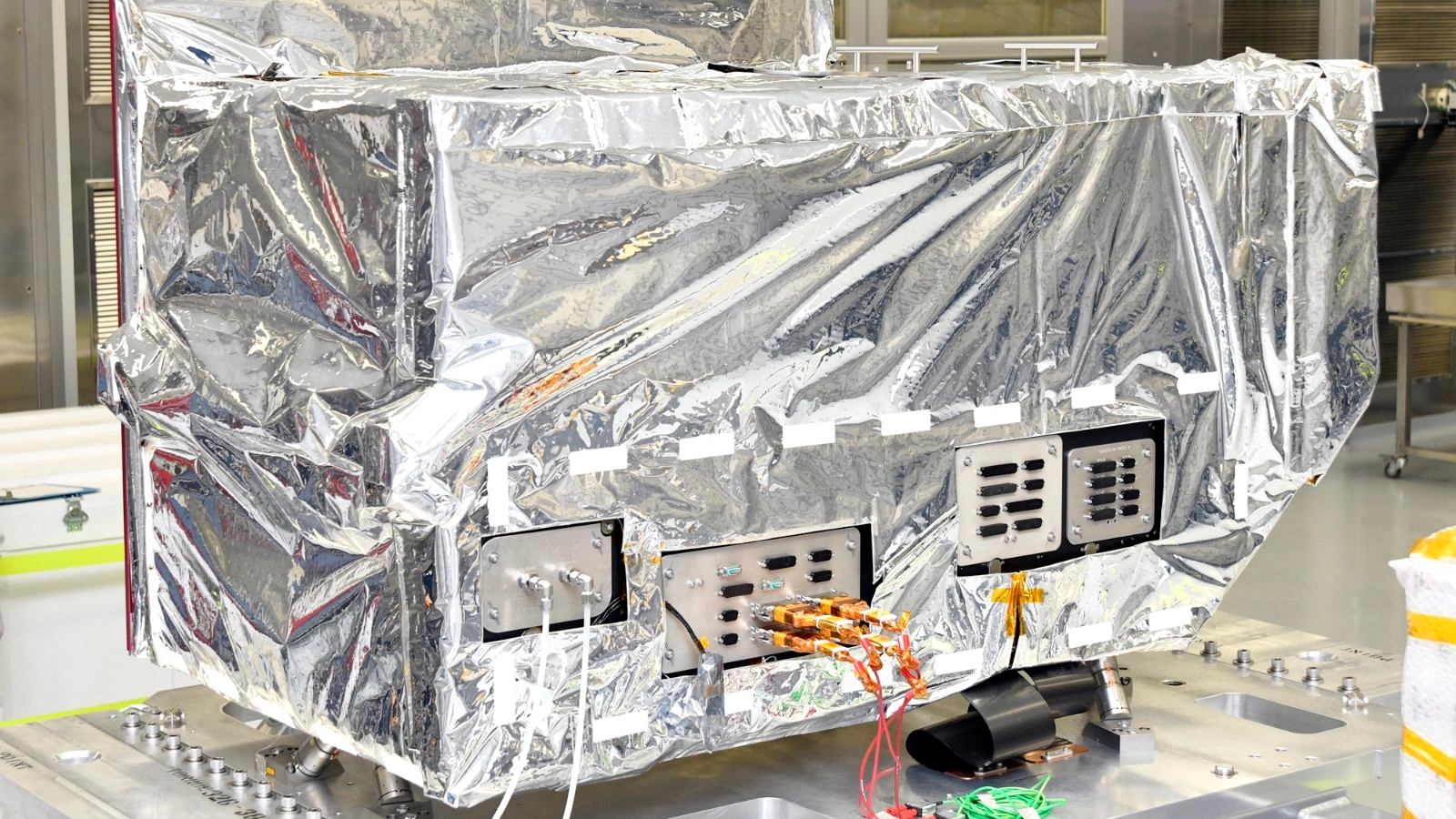
BAE Systems has delivered flight hardware for the U.S. Space Force’s Next Generation Overhead Persistent Infrared Polar programme, keeping the project on track for a 2028 launch, the company stated.
The delivery covers the sensor subassembly and sensor system controller components for the programme, known as NGP, which is intended to provide the Space Force with missile warning, technical intelligence and battlespace characterisation capabilities. The hardware forms part of Flight Unit 1, the first of two units BAE Systems is building for the mission.
Thai Sheridan, vice president and general manager of Military Space for BAE Systems Space and Mission Systems, said the company had “met multiple challenges across a multiyear timeframe to successfully deliver our components for the next stage of full payload assembly,” adding that the programme “will provide essential next-generation defense and intelligence capabilities for the Space Force.”
According to the company, the sensor subassembly provides the optics, pointing mechanism, controlling electronics and electrical bus interface to the spacecraft. The sensor system controller interfaces directly with the space vehicle to receive commands and provide telemetry data, while also handling power control and conversion for sensor assembly components and high-accuracy mirror direction.
One notable aspect of the hardware is its origins. The components were originally designed for use with the geosynchronous Earth orbit element of the programme before being repurposed for the NGP polar mission. BAE Systems said the adaptable design of the hardware allowed it to be redirected to meet the programme’s schedule requirements.
A second flight unit is currently in production and on schedule for delivery ahead of an expected 2030 launch. The NGP programme is being developed by Northrop Grumman as prime contractor, with BAE Systems providing the sensor payload elements.





I’ve gained $17,240 only within four weeks by comfortably working part-time from home. Immediately when I had lost my last business, I was very troubled and thankfully I’ve located this project now in this way I’m in a position to receive thousand USD directly from home. Each individual certainly can do this easy work & make more greenbacks online by visiting
following website—.,.,.,.,.—>>> JobatHome1.Com