


The Ministry of Defence is rebalancing its space portfolio towards space control, with £880 million committed this parliament across space-based intelligence, surveillance and reconnaissance and space control under the Defence Investment Plan, the UK Defence Journal understands.
A defence official said space featured heavily in the work behind the document and that the department no longer treats the domain as merely a supporting function. “For years, people have talked about space as an enabler. I don’t think that’s the language we’re using anymore,” the official said, describing space as a contested domain in its own right where “things are going to play out in their own right.”
Space control covers the ability to protect friendly use of space and to deny an adversary the use of theirs. In practice the discipline spans surveillance of objects in orbit, protecting satellites against jamming, dazzling, cyber attack and physical interference, and the capacity to disrupt or degrade hostile space systems.
Russia and China have both tested anti-satellite weapons and field a range of counterspace capabilities, from ground-based lasers and electronic warfare systems to inspector satellites capable of manoeuvring close to other spacecraft, and Russian jamming of GPS signals has become a regular feature of the war in Ukraine and of activity around NATO’s borders.
The official said more money is going into space-based ISR this parliament, with the intention of scaling up concept demonstrators beyond 2030 and substantial further funding to follow in that area. Within this parliament, however, the department has made what the official described as a slight rebalancing towards space control. The official declined to go into further detail on that line of spending, but confirmed it is an area the department wants to fund. Relevant material appears on pages 48 and 49 of the published plan.
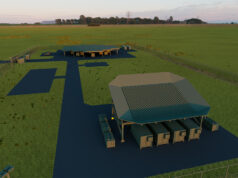
The comments came in response to a question about whether the plan contained anything on space beyond the Skynet 6 satellite communications programme and the Deep Space Advanced Radar Capability facility planned for Pembrokeshire, the trilateral ground-based radar project with the United States and Australia designed to track objects out to geosynchronous orbit.
On Skynet, Minister for Defence Readiness and Industry Luke Pollard confirmed that the department is not proceeding with the Skynet 6 narrowband satellite, listing it among a series of decisions to move investment from older programmes to next-generation capabilities alongside the retirement of the Shadow R1 surveillance aircraft and the cancellation of the Meteor missile mid-life upgrade.






Is ISTARI happening or not?
The DIP includes £880m for “Space-based ISR and Space Control ” which is what ISTARI delivers. But it was previously listed as a £968m programme – though it’s unclear if that figure included the £127m precursor MINERVA technology demonstrator programme in the total. If it did then the figures would add up given inflation (£968m Vs £1007m)
Wise moves, however it would be good to see some detail on UK sovereign space based effectors. It all very well being able to track satellites but we are now in an environment where Russia and China have active systems in space tampering with satellites. I believe the UK has several programs in the works but it would be nice to see something concrete and perhaps demonstrate its capabilities by flying in very close formation with Russian satellites to return the favour.
Certainly a good call stop skynet 6, we need large number of LEO satellites for communications, not a handful of mega satellites in GEO.
We should be doubling the spending on space based ISR. Along with France we are the only ENATO nation operating a full suite of space based ISR capabilities and as we have seen in Ukraine this is the main area of weakness that ENATO has. We also need to join some form of European space based infrared missile tracking system. We already had a demonstration from SSTL and France flies two satellites in HEO for the same purpose. We have the tech we just need to fly it. Thales is proposing a GEO based version now so three satellites gets us global coverage for twenty years, a small price to pay if we banned together with other European partners and maybe Japan and the CANZUK nations too.
UK Concrete Satellite’s ?
Best get your Hard Hat !
Cancelling the Meteor missile MLU ? Where did they sneak that one in from – surely there are many more partners in Meteor than just us , Sweden and Ukraine just two . Doesn’t anyone else get a say ? The more I read if DIP the more methinks it’s a pile of p*ss.
It’s just more cuts disguised as investments 😂