

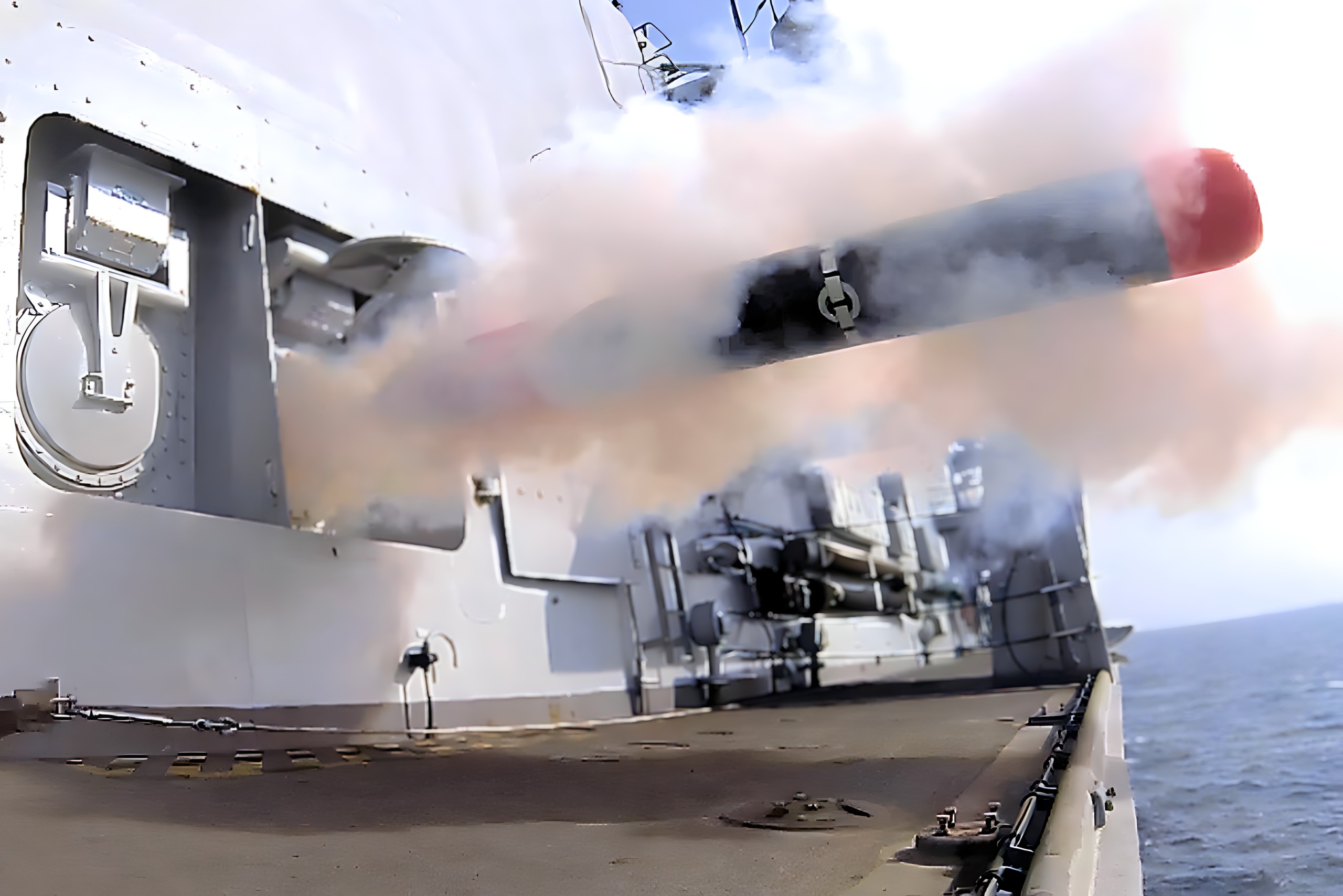
The Sting Ray Mid-Life Upgrade programme has advanced to its next phase, with the Ministry of Defence intending to award BAE Surface Ships a contract for the Demonstration and Initial Manufacture stage, the UK Defence Journal understands.
A transparency notice published by Defence Equipment and Support on 22 May 2026 confirms the planned direct award to BAE Surface Ships, with an option for full manufacture to refurbish existing stockpiles of the Sting Ray Mod 1 to the enhanced Mod 2 design. The initial contract covers four years from July 2028 to June 2032, with an option to extend by a further four years for full manufacture through to June 2036.
The programme follows a £60 million assessment phase contract awarded to BAE Systems in June 2024 to develop prototype weapons and conduct in-water trials, as the UK Defence Journal reported last year. That phase focused on design work and early testing of the upgraded system, and the new phase represents the natural progression from design into demonstration and early production.
The MoD has justified the direct award on single-supplier technical grounds, stating that BAE Surface Ships is the current Original Equipment Manufacturer, having acquired the original manufacturer, and holds significant expertise dating back to the weapon’s initial design. The notice states that “only the OEM has access to the necessary technical knowledge and documentation to fulfil this requirement,” adding that another supplier “would be required to investigate, recreate and trial the design on legacy equipment due to go out of service in 2030,” which would lead to significant project delays and “unacceptable impact on operational capability and potentially introducing unacceptable safety and quality risks.”
The estimated contract value of £600 million including VAT represents an increase on the £500 million ceiling outlined in last year’s procurement pipeline notice for this phase.
The Sting Ray has been in Royal Navy service since 1983 and is carried by Merlin and Wildcat helicopters as well as by Type 23 frigates through horizontal launchers. The existing Mod 1 variant travels at up to 45 knots, tracking submarines via active and passive sonar before detonating a 45kg Torpex charge. According to the MoD, the Mod 2 design will introduce new technological features and broader deployment options to keep the weapon effective against evolving undersea threats.
The upgrade is intended to sustain one of the UK’s core anti-submarine weapons for both the Royal Navy and the Royal Air Force, which plans to integrate the torpedo on its Poseidon maritime patrol aircraft alongside the US-made Mk 54.



Good news.
I’ve gained $17,240 only within four weeks by comfortably working part-time from home. Immediately when I had lost my last business, I was very troubled and thankfully I’ve located this project now in this way I’m in a position to receive thousand USD directly from home. Each individual certainly can do this easy work & make more greenbacks online by visiting
following website—.,.,.,.,.—>>> JobatHome1.Com
Totally irrelevant.
Agreed even if progress does appear glacial.
you do have to wonder if there will be a sudden new market for the stingray when it’s integrated onto Poseidon, it is after all a superior light weight torpedo than the Us MK54. The US will never purchase it but other Poseidon operators, especially those that have to counter SSNs may be tempted.
The Mk54 is approaching a rather lacklustre Mod1 update, but later on there is a Mod2 update, which is frankly a new Torpedo. If it wasn’t for Congress’s pickiness about “new projects”, it’d be called the Mk60 or something. Anyway this Mod2 update should be on-par with MU90s and StringRays.
If they do the same tricks with test trials as they did with Mk54 I doubt it.
Mk75 SR will I suspect still surpass anything the USN develops in the future. They will end up with another Mk50 debacle.
J,
Hmmm … dare one hope someone will connect the dots, and mate Stingray Mod 2 w/ the currently conceptualized Long-Range ASW missile? 🤔🤞. (Always subject to the constraints of the probably mythical DIP, and the whims of Rachel from Accounts.)
Yep, i’ve been saying that for a while now 🙂
Or even put Stingray in shipboard launchers as per T23? However wonderful T26 will prove to be, single point of failure (Helo u/s, weather non compliant) I would like there to be a Plan B, even if imperfect.
Agree. They also can’t be in 2 or 3 places at the same time – something any Russian N2 would surely exploit.
Think the plan is in the pursuit of an ‘ASROC’ Type system to put in MK41,so no need for Shipbourne Torpedo’s ala Type 23.
Or a containerised launcher in the missing bay while the MK41 version is developed?