

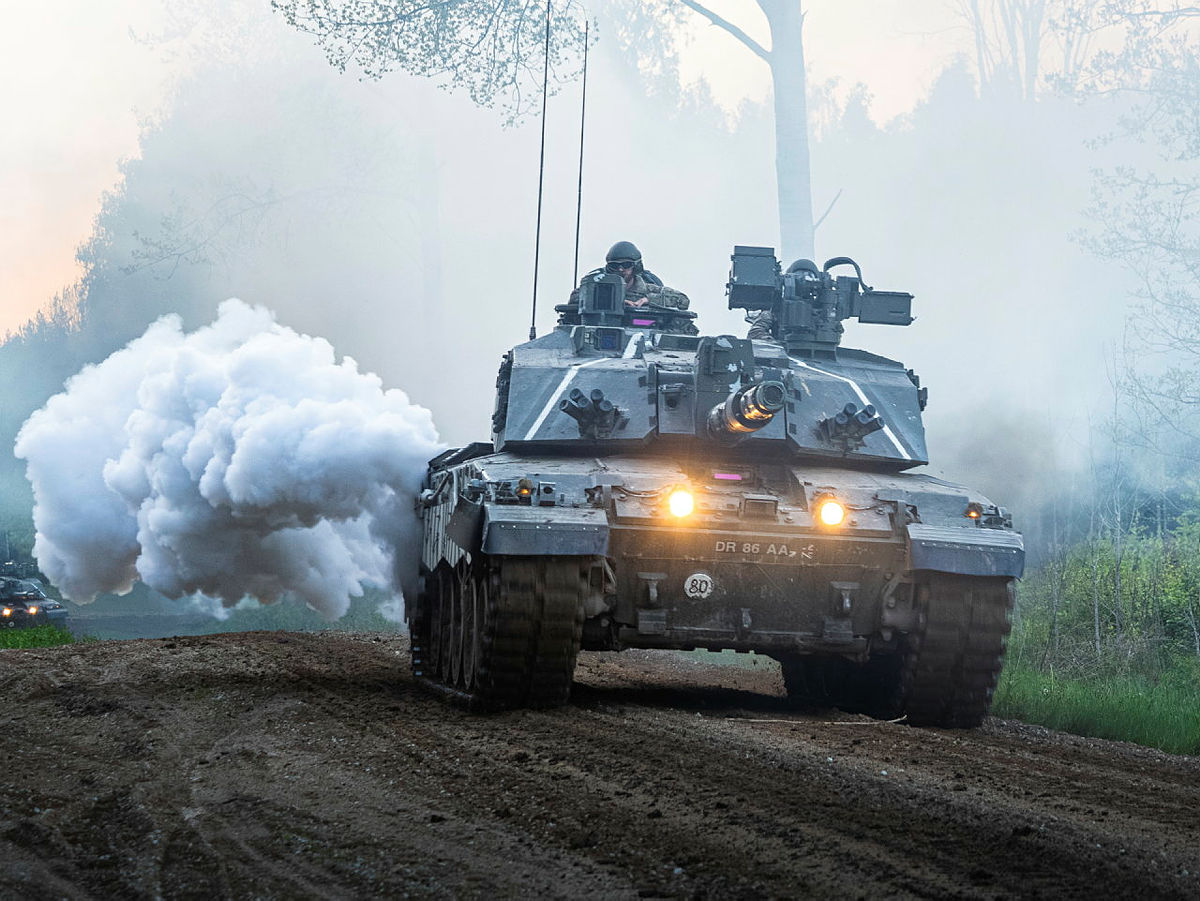
Some 1,500 British troops from 4 Brigade have deployed to Estonia for Exercise Spring Storm, training alongside NATO members and partners within 25km of the Russian border.
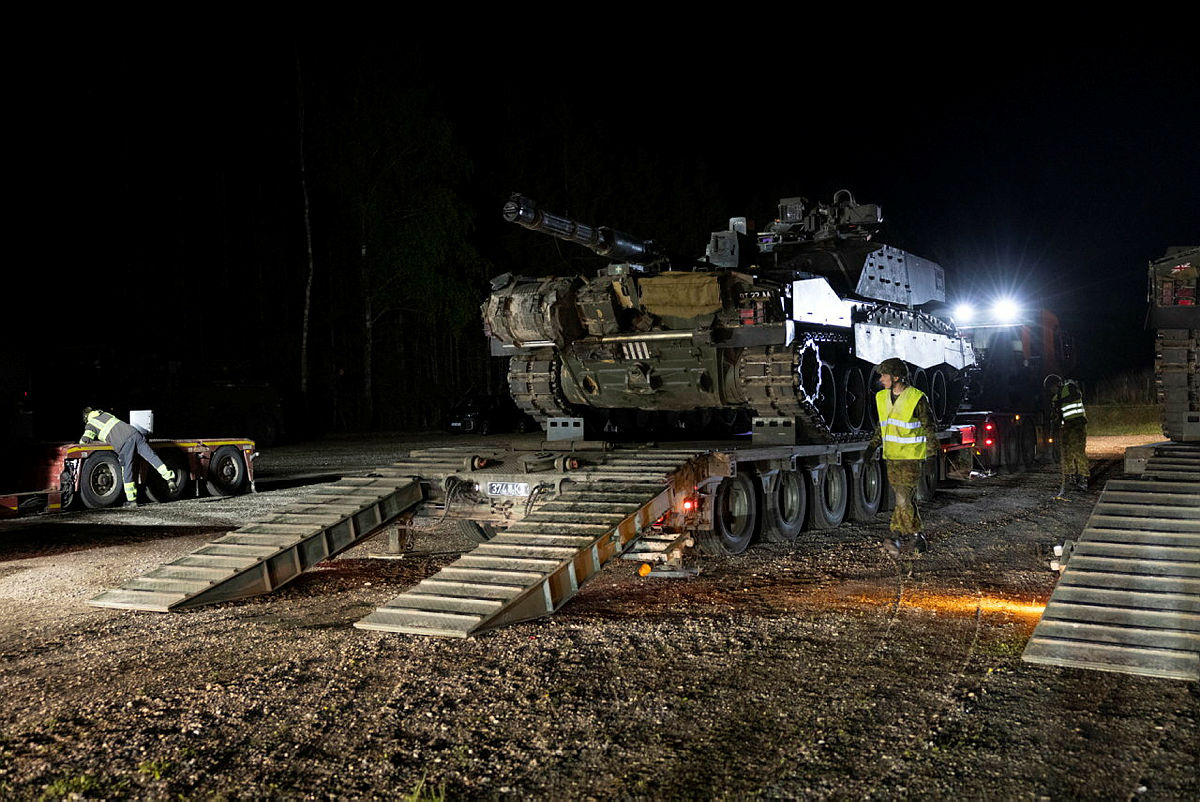
The exercise, supported by Challenger 2 main battle tanks moved into theatre on heavy equipment transporters, was built around a battlegroup formed on the 2nd Battalion, the Royal Regiment of Scotland.
The battlegroup, we understand, was tasked with defending against an incursion by an aggressive neighbouring state across the border, operating in the south-easternmost part of Estonia where the training scenarios were conducted close to Russian territory.
The Ministry of Defence said the exercise demonstrated the deployment of NATO’s Forward Land Force, the framework under which the alliance stations multinational combat formations on its northern and eastern flanks. Imagery released from the exercise showed Challenger 2s being unloaded and manoeuvring under smoke during the training, conducted through the second half of May.
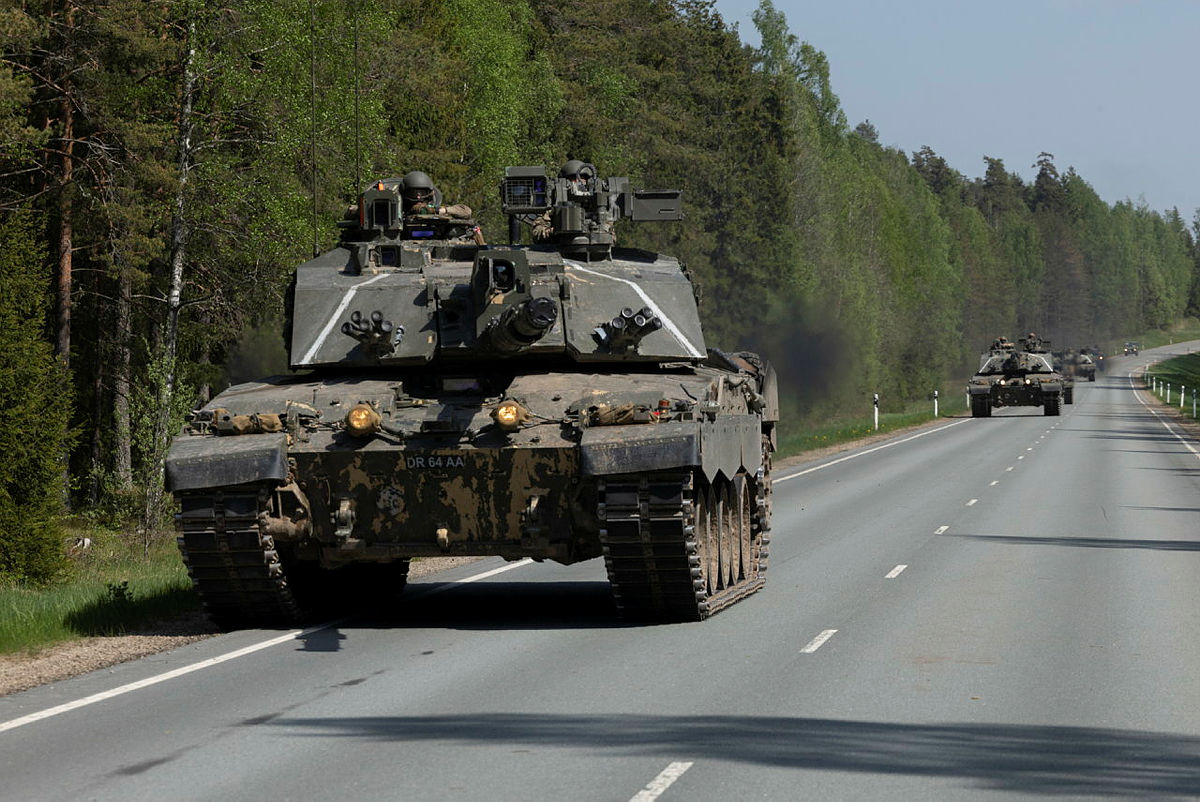
British troops have been deployed to Estonia since 2017 under Operation Cabrit, the UK’s contribution to NATO’s enhanced Forward Presence, which was established after Russia’s annexation of Crimea in 2014 to reassure allies on the alliance’s eastern edge. The UK leads the multinational battlegroup based at Tapa, and Estonia is among the Baltic states that share a land border with Russia and have pressed consistently for a visible allied military presence.
The Forward Land Force concept is really more of an evolution of that presence, following Russia’s full-scale invasion of Ukraine in 2022, NATO agreed to scale its eastern battlegroups up toward brigade strength where required, with framework nations committing additional forces held at readiness to reinforce them. For the United Kingdom, that has meant maintaining a standing presence in Estonia while earmarking a larger formation that can deploy to reinforce the country at speed, an arrangement that exercises such as Spring Storm are designed to rehearse.
Exercise Spring Storm, known in Estonian as Kevadtorm, is the Estonian Defence Forces’ principal annual field exercise, drawing in allied units alongside Estonian regulars, reservists and conscripts. Holding the training in the south-east of the country, close to the border, places it in the terrain that a defending force would have to hold in the event of an incursion, and tests the movement of heavy armour and the establishment of command posts under field conditions.









Would be interesting to know if and how many drones were involved.
I’ve gained $17,240 only within four weeks by comfortably working part-time from home. Immediately when I had lost my last business, I was very troubled and thankfully I’ve located this project now in this way I’m in a position to receive thousand USD directly from home. Each individual certainly can do this easy work & make more greenbacks online by visiting
following website—.,.,.,.,.—>>> JobatHome1.Com
As 4 Brigade has no regular CS CSS of its own, curious who enabled them, even at only 1500 strong. Anyone know?
And if the entire Brigade had to deploy, which Brigade are you robbing CS CSS from, HMG?
I wonder if Healey would like to answer….
Considering the British Army got its arse handed to it by a Ukrainian drone team last time….
Here’s hoping they did better this time around 😅
Which regiment was on the challengers anyone know?