

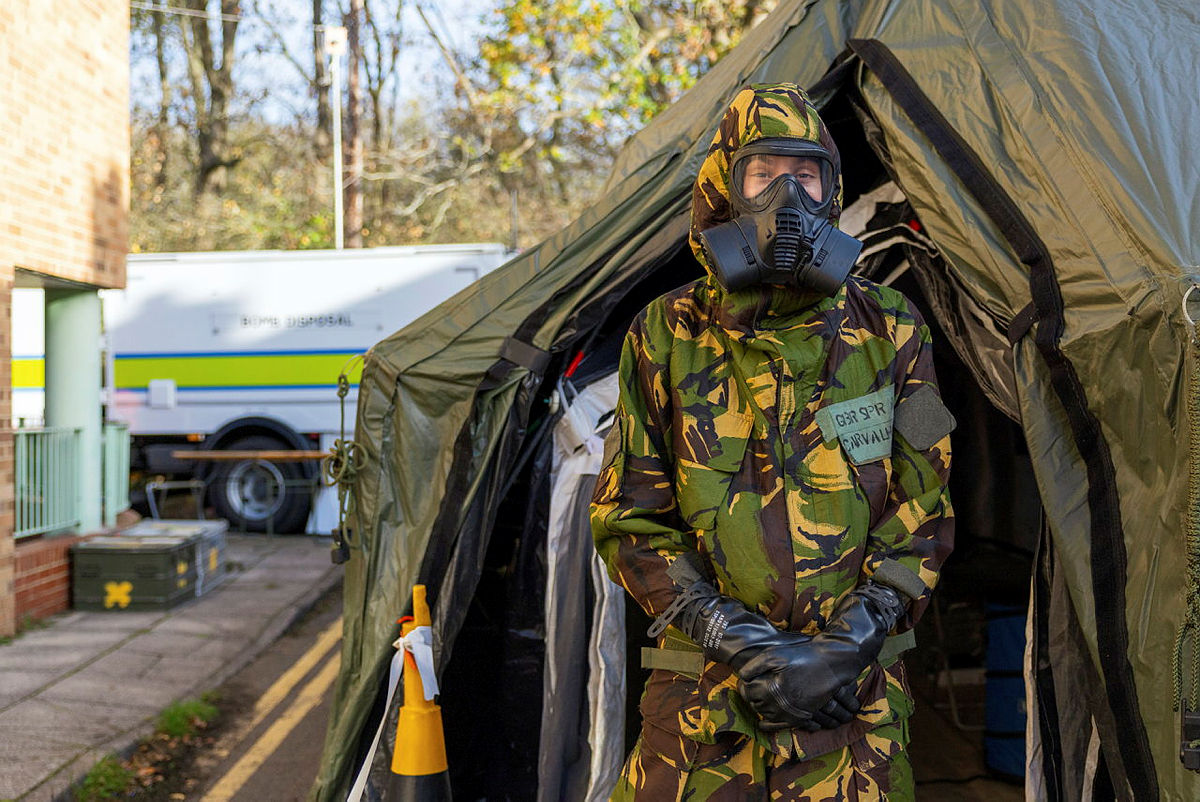
The Ministry of Defence has set out the broad scope of £1.7 billion allocated to defence support and counter-CBRN in the Defence Investment Plan, while declining to detail the counter-chemical, biological, radiological and nuclear element on security grounds.
Ben Obese-Jecty, Conservative MP for Huntingdon, asked the Secretary of State for Defence for the full scope and a breakdown of the figure set out at paragraph 109 of the plan, published on 30 June 2026.
Answering, Minister Luke Pollard said: “The £1.7 billion for ‘Defence Support and Counter CBRN’ in the Defence Investment Plan (DIP) includes equipment projects managed by the National Armaments Logistic and Support organisation in National Armaments Director Group and selected other key enabling projects, such as the costs for running the British Forces Post Office, rail services and the supply of food to deployed personnel.”
On how the figure relates to the rest of the plan, the minister said: “The chapters and items in the DIP are mutually exclusive so, for example, support costs for individual platforms will appear in other chapters.”
Setting out the logistics element, Pollard said: “The DIP has provided an additional £50 million investment in ‘logistics support’, recognising its foundational role in enabling and sustaining the Integrated Force.” He continued: “This targeted investment reflects the critical importance of Defence Support in delivering the logistics, information systems, operational stocks, and enabling functions required to maintain military readiness, resilience, and effectiveness across Defence.”
On what the money is intended to achieve, the minister added: “By strengthening key support capabilities, the investment will help ensure that our Armed Forces are better equipped to generate, sustain, and deploy force elements at the readiness levels required to meet current and future operational demands, while enhancing the resilience and efficiency of the wider Defence Support enterprise.”
Turning to the counter-CBRN portion of the allocation, Pollard stated: “It is not Ministry of Defence policy to comment on the exact numbers or scope of Counter-Chemical, Biological, Radiological and Nuclear capabilities, as disclosure of such detail could undermine operational and national security.”










…—…
This is one of the areas this country is wide open..
Once a long time ago before Cameron all DGHs ED departments had a NBC casualty decontamination capability ( I know cus I ran one of the teams ).. essentially every ED had
1) an decontamination tent
2) full protective equipment for the decontamination team and the ability to run about 4 shifts before the powered respirators ran out of consumables.
3) Detection equipment
4) treatments pods for Nuclear, biological and chemical attack casualties.
This was on top of the capability the fire service and ambulance services could provide as immediate responders…. Essentially this meant the ambulance service in extremis could deliver casualties to EDs without decontamination and the EDs could decontaminate on triage assessment need.
That’s all gone and even the fire service has almost no capabilities…
You’ve commented on this before.
How much was saved, and what would be the cost to rebuild it?