

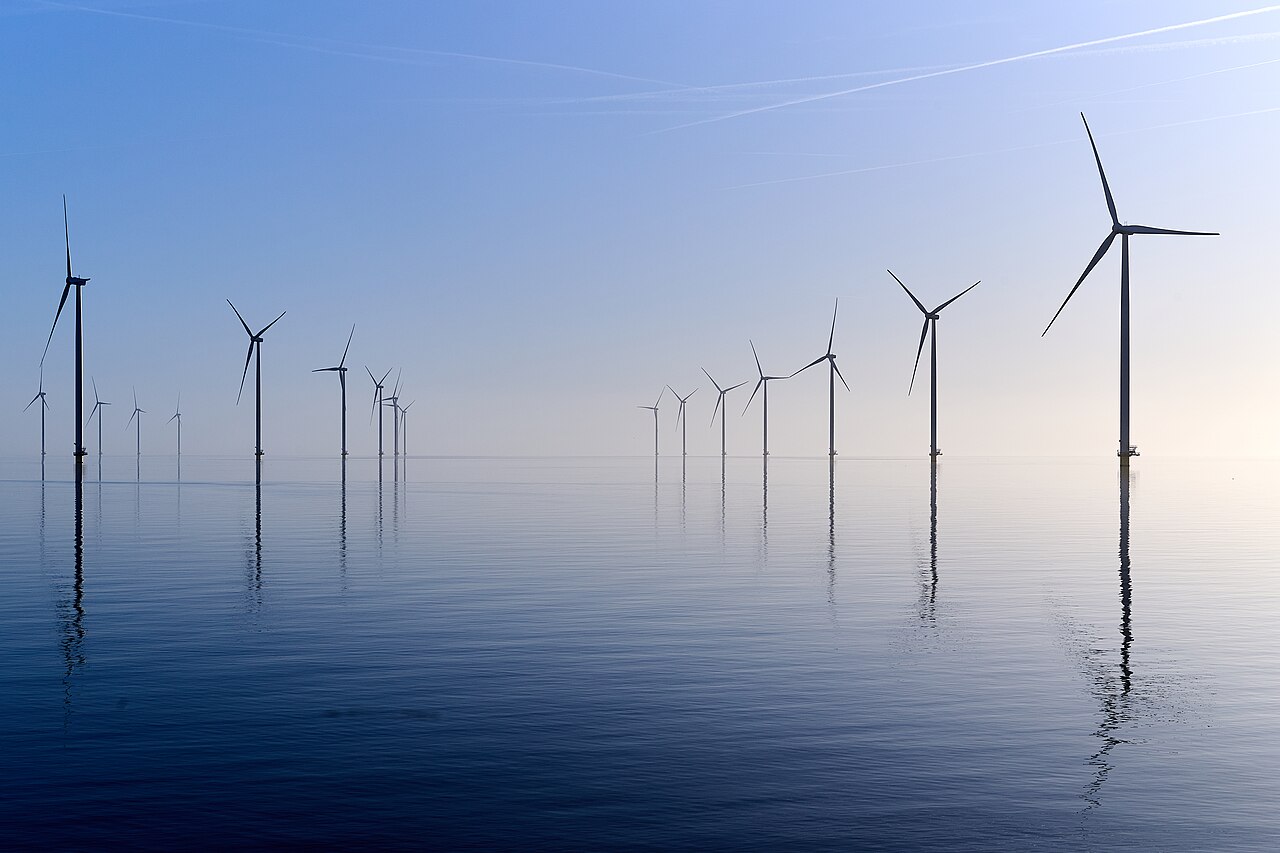
People leaving the Armed Forces can take Global Wind Organisation safety and technical training through the Career Transition Partnership as a route into the wind energy industry, and employment fairs are held each year in Edinburgh and Elgin, according to an answer given in Parliament.
Imogen Walker, the Labour member for Hamilton and Clyde Valley, had asked what support and training pathways are available to help service leavers into Scotland’s renewable energy industry.
Defence Minister Luke Pollard: “The Career Transition Partnership (CTP) provides Service leavers with tailored career support, training and access to employers, including opportunities within Scotland’s renewable energy sector.
“Service leavers can work with a CTP Career Consultant to develop a personal resettlement plan and access relevant vocational training. This includes Global Wind Organisation Basic Safety and Basic Technical Training to support routes into the wind energy sector.
“CTP also works with employers and industry partners to create employment pathways and delivers annual employment fairs in Edinburgh and Elgin, connecting Service leavers directly with recruiting employers.”
Global Wind Organisation training is the industry standard set of certificates covering working at height, first aid, fire awareness, manual handling and sea survival, and the technical module adds mechanical, electrical and hydraulic basics. The Career Transition Partnership is run for the Ministry of Defence by Right Management and supports personnel in the two years before discharge and for two years afterwards.










Lots of service leavers in offshore wind. I’m one of them. Great career.
Once again this great blog plumbs the depths of kneeling to the false god of renewable energy
What on earth is wrong with renewable energy (sensible answers only please).
The bulk of renewables equipment is manufactured in China using power from coal fuelled power stations. Solar and wind farm equipment has a 10-15 year service life and then poses significant recycling problems. It also requires rare metals, the mining of which is ecologically unsound and very dangerous for miners in the developing world. Wind turbines also kill birds and bats. Battery storage is a fire risk and the batteries are also problematic to recycle. Renewables require back up gas generators. Nuclear is not suitable for that purpose So it’s not really renewable, cheap, clean or efficient, in the round. Renewables are the real reason why electricity is so expensive in Britain. But, apart from all that, it’s great…or not really
P.S. The scientific basis for ‘renewables’ is looking increasingly implausible. Recent research by Williams et al., 2026 does not support humans warming the deepwater around Antarctica by enhancing CO2 in the atmosphere, but that warming (and cooling) have been ~100% ‘driven by wind-forced circulation changes’.
Well personally I’m all for migrating the building of renewable kit from China to the UK. We don’t have coal powered power stations operating any more so problem solved. Existing batteries are indeed a fire hazard and made from rare materials etc. I will grant you that however there are better and cheaper materials waiting in the wings. Also it is not beyond the wit of man to scare birds and bats away from turbines. I am comfortable that future developments will make many if not all of these issues go away.
There is an unprecedented amount of R&D going on around the world in all sorts of areas which will continue to improve what is a new industry. Personally I do not believe that renewables will be required in the longer term however much world leaders panic over the issue. I think better solutions will become available without needing to return to fossil fuels.
Yes, we’ve been promised nuclear fusion power every year since 1920.
Bringing manufacture of wind and solar generstion back to Britain will make electricity even more ruinously expensive. China didn’t just build factories to assemble final products; they built the entire supply chain. For solar power, this meant dominating the production of polysilicon, the highly purified material needed for photovoltaic cells. In the wind sector, China leveraged its vast reserves of rare earth elements—particularly neodymium and praseodymium—which are essential for the powerful permanent magnets used in modern turbine generators. By controlling the refining of these materials, Chinese manufacturers secured cheaper, reliable access to the fundamental building blocks of clean energy.
The Chinese government categorized renewable energy as a “strategic emerging industry,” unlocking state-backed loans, subsidized land, and cheap electricity for manufacturers. This financial cushion allowed companies to rapidly scale their operations. Entire industrial parks were built where glassmakers, aluminum frame producers, and panel assemblers operated side-by-side. The resulting economies of scale pushed the cost of Chinese solar modules down so fast that Western competitors, lacking similar state support and localized supply chains, were priced out of the market.
Because domestic demand was guaranteed by state planning, factories could expand output fearlessly. The sheer volume of internal deployment gave Chinese firms unmatched experience in engineering, logistics, and grid integration, locking in a manufacturing lead that has redefined global energy infrastructure.
Recreating a solar and wind generator manufacturing industry in Britain will be extremely difficult, require enormous investment difficult to justify in any realistic business plan. State subsidy will result in higher taxes and even more expensive electricity.
One of the biggest suppliers of wind turbines to the UK is from Denmark. I know from personal experience that for 9 months of the year the biggest cost to me is the standing charge because of the solar panels.
China has 35% of UK wind turbine market and 62% of the global market, 85% of global solar panel market. A lot of the components within European manufactured wind turbines are sourced from China.
New coal-fired power proposals by Chinese developers, including reactivated applications, hit a new peak in 2025, at 161GW. This is equal to 13% of the coal capacity currently online in China.
Colin Brooks
18:59 (0 minutes ago)
to UK
The cheapest energy is coal fired, then gas fired then renewables. My opinion is that for the sake of our economy , our industry and our defence we should take Milliband to the Chagos islands and destroy any way of escape ^.^
Interesting suggestion however Colin some things at not all about price.
I also think it will not be many years before energy will become very cheap indeed. Some Countries will obviously still be stuck in the past however many know the writing is on the wall. Many world powers are frightened of losing control. Net Zero is just a stepping stone in transforming the economies of many nations. The UK will be one of those nations.
Other countries think strategically. They will cheerfully burn as much fossil fuel as they can lay their hands on to outcompete our industries so that the latter move to those countries. When the economically extractable fossil fuels run out they will transition to alternatives, having invested in (eventually) being able to do so, by which time they will have all the industry, all the data centres and all the money because our politicians jumped the gun. This is very obviously what China is doing.
It doesn’t matter where we source our energy from, marginal pricing ensures our energy is the most expensive it can be and therefore our industries are the least competitive they can be.
Agreed, the only countries that are clinging to fossils at this point are the ones who missed the boat on investing in green tech.
Short of nationalising the oil and gas industries and then funneling the energy into making cheap solar panels we’re now locked into a future where we rely on China for our panels.
Fortunately panels last decades before they start losing efficiency.
Some things are ALL about price Mark.
There are people on this blog who are either stupid,ignorant or working for unfriendly countries, if you can not afford food you die, if you can not afford to keep warm you die. If you removed all the CO2 from the atmosphere then all life on the surface of the earth would die out.